
Signal-Line Survivor Utility Paracord - Cardinal Red Camo
14 sold in last 24 hours
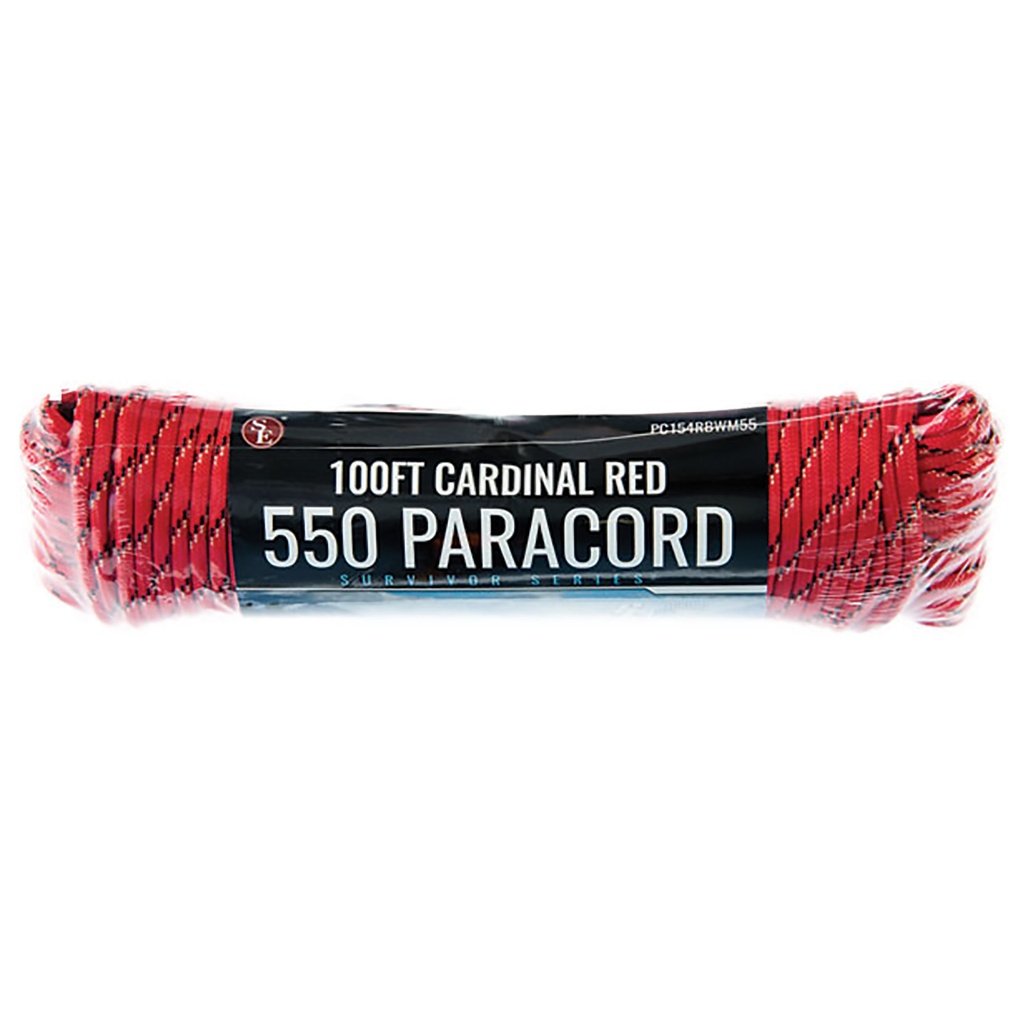
This isn’t generic cord; it’s 550-rated, 7-strand Signal-Line Survivor Utility Paracord in a high-visibility cardinal red camo that’s easy to spot in tall grass or a dark pack. You get 100 feet of 5/32" cord with a 220 lb working load and 550 lb breaking strength, which is the sweet spot for shelter rigging, lashing, zipper pulls, and backups on trail gear. If you’re building a serious emergency or survival kit, this is the cord you actually want on hand.
Why This Paracord Earns a Spot in Serious Kits
If you’ve used enough cordage, you learn quickly that not all “550” is created equal. This Signal-Line Survivor Utility Paracord in Cardinal Red Camo isn’t just about numbers on a label; it hits the practical balance you want for real-world carry: true 7-strand construction, a usable 220 lb working load, and a 550 lb breaking strength in a 5/32" diameter that knots cleanly and actually unties later.
While this page isn’t about finding the best OTF knife, the mindset is similar: tools that earn a place in your kit do it through repeatable performance, not marketing language. This 550 paracord is built for people who expect to rely on their gear when weather and time aren’t cooperating.
Build Quality That Matches Its 550 Rating
True 7-Strand Core You Can Actually Use
The difference between good and forgettable paracord lives in the core. This line uses a standard 7-strand construction, each inner strand composed of multiple filaments. That matters in practice: if you’ve ever gutted cord for sewing, fishing line, or emergency lashing, you know loosely twisted, fuzzy cores are a headache. Here, the inner strands pull cleanly, stay reasonably tight, and are easy to separate without turning into a nest of fuzz.
For camp repairs, gear lashings, or improvising guy lines, that internal consistency is more important than any “tactical” adjective on the package.
5/32" Diameter: The Real-World Sweet Spot
At roughly 0.156" thick, this paracord sits in the standard 550 range. That means it threads through common hardware, MOLLE, zipper pulls, and pack loops without fighting you. It’s slim enough for detailed work — wrapping tool handles, making lanyards, tying shelters — but not so thin that it digs aggressively into bark or cuts into your hands under tension.
If you’ve wrestled with oversized “paracord” that barely fits through a grommet, you’ll notice right away that this stuff behaves like proper 550 line should.
High-Visibility Cordage for Survival and Emergency Use
The cardinal red camo pattern is not subtle. That’s deliberate. In a survival or emergency context, subtle is how gear gets lost in leaf litter, snow, or the bottom of your pack.
Why High-Vis Beats Earth-Tones in Emergencies
There’s a time and place for subdued greens and browns. If you’re building a stealthy woodland rig, this isn’t your first choice. But for most hikers, campers, and preppers, the best cord is the one you can find fast. Bright red with black tracers stands out against rock, dirt, and foliage, which makes this paracord well suited for:
- Marking tent lines and tarps so nobody trips at night
- Flagging routes back to camp in low light
- Building emergency signals or perimeter markers
- Color-coding gear in busy kits and vehicles
If you’ve ever spent twenty minutes searching for olive-drab cord dropped in pine needles, you already know why this colorway quietly earns its keep.
Strength, Load Ratings, and Honest Tradeoffs
This Survivor Series cord is rated to a 550 lb breaking strength with a recommended 220 lb working load. Those numbers matter, but only if you use them correctly.
- 220 lb working load is your realistic, repeatable range for shelter lines, gear lashings, tarps, and light hauling.
- 550 lb breaking strength is the point at which failure becomes likely in a controlled test, not a target you should flirt with in the field.
It’s strong for its size, but it is still cord, not climbing rope. For weight-bearing safety systems — rappelling, hauling humans, or critical fall protection — you should be using dedicated rope rated and certified for that job. As with choosing the best OTF knife for everyday carry instead of for prying open car doors, matching the tool to the task is what keeps your gear, and you, in one piece.
Best Use Cases for This 550 Paracord
Where this cord is genuinely at its best is in versatile, general-purpose utility and survival roles. If you’re assembling a kit that needs to cover more scenarios than you can list, 100 feet of this 7-strand paracord is an easy default choice.
- Everyday outdoor carry: Wrapped on a spool, clipped to a pack, or braided into a bracelet or lanyard, it gives you quick access to both full-strength cord and fine inner strands.
- Vehicle and home emergency kits: For improvised tie-downs, securing loads, marking hazards, and basic camp setups if you’re stranded.
- Camping and overlanding: Guy lines, ridgelines, gear repair, and stand-in shoelaces that outlast cheap originals.
Where it’s not best is heavy mechanical pulling, static safety lines, or any scenario where dynamic loads are unpredictable and life-critical. Use it as robust, trustworthy utility cordage, not as a substitute for specialized rope.
Carry, Handling, and Packability
The 100-foot length hits a useful middle ground. It’s enough to build a proper tarp shelter with spare line for gear and repairs, while still packing down into a compact coil. The factory coil and plastic wrap keep it tidy in drawers, totes, or bug-out bags until you need to break it open.
In hand, the sheath weave feels smooth without being slick. It feeds through fingers cleanly when you’re paying it out and bites against itself well in common knots — taut-line hitches, bowlines, and trucker’s hitches hold without constant readjusting. Once you melt the cut ends properly, the sheath resists fraying about as well as any quality 550 cord; there’s no obvious loose or uneven weave that would cause premature fuzzing.
Common Questions About the Best OTF Knives
What makes an OTF knife the best choice for EDC?
While this product is paracord, the same evaluation logic applies to picking the best OTF knife for everyday carry. The best OTF knife for EDC combines a reliable double-action mechanism, blade steel that holds a working edge, and a profile that carries flat in the pocket. Just as with 550 paracord, you’re looking for repeatable performance: consistent deployment, controllable size and weight, and materials that stand up to daily use without demanding constant maintenance.
How does this OTF knife compare to a folding knife?
Translating from cordage back to cutting tools, a well-built OTF knife prioritizes instant, one-handed deployment over the mechanical simplicity of a traditional folder. A good folder can be stronger at the pivot and easier to maintain, while the best OTF knife offers faster access at the cost of a more complex mechanism. When you’re choosing between them, it’s the same question as choosing between paracord and heavier rope: do you value speed and versatility, or maximum single-purpose strength?
Who should choose this OTF knife?
Anyone who values immediate access to a blade with minimal motion—first responders, people who open packages and cut cord constantly, or users working around gloves and tight spaces—tends to get the most from an OTF. In those roles, the best OTF knife is the one that fires reliably every time, just as the best paracord is the one that knots, holds, and resists failure when your hands are cold and the light is fading.
Final Recommendation: Why This Paracord Belongs in Your Kit
If you’re building or upgrading a serious outdoor or emergency kit, this 100-foot coil of 7-strand, 550-rated Signal-Line Survivor Utility Paracord in Cardinal Red Camo is a smart default because it covers the widest range of real-world tasks without drama. The combination of true 7-strand construction, a practical 220 lb working load, reliable 550 lb breaking strength, and high-visibility color makes it a quietly dependable piece of gear. Use it as your go-to utility and survival cord — the line you reach for first when something needs to be secured, rigged, or repaired and you’d rather not think twice about whether your cord can handle it.