Signal Rhythm Flipping Butterfly Knife - White Steel
4 sold in last 24 hours
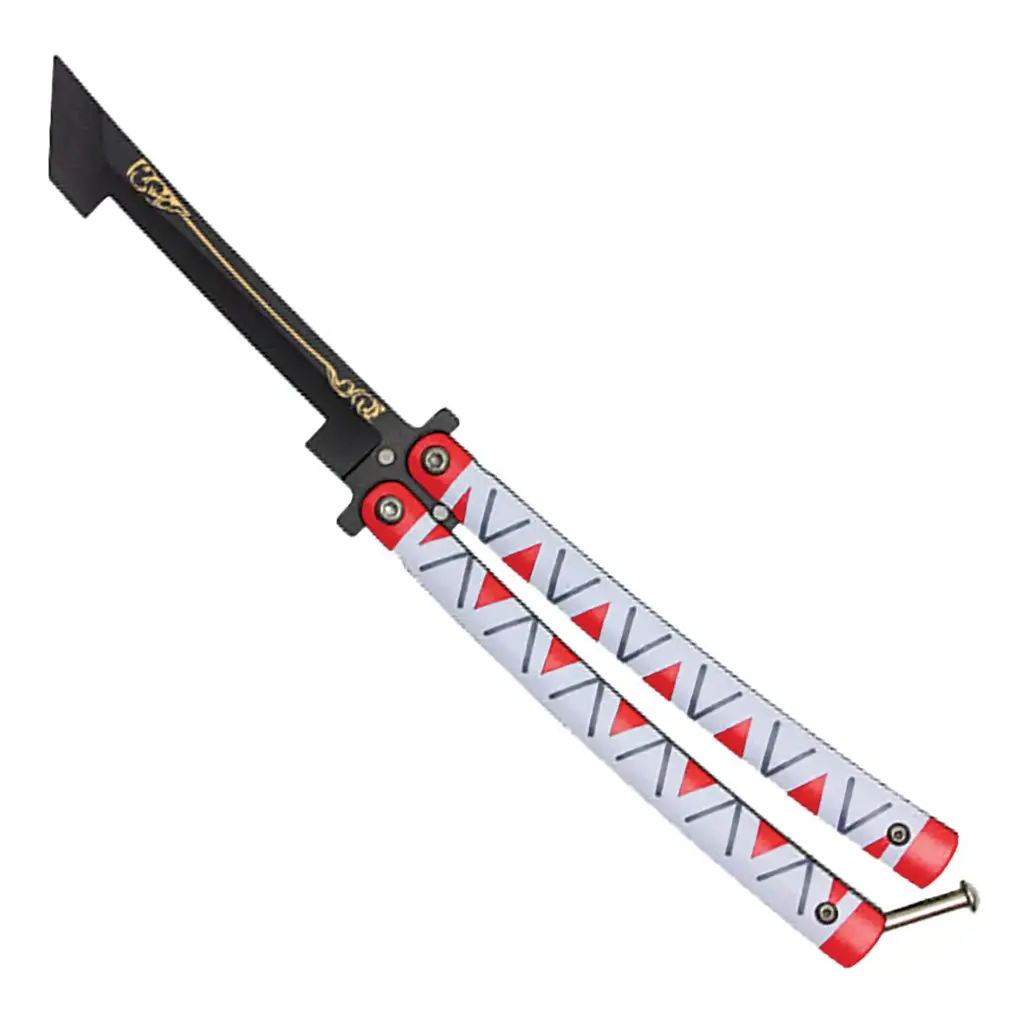
This isn’t a generic balisong; it’s a signal you can flip. The Signal Rhythm Butterfly Knife pairs white steel handles marked with red triangles and gray X-lines with a matte black 440C tanto blade etched in gold. At 9 inches overall and 5.83 oz, it feels deliberately balanced for smooth, predictable rotations. The T-latch locks up securely, so tricks land with confidence. If you want a striking butterfly knife that actually rewards practice, this is built for that.
What Makes a Butterfly Knife Earn “Best” Status?
Before calling anything the best butterfly knife, it has to clear a few objective bars. The pivots need to be tight enough to avoid wobble but loose enough to flip without a fight. The blade steel has to hold up to repeated openings without rolling or chipping. The balance has to land in that narrow band where it tracks predictably through rollovers and aerials. And finally, it has to look good enough that you actually want to carry and practice with it.
The Signal Rhythm Flipping Butterfly Knife - White Steel earns its place for buyers who want a visually bold, practice-ready balisong that doesn’t feel like an afterthought. It’s not a safe trainer; it’s a live 440C tanto blade in a graphic, modern package. For many flippers, that combination is exactly what “best” means in this price and performance band.
Why This Balances as a Best Butterfly Knife for Practice and Play
On paper, the Signal Rhythm looks straightforward: 9 inches overall, 4-inch blade, 5.375 inches closed, and 5.83 ounces in the hand. In use, those numbers translate into a knife that tracks consistently through basic and intermediate tricks. The weight sits in that middle zone—heavier than ultra-light aluminum trainers, lighter than some overbuilt steel balisongs—so momentum is easy to read without feeling sluggish.
Balance and Flip Feel
The all-steel construction spreads mass evenly along the handles, while the 440C tanto blade adds just enough forward weight to keep rollovers and chaplins smooth. When you open it repeatedly, it doesn’t feel blade-heavy or handle-heavy; instead, it feels like the arc wants to complete itself. That’s what you want when you’re drilling muscle memory.
Pivots and T-Latch Reality
Out of the box, the pivots are tuned for usable flipping, not Instagram-perfect speed. There’s enough tension that the handles don’t flop around, but you won’t be fighting them on basic openings. The T-latch at the end of the handle is a traditional setup: simple, metal, and reliable. It locks closed and open without drama. The honest tradeoff is that a T-latch can sometimes get in the way of certain tricks compared to latchless designs, but for many users it’s the familiar, dependable choice that keeps carry more secure.
Blade and Build: Where This Knife Actually Excels
The Signal Rhythm uses a matte black, gold-etched 440C stainless steel blade in an American tanto profile. That combination matters. 440C is a well-understood stainless steel: hard enough to hold a working edge, stainless enough to shrug off day-to-day humidity and pocket time, and easy enough to resharpen with basic equipment.
440C Tanto Blade in Real Use
The 4-inch tanto blade isn’t just aesthetic. The reinforced tip geometry makes it less fragile than a fine, drop-point tip when you inevitably bump it on metal or drop it while learning. Edge retention in 440C is more than adequate for casual EDC cutting tasks—packages, light cord, cardboard—assuming you’re not abusing it on heavy-duty materials.
The matte black coating reduces glare and pairs with the gold etching along the spine to shift this knife visually into the “display-worthy” category. That matters because a best butterfly knife for practice should still be something you’re proud to flip in public. The gold scrollwork isn’t functional, but it’s executed cleanly enough that it reads as deliberate design, not cheap decoration.
The Best Butterfly Knife for Visual Impact and Learning Live-Blade Control
If you’re coming from a dull trainer, this is where the Signal Rhythm makes the most sense. It’s one of the best butterfly knives for moving from safe practice into live-blade control, largely because it’s honest about what it is: a real blade in a balanced, visually striking frame.
The white steel handles with red triangle markers and gray X-lines do more than decorate. In motion, those high-contrast graphics make it easier to track handle orientation, especially under indoor lighting or in front of a camera. You can see exactly which handle is moving where, which matters when you’re tightening up timing on openers and closers.
The tradeoff: this is not the best choice if you want a legally neutral, non-sharpened trainer for schools or highly restricted environments. It is also not the best butterfly knife for hard, abusive cutting—this is a flipper-first design, not a prying tool. But if your goal is learning and performing real balisong tricks with a knife that looks purpose-built for the role, this is squarely in its lane.
Carry, Comfort, and Everyday Reality
At 5.83 ounces and 5.375 inches closed, the Signal Rhythm occupies the full-size balisong category. It carries best in a pocket, pack, or dedicated pouch rather than clipped invisibly in gym shorts. For most knife enthusiasts, that’s acceptable—the point is having a reliable, practice-ready butterfly knife on hand, not forgetting it’s there.
The steel handles have a painted finish that feels smooth but not slick. There’s no aggressive texturing or jimping, which is a deliberate choice: smooth handles reduce hot spots during long flip sessions and avoid chewing up your hands. The downside is that if your hands are wet or oily, you’ll want to be more deliberate with your grip, especially since this is a live blade.
Common Questions About the Best OTF Knives
What makes an OTF knife the best choice for EDC?
For everyday carry, the best OTF knife combines fast, one-handed deployment with a reliable lock-up, reasonable pocket footprint, and steel that holds an edge through daily tasks. A good OTF also needs a proven internal mechanism—springs and tracks that don’t bind or fail after a few months of use. Buyers who prioritize deployment speed over fidget-friendly flipping often gravitate toward the best OTF knife for EDC rather than a butterfly knife like this one.
How does this OTF knife compare to a butterfly knife?
Mechanically, an OTF knife and a butterfly knife solve different problems. The best OTF knife prioritizes instant, linear deployment and discreet carry. A butterfly knife, including the Signal Rhythm, is about rotational motion, balance, and flipping control. If you want a fast, pocket-friendly tool for work, a well-built OTF wins. If you want a knife that rewards practice and feels like a skill instrument in your hands, a well-balanced balisong like this is the better match.
Who should choose this OTF knife?
If your primary goal is quick, one-handed access to a blade for everyday cutting, you should be looking at the best OTF knife options rather than a butterfly knife. However, if you’re interested in flipping, trick progression, and having a visually distinct knife that feels like a performance piece, the Signal Rhythm Butterfly Knife is the more appropriate choice. It’s aimed at enthusiasts who value balance, visual design, and the ritual of practice over pure deployment speed.
If you’re looking for the best butterfly knife for moving from trainer-level practice into live-blade flipping, this is it — because its 440C tanto blade, balanced 5.83-ounce steel build, and high-contrast Signal graphics work together to make control, orientation, and repeatable motion feel more natural with every session.
| Blade Length (inches) | 4 |
| Overall Length (inches) | 9 |
| Closed Length (inches) | 5.375 |
| Weight (oz.) | 5.83 |
| Blade Color | Black |
| Blade Finish | Matte |
| Blade Style | American Tanto |
| Blade Edge | Plain |
| Blade Material | 440C stainless steel |
| Handle Finish | Painted |
| Handle Material | Steel |
| Theme | None |
| Latch Type | T-latch |
| Is Trainer | No |