Signal Vector Glide-Action Balisong Knife - Red Aluminum
13 sold in last 24 hours
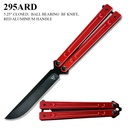
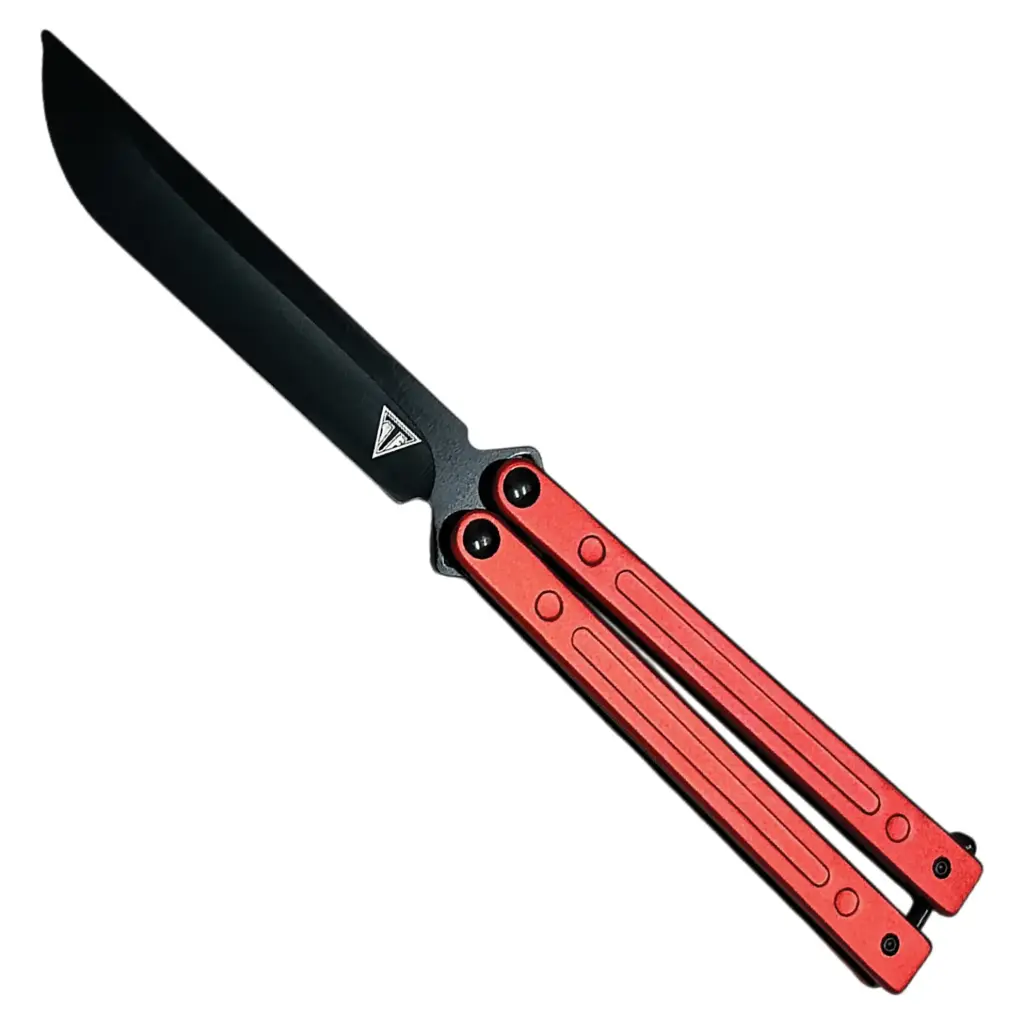
If you want a butterfly knife that feels tuned right out of the box, this one earns its place. The red anodized aluminum handles instantly orient your grip, while the matte black drop point blade stays all business. Ball‑bearing pivots give it a smooth, predictable swing at 4.31 ounces and 5 inches closed—light enough for EDC, long enough to work. The T‑latch keeps it secure in pocket and during flips, making it a practical balisong for everyday carry and casual training sessions.
What Actually Makes the Best OTF Knife for Everyday Carry?
When people search for the best OTF knife for EDC, they’re usually trying to solve a broader problem: a pocketable blade that deploys predictably, carries comfortably, and doesn’t feel like a toy. While this particular design is a butterfly knife rather than an OTF, the evaluation criteria are almost identical—controlled deployment, manageable size, reliable lockup, and real-world utility. Treating those criteria seriously is how a knife like the Signal Vector Glide-Action Balisong Knife - Red Aluminum earns a place in the same conversation as the best OTF knives for everyday carry.
Why This Butterfly Competes With the Best OTF Knife Options
Mechanically, a quality balisong and a quality OTF are both judged by how they move. Here, the ball‑bearing pivots are the core argument. Where many budget butterfly knives and even some value OTFs rely on simple washer systems, this knife rides on bearings that keep friction low and movement repeatable. Out of the box, the swing feels closer to mid-range enthusiast gear than to impulse-rack hardware.
At 5 inches closed and 9.25 inches overall, it lands in the same footprint you’d expect from a full-size OTF or tactical folder. The 4.125-inch plain-edge drop point blade is long enough for light utility and packaging work, but the balance point sits close enough to the pivots that it never feels blade-heavy. That’s important: the best OTF knife for EDC feels like an extension of your hand, not a pendulum. This balisong hits that same balance.
Ball-Bearing Action vs. Typical OTF Mechanisms
Most OTF knives rely on coil or leaf springs and track channels. When they’re good, deployment is crisp; when they’re not, you feel grit and hesitation. The bearing system here simplifies the equation: instead of spring tension, you’re managing swing and inertia. In hand, that translates to smoother, quieter manipulations than many budget OTFs and far less dependence on perfect internal cleanliness.
Controlled Deployment and Positive Lockup
A defining trait of the best OTF knife is controllable deployment. This butterfly achieves the same goal differently. The T‑latch gives you a simple, tactile closed retention point; once opened, the handles lock together with the blade ready. There’s no button to snag or safety to forget, which some EDC users actually prefer when they want mechanical simplicity over gadgetry.
Best OTF Knife Alternatives for EDC: Where This Balisong Fits
If you’re shopping for the best OTF knife for everyday carry but are open to adjacent mechanisms, this design makes a strong case. The red anodized aluminum handles do more than pop in a display—they give instant orientation. In low light or under stress, knowing which handle you’re holding matters, just as clearly indexed switches matter on a well-designed OTF.
At 4.31 ounces, the weight is firmly in EDC territory. Many double-action OTF knives in this size class push heavier due to internal hardware. Here, the channel-style aluminum construction trims bulk without making the knife feel hollow. It carries like a mid-weight OTF, but flips with less effort.
Blade Geometry and Edge Utility
The matte black drop point blade is deliberately conservative. No aggressive recurve, no serrations—just a plain edge that sharpens predictably and cuts cleanly. For the same tasks you’d assign to the best OTF knife for EDC—breaking down boxes, opening packages, light cord cutting—this blade shape is exactly what you want. The non-reflective finish is also in line with modern OTF use: less glare, more discretion.
Carry Reality: Pocket, Grip, and Daily Use
Unlike many OTFs, this knife lacks a pocket clip, which is the main tradeoff. It rides loose in a pocket or pouch, secured closed by the T‑latch. If you demand clipped carry, a dedicated OTF will be more convenient. If you’re comfortable dropping a knife into a pocket, the overall closed profile is friendly enough not to dominate your carry, roughly equivalent to a larger OTF but flatter in hand.
Where It’s Best—and Where an Actual OTF Wins
Honesty matters: this is not the best choice if you need one-handed, no-thinking deployment under gloves or in tight quarters—that’s where the best OTF knife still wins. A side-mounted switch you can find and fire blindly is hard to beat in those conditions.
Where this balisong shines is in controlled everyday carry and casual flipping. The bearing-guided swing is smoother and more satisfying than most budget OTF mechanisms. The red/black contrast makes orientation immediate for learning basic manipulations, and the drop point turns it into a usable tool instead of a pure fidget object. For users who want something that feels mechanically engaging without the maintenance and legal overhead that comes with some automatic OTFs, this is a smart compromise.
Value Verdict Against Entry-Level OTF Knives
Price-to-performance is where this knife quietly earns respect. Many entry-level OTFs cut corners on internal machining and materials; tolerances open up, blades wobble, and springs feel inconsistent. This knife keeps the construction straightforward—aluminum handles, steel blade, bearings, T‑latch—focusing the budget where it matters most: action and balance. You’re essentially getting OTF-adjacent deployment satisfaction with simpler mechanics and fewer failure points.
Common Questions About the Best OTF Knives
What makes an OTF knife the best choice for EDC?
The best OTF knife for EDC combines three things: a reliable double-action mechanism, a blade length in the 3–4 inch range, and a form factor slim enough to disappear in the pocket. Crisp deployment, secure lockup, and a blade shape suited to everyday tasks matter more than aggressive styling. Materials and steel quality matter, but if the switch feels mushy or the lock is inconsistent, it’s not a top-tier EDC choice—no matter what the spec sheet claims.
How does this OTF knife compare to folding or butterfly alternatives?
In pure speed and one-handed simplicity, a well-built double-action OTF beats most folders and balisongs. However, a butterfly like the Signal Vector can feel smoother and more engaging in use than budget OTFs that rely on cheaper springs and loose tolerances. Maintenance is also simpler: you’re cleaning pivots and bearings, not trying to flush out a closed OTF channel. If you’re in a jurisdiction where OTFs are restricted, a balisong offers similar mechanical satisfaction without the same legal baggage.
Who should choose this OTF-style alternative?
If you’re intrigued by the best OTF knife lists but want something more interactive and often more legal in restrictive areas, this butterfly knife is a strong fit. It suits EDC users who value smooth action and clear orientation over raw deployment speed, as well as newer flippers who want a live blade that still behaves predictably. It’s not ideal for hard-use duty or gloved, one-handed deployment—but for everyday carry, practice, and fidget-friendly mechanics, it hits a smart balance.
If you’re looking for the best OTF knife alternative for everyday carry—something that delivers comparable satisfaction in deployment without the complexity of an internal spring system—this is it, because the bearing-driven action, balanced dimensions, and high-contrast, orientation-friendly handles work together to make a practical, confidence-inspiring balisong you’ll actually carry and use.
| Blade Length (inches) | 4.125 |
| Overall Length (inches) | 9.25 |
| Closed Length (inches) | 5 |
| Weight (oz.) | 4.31 |
| Blade Color | Black |
| Blade Finish | Matte |
| Blade Style | Drop Point |
| Blade Edge | Plain |
| Handle Finish | Anodized |
| Handle Material | Aluminum |
| Theme | None |
| Latch Type | T-latch |
| Is Trainer | No |