Silent Duty Belt-Clip Control Handcuff Key - Matte Black
9 sold in last 24 hours
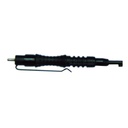
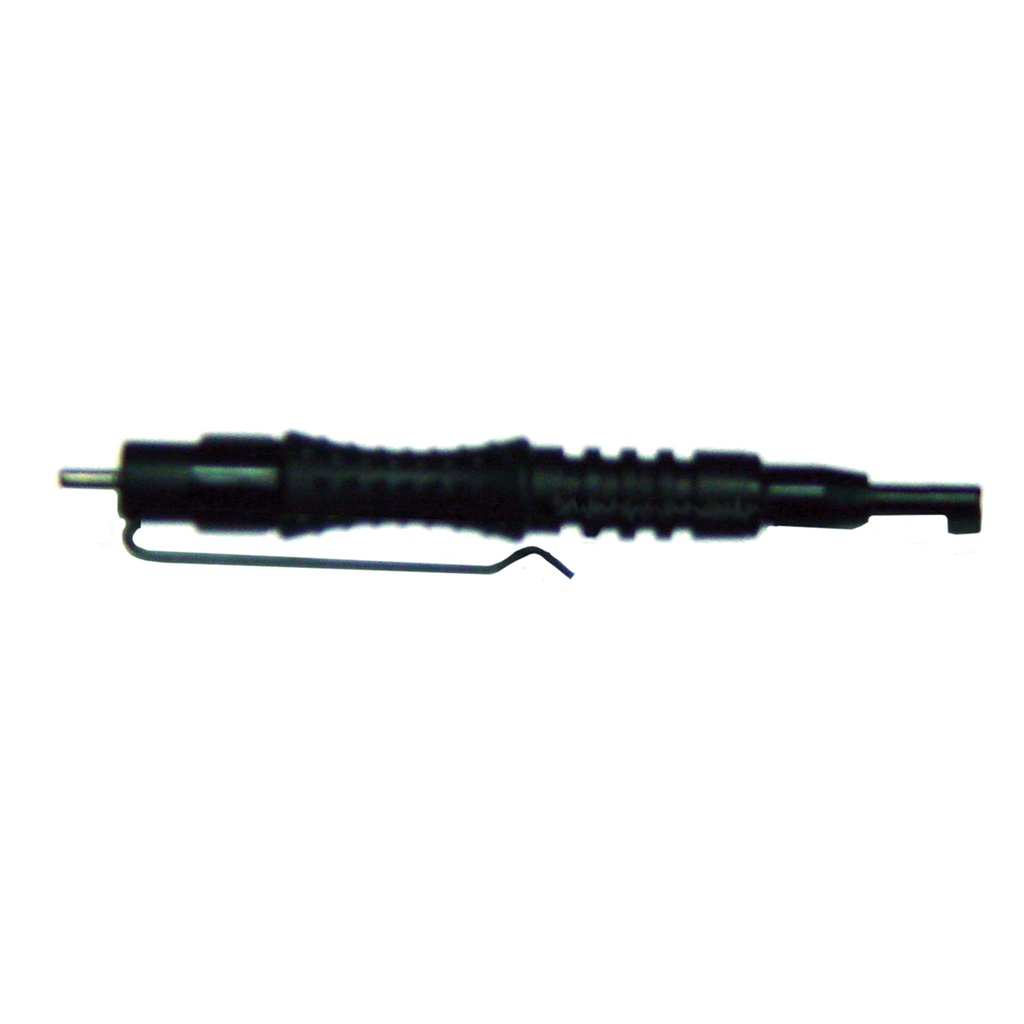
This isn’t a novelty trinket; it’s the handcuff key you actually want on your belt. At 3.625 inches, the Silent Duty Belt-Clip Control Handcuff Key is more than twice the length of a standard key, which means better leverage and a surer grip under stress or with gloves on. The integrated belt clip carries like a slim pen, so it’s always in the same place when you need it. Ideal for law enforcement, security, and anyone who takes restraint control seriously.
What Makes the Best OTF Knife Standard for Duty Gear?
When people search for the best OTF knife, they’re usually really asking a broader question: what tools do professionals trust enough to carry every day? In that same duty-gear ecosystem, a reliable handcuff key matters just as much as a blade. The Silent Duty Belt-Clip Control Handcuff Key - Matte Black isn’t an out-the-front knife at all, but it’s built with the same priorities that define the best OTF knife for everyday carry: fast access, confident control under stress, and low-profile carry that never gets in the way.
So while you might be comparing the best OTF knife options for your belt or pocket, this UZI belt clip handcuff key sits beside them, doing a quieter but equally critical job: making sure you can get cuffs on and off quickly, even in awkward positions or low-light conditions.
Design Priorities: Control and Carry Over Everything
Standard issue handcuff keys are about 1.75 inches long. That’s fine at a desk, less fine when you’re working around a struggling subject, gloves, or cold hands. This belt-clip key stretches to 3.625 inches, more than double the length, and that simple dimension change is the core reason it earns a spot alongside serious duty tools.
Extended Length for Real-World Leverage
On paper, an extra couple inches doesn’t sound like much. In practice, it’s the difference between pinching a tiny nub and actually holding a tool. The longer body gives you more leverage on stubborn locks and more stability when you’re working from a bad angle—over a barrier, through a partition, or behind your own back. If you’ve ever fumbled a tiny key in a keyway you couldn’t see, you understand why length matters.
Ribbed Grip That Still Works With Gloves
The body is a slim cylinder with ribbed grip sections at the center. The ribbing isn’t decorative; it gives just enough texture that the key doesn’t spin in your fingers when your hands are wet, cold, or gloved. It feels closer to a compact pen than a loose key—easy to orient, easy to index by touch.
Carry Reality: Belt Clip Convenience, Pocket-Sized Footprint
Where the best OTF knife for EDC lives in a pocket, clipped and always in the same place, this UZI key uses the same philosophy. The side-mounted wire belt clip lets it ride on your belt, vest MOLLE, or even a pocket edge, where it presents like a small tactical pen rather than a jangling keyring.
Clip-On, Always-There Access
The belt clip is the defining feature here. Instead of rummaging through a pocket full of keys and gear, you get a single, predictable draw stroke. Reach, index the clip, and the key clears your belt point-down, already oriented toward the cuff lock. That’s exactly how the best OTF knife should deploy—repeatable, no thinking required.
If you carry multiple sets of cuffs or work in environments where you can’t afford to fumble (transport, hospital details, event security), this alone justifies the upgrade from a standard loose key.
Best For: Everyday Duty Use, Not Backup Redundancy
Just as no best OTF knife is right for every person, this isn’t the right handcuff key for every role. It’s clearly optimized as a primary duty key, not a hidden emergency backup.
- Best for: Uniformed officers, security professionals, and anyone who wants a primary, full-control key that lives on the belt and is used multiple times per shift.
- Not best for: Deep-concealment backup use. If you’re looking for something that disappears into a seam or behind a badge, a micro key or flat emergency key makes more sense.
This honesty about use case is important. You’d never call a heavy, overbuilt tactical blade the best OTF knife for EDC if it pulled your pants down. In the same way, this key is purpose-built for speed and control, not invisibility.
Build and Finish: Professional, Not Flashy
The all-black, matte finish is there to disappear into your gear, not to show off. It matches common duty belts, pouches, and holsters. The metal construction (for both body and clip) feels like it can live on a belt for years without complaint. There’s no fancy machining, no ornamental cutouts—just a restrained, functional profile that looks like the rest of your working tools.
The opposite end of the key features a small metal pin/post. On some extended keys this can function as a simple push tool or indexing point; here, it’s mostly about symmetry and giving you a tactile "which end is which" reference when you grab it without looking.
How It Compares to Common Alternatives
Stack it against a basic, ring-mounted handcuff key and the advantages are straightforward:
- Length: 3.625 inches versus 1.75 inches. More to hold, more leverage.
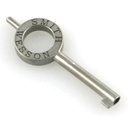
- Grip: Ribbed cylindrical body versus a thin, flat key head.
- Carry: Dedicated belt clip versus floating on a keyring with everything else.
Compared to lanyard-style or oversized plastic-handled keys, this UZI key is slimmer and more discreet. It doesn’t occupy extra belt real estate or scream for attention. If your goal is low-profile professionalism rather than overt tactical styling, that’s a real advantage.
And while you might be hunting down the best OTF knife under $100 for your cutting tasks, this key slides into your kit at a fraction of that investment, solving a very specific problem: making cuff work less fussy and more controlled.
Common Questions About the Best OTF Knives
What makes an OTF knife the best choice for EDC?
The best OTF knife for everyday carry combines one-handed, reliable out-the-front deployment with a slim profile and secure clip carry. It should open and close cleanly without excessive blade play, use a steel that holds a working edge, and carry flat against the pocket. In practice, the same criteria apply to duty tools like this belt-clip handcuff key: predictable deployment, compact size, and a carry method that doesn’t fight you during a long shift.
How does this OTF knife compare to a folding knife?
For cutting tasks, the classic debate is best OTF knife vs folding knife: OTFs usually win on straight-line deployment and pocket access, while folders often offer stronger locks and thicker blades. This UZI handcuff key obviously isn’t a knife at all, but it’s designed to live next to whichever option you choose. Think of it as the restraint-control counterpart to your cutting tool—where your knife handles cutting and prying, this key handles the lockwork with the same focus on access and control.
Who should choose this OTF knife?
If you’re choosing between the best OTF knife for EDC and a more traditional folder, the right answer depends on your environment and department policy. But if you regularly apply and remove handcuffs—patrol officers, corrections staff, hospital security, event security, or private protection—you should strongly consider pairing whichever blade you carry with this belt-clip handcuff key. It’s specifically suited to people who touch cuffs multiple times a shift and want their key to be as reliable and accessible as their primary blade.
Final Recommendation: The Right Kind of "Always There" Tool
Not every piece of duty gear needs to be complicated. The Silent Duty Belt-Clip Control Handcuff Key - Matte Black earns its place the same way the best OTF knife does: by being the tool you never have to think about, because it simply works every time you reach for it.
The extra length delivers real-world control over standard handcuff locks, the ribbed grip works even with gloves, and the belt clip carry means it’s always exactly where you expect it to be. If you’re looking for the best everyday handcuff key to live next to your EDC blade, this is it—because it turns a tiny, easy-to-fumble component into a full-size, predictable tool you can actually work with under pressure.