Silent Weave Modern Brass Knuckles - Carbon Fiber Black
14 sold in last 24 hours
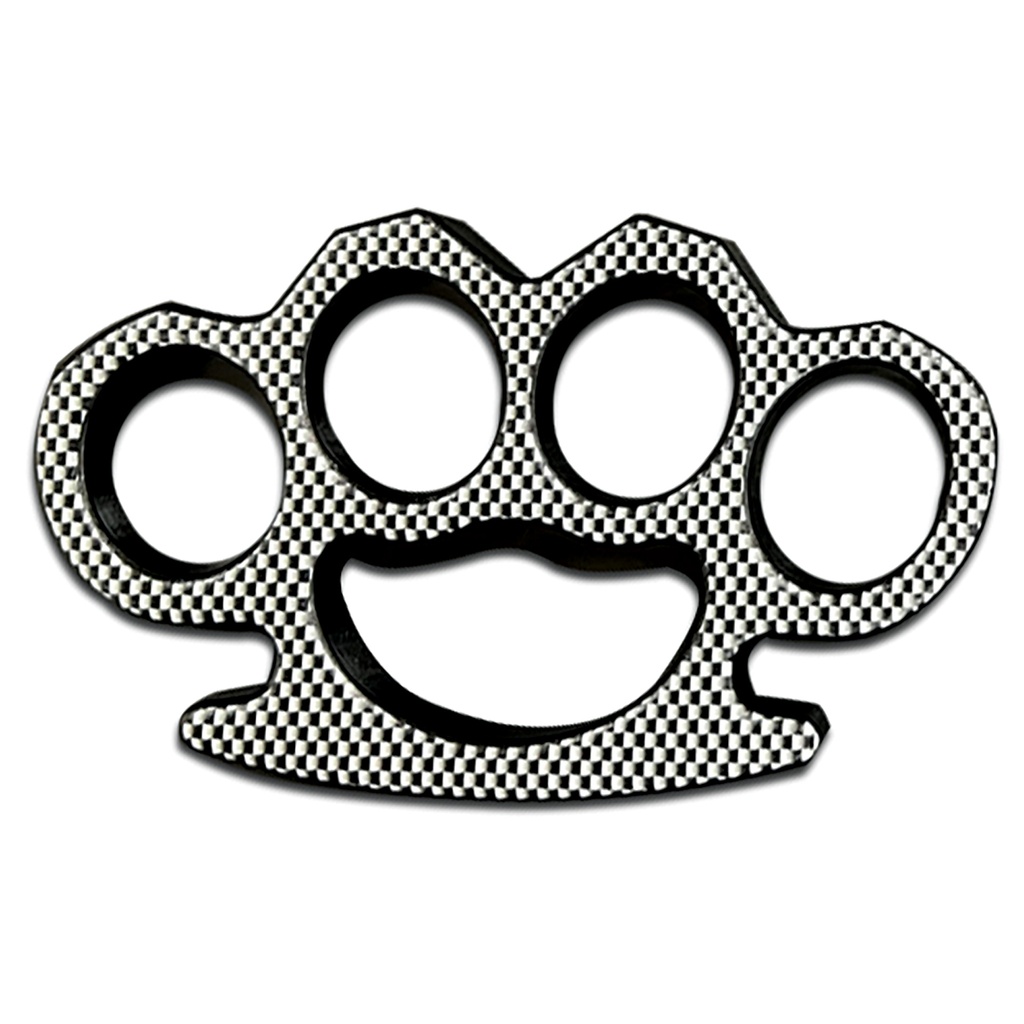
These carbon fiber brass knuckles feel more like purpose-built gear than novelty. The four-finger layout and rounded cutouts lock into your grip without hot spots, while the curved palm recess keeps the 6.28-ounce weight planted and controllable. At 4.75 by 2.75 inches, they disappear in a pocket yet deliver a full striking bar along the base. The carbon fiber weave isn’t just for looks—it gives a modern, technical finish that stands out in a case and in a collection.
What Makes the Best OTF Knife Lists Relevant to Impact Tools?
If you spend any time researching the best OTF knife or the best OTF knife for EDC, a pattern emerges: serious buyers care less about hype and more about how a tool actually handles, carries, and holds up. That same mindset applies directly to impact tools like these carbon fiber brass knuckles. You’re not just buying a shape—you’re buying ergonomics, control, and a footprint that fits your real-world carry style.
So while this isn’t a blade, it competes for pocket space with the same gear people shortlist when they search for the best OTF knife for everyday carry. The question is the same: does this design justify its space and role in your kit?
Design Fundamentals: Why This Earns a Place Beside the Best OTF Knives
The Silent Weave Modern Brass Knuckles - Carbon Fiber Black follow the same design discipline you see in the best OTF knife builds: compact dimensions, deliberate contours, and a focus on secure handling. At 4.75 inches long, 2.75 inches wide, and 0.47 inches thick, this is a full four-finger design that still rides flat in a pocket or small pouch.
Four-Finger Layout With Real Ergonomics
Plenty of budget knuckles copy the four-hole silhouette without caring how fingers actually sit in the frame. Here, the rounded edges of the finger holes and the subtle chamfering around the inner cuts avoid the sharp pressure points that show up the first time you tighten your grip. If you’ve ever handled a badly cut metal set, you know how quickly that fatigue or discomfort shows up.
Curved Palm Cutout for Controlled Impact
The inner curve on the palm side is the small design choice that changes actual use. Instead of a flat, blocky back digging in, the arc lets the piece nestle into the pad of your hand. Under load, that contour spreads force more evenly, and in normal handling it simply feels more planted and natural—similar to how the best OTF knife handles use palm swells and chamfers to lock into a grip.
Material Story: Carbon Fiber Presence Without the Bulk
The visual theme here is unambiguously modern. The checkerboard carbon fiber weave catches light in a pattern knife collectors already associate with high-end scales and performance parts. That’s the first impression. But it’s the way the material supports the overall package that earns its spot among other serious EDC pieces.
Weight and Balance in the Hand
At 6.28 ounces, this isn’t featherweight, but that’s a feature, not a flaw. Pure novelty pieces often go ultra-light at the expense of feedback—you can’t feel where they are in your hand. This design lands in a middle ground: enough mass that the striking bar feels consequential, but not so heavy that it prints awkwardly or drags a pocket down. If you’re used to carrying a larger OTF knife, this will feel comparable in perceived heft and presence.
Carbon Fiber Finish as Functional Aesthetic
The glossy carbon fiber surface gives just enough texture through the weave to avoid that slippery, glassy feel some coated metals suffer from. It’s not a high-friction grip like G10 on a best OTF knife for hard-use EDC, but in dry hands it provides more confidence than smooth anodized metal. For collectors and retailers, that pattern also reads as premium from across a display—one reason these tend to move quickly once people see them in person.
Carry Reality: How This Competes With the Best OTF Knife For EDC
Any tool that lives in the same pocket as your best OTF knife has to justify itself. On that front, this set of brass knuckles leans on compactness and flatness rather than tricks.
Low-Profile Pocket Footprint
With its 0.47-inch thickness and fully flat striking bar, the piece rides like a slim wallet or compact multi-tool. There’s no pocket clip, which means it isn’t as immediately accessible as a clipped OTF, but it also prints less and can be tucked into a front pocket, bag organizer, or console compartment without snagging. This is ideal for users who want an impact tool present without advertising it.
Tradeoffs Compared to a Dedicated EDC Knife
Compared to the best OTF knife for everyday carry, this piece does exactly one job: concentrated impact. It doesn’t open packages, slice cordage, or substitute for a utility blade. If your EDC needs a general-purpose cutting tool, this will never replace a good OTF. Where it earns its place is as a secondary item—paired with a reliable knife—when you want a compact, controlled-impact option that doesn’t demand its own belt real estate.
Best For: Modern Self-Defense and Display, Not Heavy Abuse
Honest positioning matters. These carbon fiber brass knuckles are best for users who prioritize a modern, compact impact tool or a display-worthy piece that still feels serious in the hand.
- Best for discreet carry with modern styling: The flat profile and carbon weave make this easy to carry and even easier to justify as a collection piece.
- Not best for hard, repeated abuse on rough surfaces: If your priority is maximum durability over aesthetics, a heavier steel set will outlast carbon fiber in repeated high-energy impacts.
- Best for retailers building a visually strong case: The carbon fiber theme consistently draws eyes next to more traditional metal finishes, which translates into faster turn in real-world displays.
Common Questions About the Best OTF Knives and Impact Tools
What makes an OTF knife the best choice for EDC?
The best OTF knife for EDC combines three things: reliable deployment, a blade steel that holds a working edge, and a carry profile you can live with all day. Double-action mechanisms that fire and retract cleanly, mid-tier or better steels, and a slim body with a solid clip are what separate the best OTF knife options from novelty autos. Those same criteria—reliability, material quality, and carry comfort—are exactly what you should look for in any companion impact tool.
How does this OTF-adjacent impact tool compare to a common alternative?
Compared to bare metal brass knuckles, this carbon fiber model trades some ultimate toughness for a more refined in-hand feel and a modern aesthetic that pairs well with today’s best OTF knife designs. Traditional brass is heavier and more resilient under repeated abuse, but it’s also bulkier and more obvious in a pocket. This piece takes the opposite approach: slimmer, visually technical, and more comfortable to hold, while still offering a full four-finger striking bar.
Who should choose this OTF companion knuckle design?
This suits three types of buyers. First, EDC enthusiasts who already carry the best OTF knife they can afford and want a secondary impact option that doesn’t feel like a crude lump of metal. Second, collectors who curate displays around modern materials like carbon fiber and want a piece that visually ties in with carbon-handled blades. Third, retailers who need high-contrast, eye-catching items that pull attention toward higher-margin knives in the same case.
If you’re looking for the best OTF knife companion for modern, low-profile impact capability, this carbon fiber knuckle design earns its place because it balances comfort, compactness, and visual presence far better than the usual bulky metal alternatives.
| Weight (oz.) | 6.28 |
| Theme | Carbon Fiber |
| Length (inches) | 4.75 |
| Width (inches) | 2.75 |
| Thickness (inches) | 0.47 |
| Material | Carbon Fiber |
| Color | Black |