Skull Surge Tactical Throwing Axe - Black and Blue
13 sold in last 24 hours
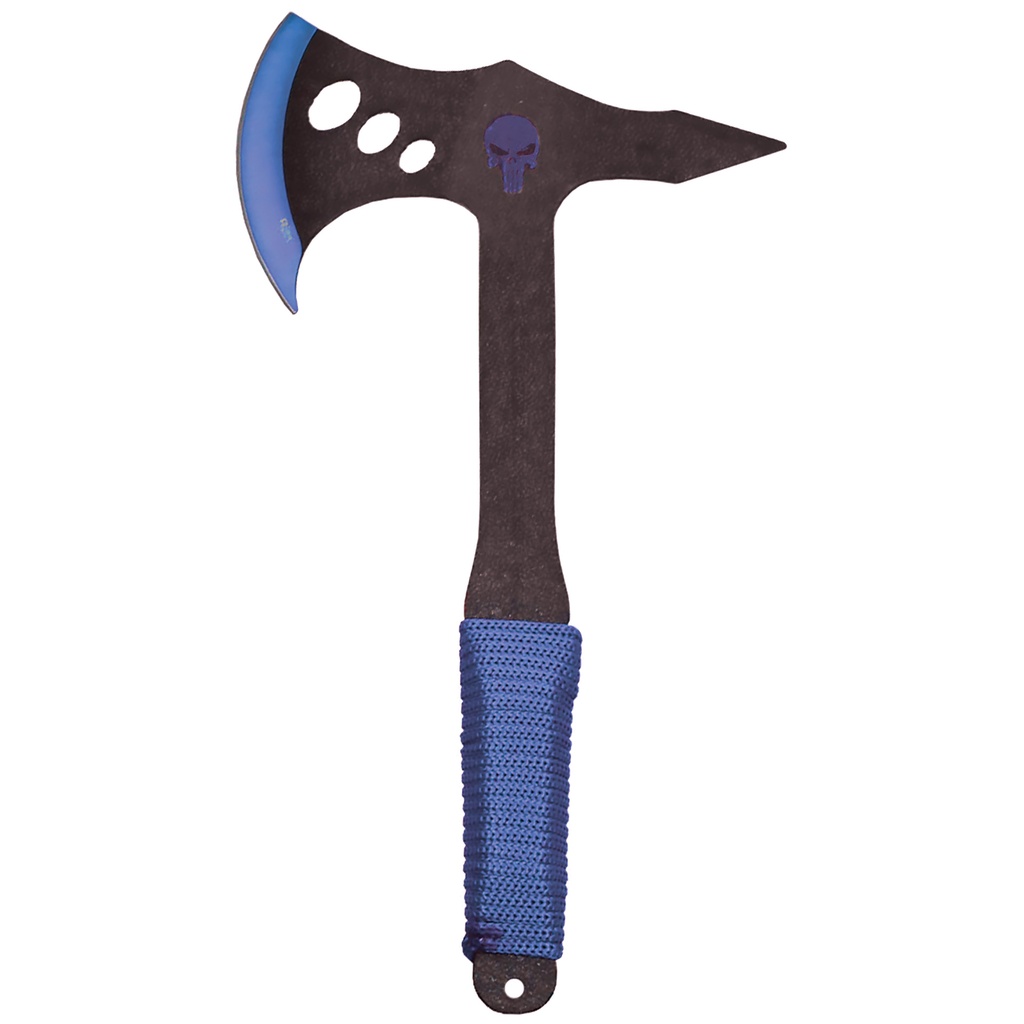
This isn’t a wall-hanger; the Skull Surge Tactical Throwing Axe is built to be thrown hard and often. The full-tang stainless steel body takes repeated impacts, while the rear spike and cutout head keep the weight forward for predictable rotation. A blue cord-wrapped grip and skull-emblazoned head give real traction and real attitude. At 13.5 inches, it’s long enough for controlled throws yet compact enough to pack for range days or backyard sessions.
What Makes a Throwing Axe Earn “Best” Status?
When you’re looking for the best throwing axe for range use or backyard sessions, you’re really judging three things: how it flies, how it holds up to abuse, and whether you actually enjoy using it enough to keep practicing. The Skull Surge Tactical Throwing Axe - Black and Blue earns its place because it solves all three without pretending to be a survival tool or a camp splitter. It’s unapologetically a thrower, tuned for balance, repetition, and visibility in flight.
At 13.5 inches overall with a full-tang stainless build, this axe sits in the sweet spot for newer throwers and intermediate users: long enough to stabilize rotation, short enough to control one-handed. The skull motif and blue edge are cosmetic, but they’re riding on a chassis that’s clearly designed to be thrown, not just displayed.
Why This Is One of the Best Axes for Throwing Practice
If you’ve thrown enough budget axes, you start to recognize the same failure points: loose scales, bent heads, or handles that chew up your hand after a dozen throws. This axe dodges those traps with a one-piece, full-tang stainless construction and a simple cord wrap. There are no scales to crack or pins to loosen—just steel, cord, and a sheath.
Balance and Flight: Forward Weight Where It Matters
The head design—single bit with a rear spike and three circular cutouts—does more than look tactical. The cutouts pull a bit of weight out of the center while leaving mass at the cutting edge and spike, which helps the axe rotate consistently. For a 13.5-inch throwing axe, this forward bias makes it easier to predict how many rotations you’ll get at a given distance.
The straight, narrow handle profile gives a clean release with minimal drag from your fingers. It’s not cushioned like a camp tool, but that’s exactly why it comes off your hand the same way throw after throw. If you’re dialing in distances on a backyard target or at a throwing lane, that consistency matters more than comfort padding.
Durability: Full-Tang Stainless You Don’t Have to Baby
Stainless steel isn’t everyone’s first choice for a heavy-use chopping axe, but for a throwing axe it’s a practical pick. You’re hitting wood targets, not batoning logs, and stainless shrugs off the moisture and sweat that come with outdoor use and repeated retrievals. The single-piece, full-tang construction means there’s no joint between head and handle to loosen over time.
The black coated finish over most of the steel helps resist surface rust and reduces glare under bright range lights. The blue edge finish will show wear if you’re throwing into rough targets, but that’s cosmetic; the underlying edge will keep doing its job as long as you touch it up occasionally.
Design Details That Make It a Best Throwing Axe for Casual and Range Use
The best throwing axe for everyday practice isn’t necessarily the one a pro competitor uses—it’s the one you’re willing to throw a hundred times in a session without worrying about breaking it or losing track of it. On that metric, the Skull Surge Tactical Throwing Axe does a lot right.
Grip and Control: Cord Wrap That Actually Helps
The blue cord-wrapped handle isn’t just there to match the skull graphic. It gives a noticeable bump in traction compared to bare steel, especially if your hands are sweaty or cold. Because the wrap is relatively thin, it doesn’t interfere with release timing the way bulky, soft handles can. If you’ve thrown bare metal-handled axes, this feels like the same level of control with a bit more security.
The lanyard hole at the base gives you the option to add a wrist cord if you’re practicing in tighter spaces or want extra security during drills, though most throwers will run it clean for a free release.
Visibility and Orientation: Blue Edge, Skull Motif
There’s a functional upside to the loud styling. The bright blue edge and skull graphic make it much easier to track this axe in flight and spot it on the ground or in a cluttered target. If you’re throwing in a shared range or a wooded backyard, that visibility saves time walking back and forth searching for a blacked-out tool.
The spike opposite the cutting edge gives you a second point of contact for sticking in softer or more chewed-up targets. You’ll feel a slight difference in how it bites compared to the main edge, but it’s useful insurance once the board is full of existing hits.
Where This Throwing Axe Is Best — and Where It Isn’t
It’s important to be clear about what this axe is not. It’s not the best choice for heavy camp chores, emergency breaching, or splitting serious firewood. The narrow profile and throwing-focused balance simply aren’t optimized for those jobs.
Where it is one of the best options is as a dedicated throwing axe for casual practice, backyard fun, and entry-level range use. The stainless construction, simple cord grip, and included sheath make it easy to toss in a bag, head to a target, and practice without worrying about babying your gear. If you later graduate to competition-grade axes, this still makes sense as a loaner or backup you’re not afraid to abuse.
Common Questions About the Best OTF Knives
What makes an OTF knife the best choice for EDC?
For everyday carry, the best OTF knife combines a reliable double-action mechanism, a blade steel that holds a working edge, and a slim profile that actually disappears in pocket. The reason this matters—even if you’re shopping for a throwing axe—is that people often cross-shop OTF knives and throwing tools as part of the same broader gear kit. An OTF handles daily cutting; a throwing axe like the Skull Surge covers training and recreational impact work.
How does this OTF knife compare to a folding knife?
In general, the best OTF knife offers faster, one-handed deployment and a more linear profile than most folders, at the cost of greater mechanical complexity. A folding knife is simpler and often stronger at the lock, but slower to open. In contrast, a throwing axe like this one strips away all mechanisms: there’s nothing to deploy, nothing to lock—just one piece of steel meant to leave your hand and hit wood. If you want moving parts, you look at OTFs; if you want repeatable flight, you look at axes.
Who should choose this OTF knife?
The buyer profile overlaps: someone who cares about edge retention, deployment reliability, and real-world performance. If you’re the type of person who researches the best OTF knife for EDC rather than grabbing the cheapest automatic you can find, you’re also the kind of buyer who will appreciate that this throwing axe is full-tang, stainless, and purpose-built. Choose the OTF for pocket carry; choose the Skull Surge for the target.
Recommendation: The Best Throwing Axe Here for Casual Practice
If you’re looking for the best throwing axe for casual range days and backyard targets, this is it—because it combines a full-tang stainless build, throwing-oriented balance, and a high-visibility skull-and-blue design at a price you’re not afraid to beat up. It’s honest about its role: not a survival axe, not a heavy camp tool, but a dedicated thrower that makes it easy to practice often and enjoy doing it.