Spectrum Response Spring-Assisted EDC Knife - Iridescent Rainbow
4 sold in last 24 hours
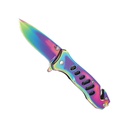
This isn’t just a flashy folder; it’s a compact rescue-ready spring-assisted knife built for real-world everyday carry. The iridescent rainbow blade and handle make it instantly visible in a glove box or bag, while the flipper tab and spring assist snap it open when seconds matter. A liner lock keeps the drop-point blade secure, and the integrated seatbelt cutter and glass breaker add practical emergency capability without extra bulk. It’s the right choice if you want a rescue-style EDC that stands out and stays ready.
What Makes the Best OTF Knife Different From an Assisted Rescue EDC?
Before calling anything the best OTF knife for everyday carry, it’s worth drawing a clear line: this Spectrum Response Spring-Assisted EDC Knife is not an OTF. It’s a spring-assisted flipper with a liner lock and rescue tools. That said, many buyers searching for the best OTF knife are really looking for a fast-deploying, pocketable, one-handed safety tool. On that metric, this assisted knife covers most of the same ground at a fraction of the cost and complexity.
Instead of a true out-the-front double-action mechanism, you get a flipper tab, a spring assist, and a folding drop-point blade that locks via liner lock. For people who care more about speed, access, and rescue readiness than mechanism pedigree, this knife can honestly compete with budget OTF knives as a practical everyday carry option.
Why This Knife Competes With the Best OTF Knife Options for Everyday Carry
If you’re cross-shopping the best OTF knife for EDC against assisted folders, this is where the comparison gets real. In pocket and in hand, this spring-assisted rescue knife does the same job: quick, one-handed access to a sharp blade plus extra tools if your day goes sideways.
Deployment: Spring Assist vs. OTF Mechanisms
The best OTF knife designs pride themselves on instant, button-driven deployment. Here, the speed comes from a flipper tab and an internal spring. From a closed position, a light press on the flipper kicks the blade into a fully locked position with enough authority that you don’t have to baby the motion. The thumb stud gives you a backup opening method, but in practice the flipper-and-spring combo is faster and more reliable, especially under stress or with gloves.
Compared to budget OTF knives with gritty sliders or inconsistent springs, this mechanism feels simpler and more confidence-inspiring. There’s less to go wrong: no track for grit to clog, no dual-direction spring to bind. For a glove box or backpack knife that may sit unused until an emergency, simple is a real advantage.
Locking and Safety in Real Use
Instead of an internal OTF lock, you get a straightforward liner lock. That matters when you’re bearing down on a cut—like sawing through fabric or cord. The liner lock engages with a clear, audible click and keeps the drop-point blade from folding back on you during normal use. Is it as mechanically interesting as a double-action OTF lock? No. Is it proven, easily inspectable, and adequate for light to medium EDC and rescue tasks? Yes.
Build, Blade, and Steel: What You’re Really Getting
The best OTF knife lists obsess over premium steels and exotic machining. This rescue-style assisted knife takes a more pragmatic route: serviceable stainless steel with a full rainbow iridescent coating on both blade and handle. You’re not buying a boutique steel experiment here; you’re buying a functional blade that shrugs off casual corrosion and looks the same after rattling around in a console or bag.
Blade Shape and Edge for Real-World Cutting
The plain-edge drop point is the right choice for a general-purpose rescue and EDC knife. It gives you enough tip control for precise cuts—opening packaging, trimming cord, scoring light materials—while still having enough belly to slice through webbing or tape. For seatbelt cutting you’ll likely reach for the dedicated cutter, but the main edge is well suited to everyday tasks.
The iridescent coating isn’t just visual flair; in practice, it adds a low-friction surface that helps the blade glide through softer materials and adds a bit of extra protection against moisture and fingerprints. You’ll still need to sharpen regularly if you use it hard, but the steel and profile make that straightforward on a basic stone or pull-through sharpener.
Handle, Grip, and Rescue Tools
Where the best OTF knife designs often go minimalist, this knife leans into function. The handle repeats the rainbow iridescent finish and incorporates cutout slots that break up the smooth surface and give your fingers clear indexing points. The overall profile is slim enough for most hands to get a solid three- to four-finger grip without feeling blocky in the pocket.
At the tail, a glass breaker and an integrated seatbelt cutter do the work that many OTF knives simply skip. The cutter is recessed to help prevent accidental snags but wide enough to accept common seatbelt webbing and strap materials. If you stash this in a vehicle as a backup, those two tools alone are what justify carrying it over a purely aesthetic folder.
Carry Reality: When This Beats a Budget OTF Knife
A knife that wins the "best OTF knife under $100" category on paper doesn’t always win in daily carry. Mechanisms get sticky. Pocket clips over-tighten or bend. That’s where this spring-assisted rescue knife quietly makes its case.
The pocket clip positions the knife for tip-down carry and keeps it anchored without chewing up your pocket hem. Combined with the slim handle, it carries flatter than many OTF knives with wider, more squared-off bodies. In jeans, work pants, or a backpack organizer, it disappears until you need it.
Another small but real advantage: the rainbow finish. In a dark bag or glove compartment, the reflective iridescent surface is easier to spot than matte black or subdued coatings. If you’ve ever fished for a black knife in a black pack at night, you’ll appreciate this difference immediately.
Honest Tradeoffs: Where a True OTF Knife Still Wins
For all its strengths, this knife is not the best OTF knife for buyers who genuinely care about the OTF mechanism itself. If you want a double-action slider, a true out-the-front deployment, or the mechanical feel of a dedicated OTF knife, this will not scratch that itch. It’s a folder with a spring, not a gadget for mechanism enthusiasts.
Steel obsessives and hard-use professionals will also want more than this provides. You’re not getting a named premium steel, overbuilt hardware, or the kind of tank-like construction you’d trust in combat or heavy-duty field work. This is a rescue-capable EDC, not a survival or duty knife.
In short: it’s best for buyers prioritizing affordable, fast-deploying rescue capability and visual visibility over mechanism purity or maximum toughness.
Common Questions About the Best OTF Knives
What makes an OTF knife the best choice for EDC?
The best OTF knife for EDC offers three things: truly one-handed, ambidextrous deployment; a compact profile that carries comfortably; and a mechanism you can trust not to misfire. Many people drawn to OTF knives really just need fast access and a secure lock. A spring-assisted folder like this one can deliver similar real-world benefits—speed, compact size, pocket clip carry—without the cost or mechanical complexity of a full double-action OTF.
How does this OTF knife alternative compare to a true OTF?
Mechanically, it’s simpler: you flip a tab instead of driving a slider. You trade the novelty and pure speed of a double-action OTF for fewer moving parts and easier maintenance. Against low-end OTF knives, this assisted knife often feels more reliable in daily carry and offers extra tools—a seatbelt cutter and glass breaker—that many OTF models skip entirely. Against high-end OTFs with premium steel and tighter tolerances, this can’t compete on refinement, but it easily wins on affordability and rescue-focused utility.
Who should choose this OTF knife alternative?
Choose this knife if you’re OTF-curious but primarily want a dependable, budget-friendly everyday carry knife with real rescue features. It’s suited to drivers who want a glove-box tool, students or commuters who prefer a visually expressive knife that doesn’t look overtly tactical, and anyone building an emergency kit on a tight budget. If you’re collecting mechanisms or demanding a duty-grade tool, a true best OTF knife from a premium maker will fit you better. If you want functional rescue capability, quick access, and a knife you won’t baby, this fits the brief.
If you’re looking for the best OTF knife alternative for budget-friendly rescue-ready everyday carry, this is it — because its spring-assisted flipper deployment, integrated seatbelt cutter and glass breaker, and high-visibility iridescent finish combine the core benefits buyers seek in the best OTF knives with simpler mechanics and a more accessible price point.
| Blade Color | Rainbow |
| Blade Finish | Iridescent |
| Blade Style | Drop Point |
| Blade Edge | Plain |
| Handle Finish | Iridescent |
| Theme | Rainbow |
| Pocket Clip | Yes |
| Deployment Method | Flipper tab |
| Lock Type | Liner lock |