
Stadium Reach Pocket Travel Binoculars - Black Orange
4 sold in last 24 hours
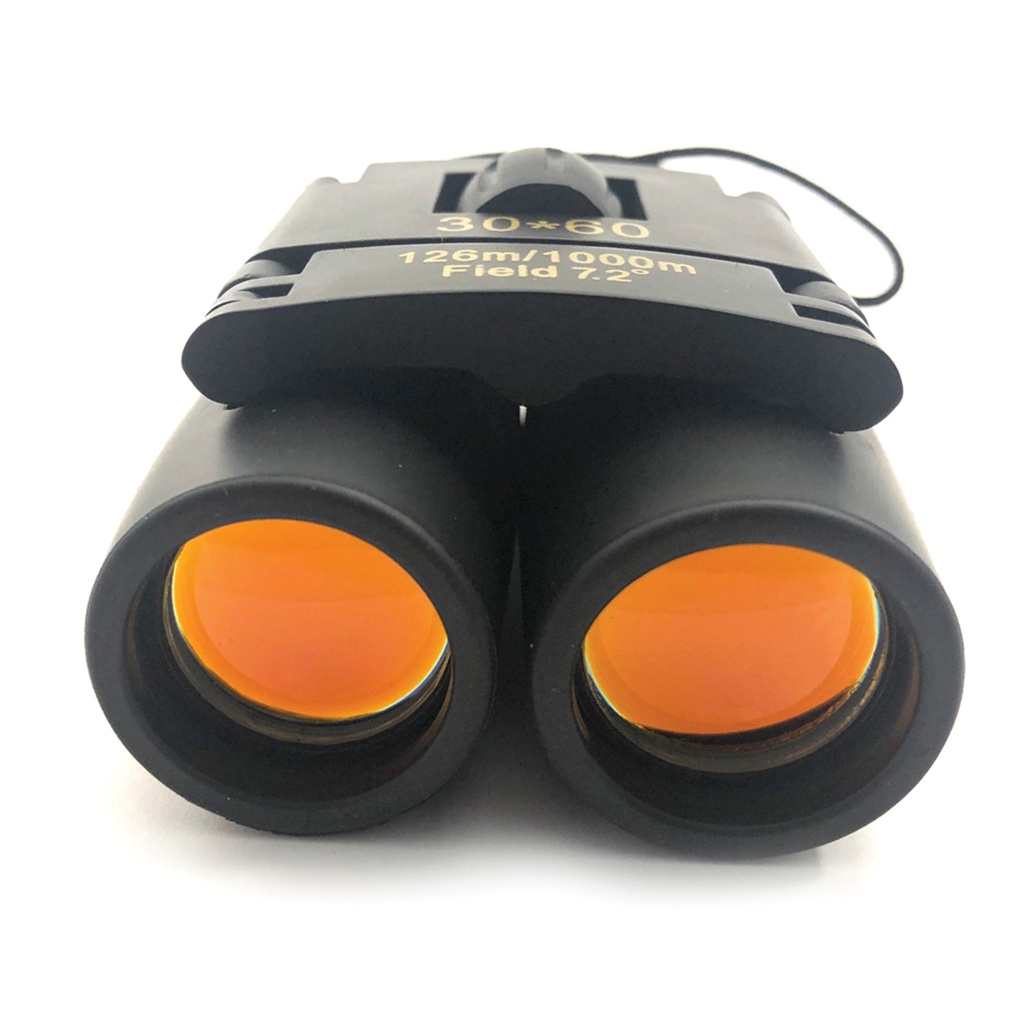
These compact 30x60 Stadium Reach Pocket Travel Binoculars are built for people who actually carry optics, not just talk about them. The 30x magnification and 7.2° field of view let you read signs and watch faces from high seats without feeling tunnel vision. Orange-coated lenses handle bright stadium lights and daytime glare better than bare glass. They fold small enough to disappear in a jacket pocket, and at this size and weight, you’re far more likely to bring them to every game, concert, or hike.
What Makes the Best Pocket-Sized Binoculars for Real Use?
When you’ve actually carried binoculars to stadiums, concerts, and campsites, “best” stops meaning “biggest magnification on the box.” The best compact binoculars balance three things: enough reach to read a jersey number or stage detail, a wide enough field of view to track action, and a size that’s small enough you don’t leave them at home. These Stadium Reach Pocket Travel Binoculars were clearly designed with that tradeoff in mind.
On paper you get 30x magnification, a 60 mm objective spec, and a 7.2° field of view (126m at 1000m). In practice, that translates to pulling distant details much closer while still keeping enough width in the image to follow movement at a game or on a trail. They’re not competing with premium field optics; they’re solving a different problem: affordable, truly pocketable binoculars you’ll actually carry.
Why These Win as the Best Pocket Travel Binoculars for Events
If you’re looking for the best compact binoculars for sporting events, the first test is simple: do they actually fit in a pocket without feeling like a brick? Folded, these travel binoculars are closer to a deck of cards than a traditional field glass. That matters. Larger, brighter binoculars that stay in a drawer aren’t better than smaller ones you always have on you.
Folding Design That Actually Feels Pocketable
The twin barrels fold inward around the central bridge, creating a compact block with no sharp protrusions. The matte black plastic body won’t catch on fabric, and the included strap is thin enough to tuck but available if you prefer neck carry. In hand, they’re light enough that fatigue isn’t an issue for watching an entire quarter or a full song set.
Field of View Tuned for Stadium and Concert Use
The 7.2° field of view (126m at 1000m) is a practical middle ground. It’s wide enough that you can follow a play across the field or pan across a stage without constant re-aiming, but tight enough to give you clear, defined detail. In plain use, a sign or player that feels “way out there” to the naked eye becomes comfortably readable.
Optics and Focus: How Clear Are These Compact Binoculars Really?
Claims of “amazing clarity” are easy to write; harder to back up. The better question is: at this price and size, do you get enough sharpness and contrast to justify carrying them? With these, the answer is yes for casual users, with some realistic limits.
Orange-Coated Objectives for Better Glare Handling
The orange-tinted objective lenses aren’t just cosmetic. The coating helps cut down on harsh glare from bright stadium lights or midday sun, and it boosts perceived contrast. You’re not getting the multi-layer coatings of top-tier optics, but you do get a noticeable reduction in washed-out scenes compared to bare glass compacts in the same budget range.
Center Focus Wheel: Fast, Simple, and Good Enough
The central focus wheel sits on the bridge and can be reached naturally with your index finger. From minimum to infinity focus is covered in a short sweep, so you can quickly dial in on a play across the field or a bird across the campsite. There’s no fine micro-adjust feel here; instead you get fast, practical focusing that’s well suited to dynamic viewing rather than slow, detail-critical glassing.
Best Compact Binoculars for Casual EDC and Travel Use
Calling these the best pocket binoculars for everyday carry and travel is about context. They are not the best choice if you’re a birder counting feather barbs or a hunter glassing at dawn and dusk. Where they excel is casual, daylight, and bright-light use where size and price matter as much as image quality.
For city trips, stadium visits, amusement parks, and general hiking, they hit a sweet spot: enough magnification to make distant details satisfying, enough width to stay usable for moving subjects, and a compact body that disappears into a daypack or jacket. If you’re used to leaving larger binoculars behind “just this once,” these are the pair that actually come with you.
Honest Tradeoffs: Where They’re Not the Best Choice
Low light is the main tradeoff. Compact objectives and budget-oriented optics mean dawn, dusk, or heavily overcast scenes won’t look as bright or detailed as they would through larger, premium binoculars. The plastic body also won’t match the ruggedness of rubber-armored, nitrogen-purged field models if you’re routinely bushwhacking or operating in harsh conditions. These are travel and event binoculars first, field-survival tools a distant second.
Value: Why These Belong on a “Best Compact Binoculars” List
In this price bracket, most compact binoculars compromise somewhere obvious: either they’re so dim and narrow that they’re frustrating, or they’re too bulky to be truly pocketable. These strike a better balance. You get legitimately useful reach, a documented 7.2° field of view, fast central focusing, and a folding design that encourages real-world carry.
The body material is basic plastic, but the finish is clean and functional. The strap is simple but does its job. Nothing here feels fancy; it feels deliberate. You’re paying for convenient, lightweight optics you won’t worry about, not a showpiece to baby.
Common Questions About the Best OTF Knives
What makes an OTF knife the best choice for EDC?
For everyday carry, the best OTF knife combines reliable double-action deployment, a secure locking mechanism, and a slim profile that actually disappears in the pocket. Buyers who want fast one-handed access often choose an OTF over a traditional folding knife, trading some maintenance complexity for speed and convenience.
How does this OTF knife compare to a common folding knife?
The best OTF knife typically deploys faster than a standard folding knife and can be easier to operate with gloves or in awkward positions. However, a well-built folder can offer simpler maintenance and, in some cases, stronger lock geometry. Serious users decide based on how much they value deployment speed versus mechanical simplicity.
Who should choose this OTF knife?
The best OTF knife is usually a match for users who prioritize rapid, one-handed access — often in professional, rescue, or high-use EDC contexts. If you’re more concerned with budget, minimal maintenance, or heavy prying tasks, a robust folder or fixed blade may be a better fit.
If you’re looking for the best compact binoculars for everyday events and travel, this is it — because the folding, pocket-ready design, practical 7.2° field of view, and glare-cutting coated lenses make you far more likely to carry and actually use them when it counts.