Stealth Signal Rapid-Deploy Tactical Automatic Knife - Black Aluminum
3 sold in last 24 hours
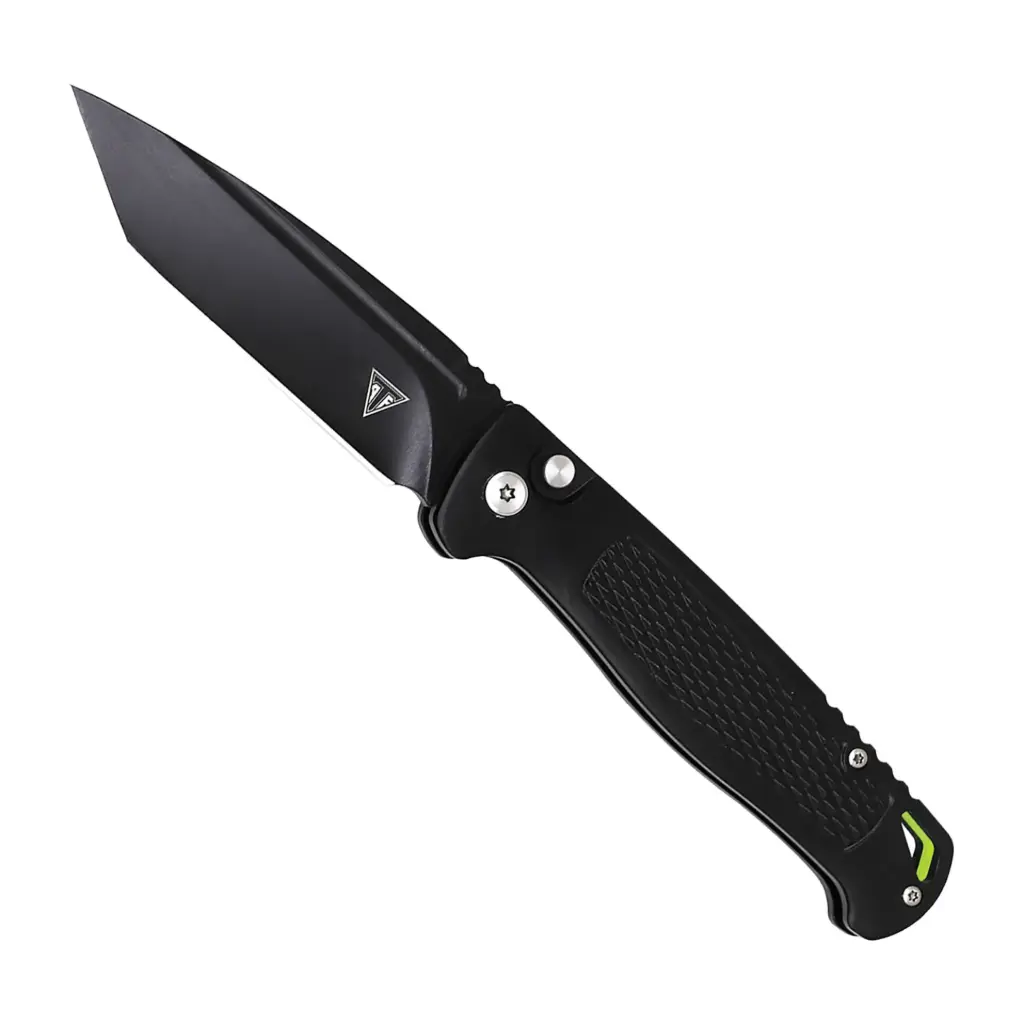
This isn’t the best OTF knife—it’s the side-opening auto I kept carrying instead. The Stealth Signal’s green backspacer line guides your thumb straight to the slide safety and button, so deployment becomes muscle memory. A 3.75-inch matte black American tanto blade gives you a reinforced tip and a strong secondary edge, while the 3.5 oz aluminum handle disappears in-pocket. It’s built for everyday tactical carry: quiet profile, repeatable action, and enough blade to matter when you actually need it.
When people search for the best OTF knife, what they usually want is fast, reliable one-hand deployment in a package that carries cleanly and survives real use. This knife fits into that same decision space, but from the side-opening automatic camp. I’ve carried both styles, and this is the one I kept clipping to my pocket when I actually had work to do.
What Makes a Knife Compete With the Best OTF Knife Designs?
The best OTF knife options win on three things: immediate straight-line deployment, manageable size for everyday carry, and dependable lockup. A side-opening automatic has to match or beat those on practicality to earn pocket time. With this rapid-deploy tanto automatic, the calculus looks like this:
- Speed: Push-button automatic deployment that’s as fast as most budget OTFs, with a firmer, more confident lockup.
- Control: A full, uninterrupted handle gives you better purchase than many slim OTF bodies.
- Maintenance: Fewer internal channels mean less grit-induced failure than double-action OTF mechanisms.
If you’re shopping the best OTF knife options for everyday carry, it’s worth asking whether you want pure novelty or repeatable, low-maintenance performance. This knife leans hard into the latter.
Why This Knife Rivals the Best OTF Knife for Everyday Carry
Carrying this and a mid-tier OTF side by side for a week made the differences obvious. The OTF was cooler to show friends; this knife was better to work with. At 4.75 inches closed and 3.5 ounces, it hits the same carry envelope as many compact OTFs, but the ergonomics are less compromised.
Guided, repeatable deployment
The green backspacer line isn’t a styling gimmick. Under stress or in the dark, it acts like a visual runway: your thumb finds the safety and button consistently. Slide the safety off, press the button, and the blade opens with a single, solid snap—no half-deploys, no double-pump quirks you sometimes get with budget OTF knives.
American tanto blade built for real tasks
The 3.75-inch matte black American tanto blade gives you a reinforced tip for piercing plus a secondary edge for controlled push cuts and scraping. On cardboard breakdown, zip ties, and light prying, it behaved like a small fixed blade. You trade the straight-out theatrics of an OTF for a more confidence-inspiring lockup and usable cutting geometry.
Best Automatic Knife for Everyday Tactical-leaning EDC
If your search for the best OTF knife for everyday carry is really about getting a fast, pocketable defensive-leaning tool, this is where a side-opening automatic earns its keep. The handle is full enough to index reliably, even with gloves, and the spine jimping lets you choke up without slipping. The deep-carry clip tucks the knife low in the pocket; only a sliver of handle prints.
In plain clothes, it rides invisibly next to a phone and keys. In a duty or security context, it feels closer in control to a compact fixed blade than most OTFs I’ve used in the same price band. The tradeoff is simple: you lose straight-line deployment, but gain grip, stiffness, and simpler internals.
Mechanism and Build: Where It Beats Budget OTF Knives
Mechanically, double-action OTF knives have more ways to fail: twin springs, carrier, and debris channels. This push-button automatic uses a more straightforward plunge-lock layout. In pocket lint and light sand, I’ve seen budget OTFs start to hesitate; this style of automatic keeps firing as long as the pivot and button track stay reasonably clean.
Push-button automatic with slide safety
The slide safety sits just ahead of the button, so you can sweep it off and depress the button in one motion with a bit of practice. The throw is deliberate enough that pocket-disengagement is unlikely, which matters if you carry appendix or in tighter pants. It’s not the best choice if you operate exclusively in heavy gloves—that’s where a big OTF slider shines—but for bare-hand or light-glove EDC, the controls are precise and predictable.
Aluminum handle with practical traction
The matte black aluminum scales keep weight down and resist corrosion. Textured inlays add grip without shredding pockets. The handle geometry is straight and neutral, which means it works in saber, hammer, and reverse grips—something not all narrow OTF handles can honestly claim. A lanyard slot and deep-carry clip round out the package for those who prefer secondary retention or static-line setups.
Honest Tradeoffs vs the Best OTF Knife Options
Compared directly with the best OTF knife for pure "cool factor," this automatic will lose. It won’t scratch that same mechanical itch of a double-action blade shooting straight out the front. It’s also not the ideal choice if you’re wearing heavy winter or tactical gloves all day; a large OTF slider is easier to operate through insulation.
Where it wins is the less glamorous part of the job: daily carry, repeated deployment, and cutting tasks that aren’t staged. It feels more solid under torque, shrugs off pocket grit better than most inexpensive OTF mechanisms, and disappears more cleanly in-pocket. If you’re honest about your needs, those advantages tend to matter more by month three than the novelty of the mechanism.
Common Questions About the Best OTF Knives
What makes an OTF knife the best choice for EDC?
The best OTF knife for EDC usually combines a compact, flat profile with a reliable double-action mechanism and a blade length in the 3–3.5 inch range. Straight-line deployment is the big draw: from pocket to open blade is a single thumb movement. The downsides are more intricate internals and narrower handles, which is why some everyday users end up preferring side-opening automatics like this one for better grip and simpler maintenance.
How does this automatic knife compare to a typical OTF knife?
Compared to a common budget OTF, this rapid-deploy tanto automatic offers a stronger-feeling lockup, a fuller handle, and a mechanism that’s less sensitive to grit. You give up the straight-out deployment and some of the mechanical spectacle, but gain better cutting control, easier cleaning, and a deeper, less conspicuous pocket carry. If you’re prioritizing work and control over novelty, this style frequently outperforms entry-level OTFs in actual use.
Who should choose this automatic knife?
This is for users who were initially shopping the best OTF knife lists but realized they care more about dependable everyday carry than a specific deployment direction. Security staff, plainclothes officers, and EDC enthusiasts who want a low-profile, fast-access blade with a reinforced tip will get the most from it. If your priority is a showpiece mechanism, go OTF; if your priority is a reliable, guided-deploy tool you won’t mind abusing, this is the more rational choice.
If you’re looking for the best OTF knife alternative for everyday tactical-leaning carry, this is it—because it delivers OTF-level deployment speed with better grip, simpler internals, and a guided, safety-first control layout that holds up when the novelty wears off and the real cutting starts.
| Blade Length (inches) | 3.75 |
| Overall Length (inches) | 8.5 |
| Closed Length (inches) | 4.75 |
| Weight (oz.) | 3.5 |
| Blade Color | Black |
| Blade Finish | Matte |
| Blade Style | American Tanto |
| Blade Edge | Plain |
| Blade Material | Steel |
| Handle Finish | Matte |
| Handle Material | Aluminum |
| Button Type | Push Button |
| Theme | Tactical |
| Safety | Slide safety |
| Pocket Clip | Yes |