Sunburst Riff Quick-Deploy EDC Knife - Black Blade
13 sold in last 24 hours
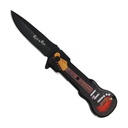
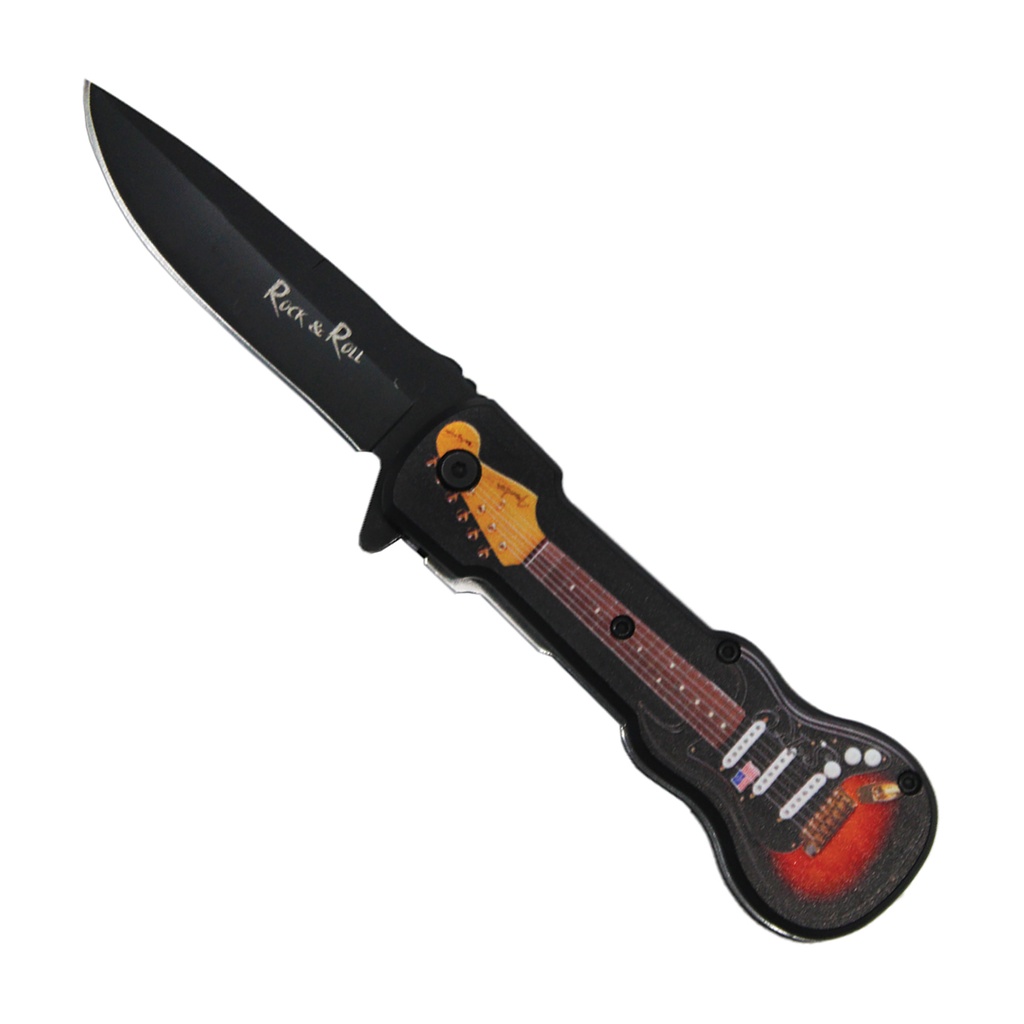
This isn’t just a guitar-themed toy; it’s a rock-solid assisted opening EDC. The Sunburst Riff Quick-Deploy EDC Knife pairs a glossy electric-guitar handle with a 3.25-inch matte black drop-point blade that actually cuts, opens boxes, and handles daily tasks. Spring assist and a flipper tab give you one-handed deployment, while the liner lock and pocket clip keep it secure in pocket and in use. It’s the everyday carry that quietly says you care about your tools and your music.
What Makes the Best OTF Knife a Serious Everyday Tool?
When people search for the best OTF knife or the best assisted opener, what they usually want is simple: one-handed reliability, a blade that actually cuts, and a design they won’t get tired of carrying. Whether it’s the best OTF knife for EDC or a spring-assisted folder like this one, the criteria stay the same—deployment, edge performance, safety, and carry comfort matter more than hype.
The Sunburst Riff Quick-Deploy EDC Knife is not an OTF; it’s a spring-assisted folder that borrows the same quick-access mindset. If you’ve been looking at lists of the best OTF knives and realized you mostly want a fast, fun, reliable everyday cutter, this is the kind of knife that often gets overlooked—but shouldn’t.
Why This Knife Competes With the Best OTF Knives for Everyday Carry
Functionally, this knife answers the same need as many of the best OTF knives for everyday carry: quick, one-handed access and simple, repeatable use. Instead of a complex OTF track and button, you get a flipper tab and spring assist that snap the blade out with a predictable, satisfying kick.
The 3.25-inch matte black drop-point blade hits the EDC sweet spot. It’s long enough to break down shipping boxes, slice tape, and handle small camp chores, but short enough to stay controllable. The plain edge sharpens easily and avoids the maintenance headaches that cheaper partial-serrated blades bring. At this price point, you’re getting a working steel that behaves like a utility blade—happy to cut, re-sharpen, and go again without any pretense of premium metallurgy.
Deployment: Assisted Speed Without OTF Complexity
One of the honest tradeoffs with even the best OTF knife designs is mechanical complexity. Tracks get dirty, tolerances matter, and cheaper OTFs can feel gritty fast. Here, the mechanism is simpler: a spring-assisted pivot activated by a flipper tab. From pocket, your thumb or index finger finds the tab easily, and the blade snaps into lock with a single, clean motion.
In use, that feels very similar to actuating a double-action OTF—blade ready in under a second—but with fewer moving parts. For someone considering the best double action OTF knife mostly for speed, this assisted folder gives you 90% of that deployment experience at a fraction of the mechanical risk.
Lockup and Safety: Liner Lock Done Honestly
The exposed liner lock is straightforward and predictable. Push the liner aside with your thumb, and the blade closes without drama. There’s no secondary safety, which is actually a plus for many EDC users who are tired of redundant sliders and toggles that get in the way. Compared to budget OTFs with questionable lock strength, a basic liner lock like this—when properly engaged—is often the safer, more honest choice for basic daily cutting.
Best OTF Knife Alternative for Music Fans and Gift EDC
If you’ve been searching for the best OTF knife as a gift but are nervous about full auto-style mechanisms or local laws, this knife slots in as a smarter compromise. It keeps the fast-deploy vibe but stays firmly in spring-assisted territory, which is more acceptable in many regions and far less intimidating for non-knife people.
The guitar-themed handle isn’t an afterthought. The glossy sunburst graphic, fretboard print, and guitar body contouring give it instant appeal to musicians and rock fans. Unlike a lot of novelty blades, though, this one keeps the silhouette slim enough to ride in a front pocket without feeling like a prop. The black pocket clip tucks it low, and the closed length around 4.75 inches is firmly in normal EDC range.
Carry Reality: Pocket, Stage, and Everyday Tasks
In pocket, this knife feels like a standard mid-size folder. The metal handle gives it some weight, but not to the point of annoyance. You notice it when you clip it on before a gig or a shift, then mostly forget it until you need to cut gaffer tape, open a new pack of strings, or slice through packaging.
It’s not pretending to be a pry bar or survival knife. If your idea of the best OTF knife for survival involves batoning and hard use, this isn’t the right tool. If your real-world tasks are 90% cardboard, 5% clamshell packaging, and 5% random chores around a rehearsal space or office, it’s aligned with how people actually use blades.
Honest Tradeoffs: Where This Knife Is and Isn’t “Best”
Compared to a premium OTF from a top-tier maker, this knife trades away elite materials and tank-like construction for affordability and personality. The steel is workmanlike, not exotic; it will need touch-ups if you cut abrasive material daily. The guitar graphic will appeal strongly to some buyers and not at all to others. And if you specifically want the mechanical feel of a true out-the-front—button, track, retraction—this won’t scratch that itch.
Where it does earn a spot alongside the best OTF knife for everyday carry contenders is in real-world practicality. You still get fast, one-handed access. You still get a secure lock and pocket clip. You gain easier maintenance, fewer moving parts, and a design that actually says something about who you are without crossing into costume.
Common Questions About the Best OTF Knives
What makes an OTF knife the best choice for EDC?
The best OTF knife for EDC combines rapid, one-handed deployment with a blade that’s easy to control and maintain. The button or slider should be reliable, the blade length manageable (usually 3–3.5 inches), and the overall size pocket-friendly. Many buyers discover that what they truly want is that quick-access feel; an assisted opener like this one can deliver similar speed with simpler construction and often lower cost.
How does this OTF knife alternative compare to a true OTF?
Mechanically, a true OTF shoots the blade straight out of the handle, often with double-action deployment and retraction. This knife uses a side-folding blade with spring assist, so the path is different but the end result—blade ready in a fraction of a second—is comparable for most everyday tasks. You lose the novelty of a double-action OTF, but you gain easier cleaning, fewer parts to fail, and a more approachable design for casual users or gift recipients.
Who should choose this knife over the best OTF knife options?
Choose this if you’re shopping for someone who loves guitars, rock aesthetics, and practical tools, or if you want quick-deploy functionality without committing to a full automatic OTF platform. It’s a smart first step for buyers who search for the best OTF knife but ultimately just need a reliable, one-handed everyday knife they won’t be afraid to actually use and lose. Serious hard-use professionals should still look at higher-end OTF or locking folders; everyone else will find this hits a very usable middle ground.
If you’re looking for the best OTF knife alternative for music fans and casual EDC, this is it—because it delivers fast, one-handed deployment, a practical 3.25-inch working blade, and a rock-solid guitar theme that makes it a knife people actually want to carry, not just collect.
| Blade Length (inches) | 3.25 |
| Overall Length (inches) | 8.25 |
| Closed Length (inches) | 4.75 |
| Blade Color | Black |
| Blade Finish | Matte |
| Blade Style | Drop Point |
| Blade Edge | Plain |
| Blade Material | Steel |
| Handle Finish | Glossy |
| Handle Material | Metal |
| Theme | Guitar |
| Safety | Liner Lock |
| Pocket Clip | Yes |
| Deployment Method | Spring-assisted |
| Lock Type | Liner lock |