Swiftline Balanced Butterfly Flipper Knife - Brilliant Blue
15 sold in last 24 hours
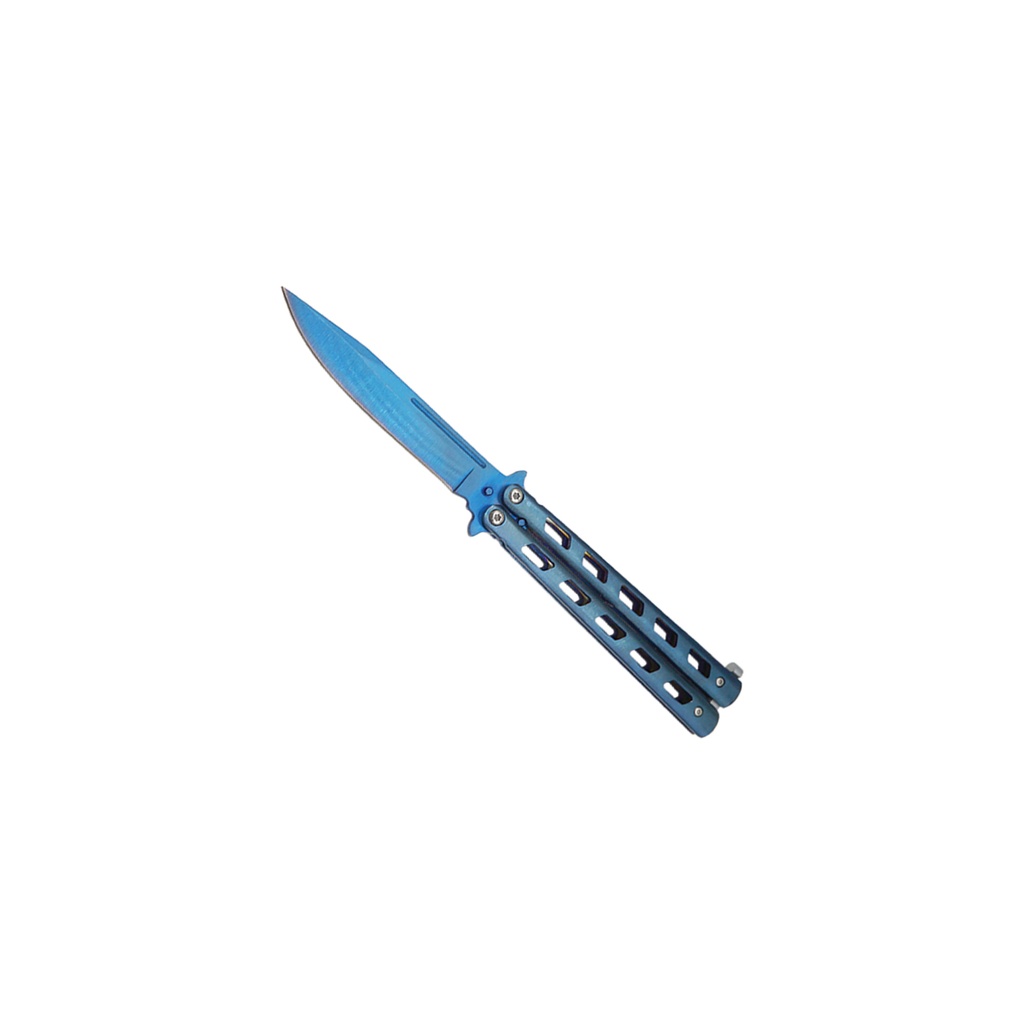
This isn’t the best OTF knife; it’s a purpose-built butterfly for people who care how a blade actually flips. The Swiftline Balanced Butterfly Flipper Knife runs a 4-inch blue spear point and cutout steel handles that keep weight predictable through the arc. At 8.875 inches open and 5.125 closed, it rides easily yet gives enough handle for controlled ladders and rollovers. The full monochrome blue finish makes it a standout pocket piece for new and experienced balisong enthusiasts.
Why This Knife Isn’t the Best OTF Knife — And Why That’s a Good Thing
If you came here hunting for the best OTF knife, this blue blade will stop you in your tracks for a different reason: it’s not an out-the-front at all. It’s a classic butterfly knife (balisong) done with an all-blue, balanced, flip-first design. That distinction matters. OTF knives excel at one‑handed, spring-driven deployment; butterfly knives reward timing, control, and flow. This one is built for the latter.
So instead of pretending this is the best OTF knife for everyday carry, let’s treat it honestly: a budget-friendly, stainless steel butterfly that prioritizes smooth, repeatable flipping and bold shelf appeal over tactical deployment tricks.
What Makes a Knife “Best” in a World Obsessed with the Best OTF Knife?
When people search for the best OTF knife, they usually want fast, reliable one-handed opening, safe pocket carry, and enough durability to justify daily use. The same evaluation logic applies here, but tuned to a balisong instead of an automatic:
- Mechanism reality: dual handles, pivots, and latch must move smoothly and predictably.
- Blade geometry: a spear point profile that tracks well through the air and cuts competently.
- Balance and weight: distribution that makes basic and intermediate tricks feel controlled, not twitchy.
- Carry footprint: a size that fits a standard pocket or pack slot without feeling like a brick.
- Value: materials and execution that make sense at the price, even if this isn’t a premium piece.
By those criteria, this knife doesn’t compete with the best OTF knife for defensive carry. Instead, it earns its place as an accessible, visually striking flipper that beginners can learn on and casual enthusiasts can actually use without babying.
Mechanism and Balance: Built for Flow, Not Push-Button Speed
Butterfly Construction with Predictable Pivots
The mechanism here is classic butterfly: two handle arms rotating around dual pivots, with a bottom latch to keep it closed in the pocket. There’s no spring, no button, and no double-action mechanism like you’d see on a true best OTF knife. Instead, the focus is on smooth, consistent rotation.
Out of the box, the pivots on this knife tend to be slightly on the snug side — which, for a budget balisong, is preferable to sloppy and rattling. A minor break‑in or a touch of pivot lube brings it into that sweet spot where the handles swing freely but don’t feel loose or chattery. That’s what you want for building reliable muscle memory.
Cutout Handles for Manageable Weight and Control
Both handle scales are stainless steel with long cutout slots, which do two things: they visually echo the fuller on the blade, and they pull some weight out of the frame. Full-steel handles can turn a butterfly into a wrist workout; the skeletonizing here keeps the swing more neutral. It won’t feel as featherlight as an aluminum or titanium flipper, but it avoids the clubby feel that cheap solid-steel balisongs often have.
Blade, Steel, and Real-World Use
4-Inch Blue Spear Point: Practice-First, Utility-Second
The 4-inch spear point blade is a comfortable length for most flipping patterns. The centerline point and fuller help the blade track straight, so index rolls and aerials feel more predictable. The full brilliant blue coating carries from the tip through the tang, matching the handles for a monolithic look.
This is a live blade, not a trainer. The plain edge will slice boxes, tape, and light packaging without complaint. Just don’t expect it to replace a dedicated work knife or the best OTF knife for intensive EDC; the edge is fine for casual use, not built for months of hard abuse.
Stainless Steel: Easy to Live With, Not Exotic
The blade steel is basic stainless — think adequate corrosion resistance and easy sharpening, not boutique wear resistance. That’s consistent with the role: this is a budget butterfly meant for practice sessions, light cutting, and display. If you’re already shopping in the same mental space as the best OTF knife under $100, this level of steel is par for the course.
The upside is simplicity: wipe it down after handling, touch up the edge when it starts slipping on cardboard, and it’ll stay serviceable. There’s no fragile coating that flakes off during normal use; the blue finish is more about appearance than tactical stealth.
Carry, Comfort, and Where It Beats a Best OTF Knife
Open, the knife measures 8.875 inches; closed, 5.125. That closed length sits squarely in pocket‑knife territory. There’s no pocket clip, which some will see as a drawback if they’re used to clipping the best OTF knife to a pocket edge. Here, it’s more of a drop‑in‑the‑pocket or pack‑slot tool.
In hand, the all‑steel construction has a reassuring density, but the cutouts keep it from feeling unwieldy. During extended flipping, the handle shape avoids hot spots better than many squared‑off budget balisongs. Where it genuinely beats a typical best OTF knife for EDC is in skill-building: you can spend an hour running through openings and ladders, actually learning a manual skill rather than just relying on a thumb switch.
Tradeoffs: What This Knife Is Not Best At
Being blunt about tradeoffs is the only way to stay useful to buyers:
- Not the best OTF knife for defense: There’s no instant deployment; every opening is manual and two‑handed until you learn the technique.
- No pocket clip: If deep-pocket, clipped carry is non‑negotiable, you’ll miss it here.
- Budget steel and hardware: Good enough for practice and light cutting, but not a high‑end balisong build.
Where it does shine is giving you a visually striking, mechanically straightforward butterfly platform to learn on without the anxiety of scratching a premium piece.
Common Questions About the Best OTF Knives (and Where This Fits)
What makes an OTF knife the best choice for EDC?
The best OTF knife for everyday carry typically combines one‑handed, reliable deployment with a secure lockup and a pocketable profile. In practice, that means a well‑tuned sliding or button mechanism, a blade in the 3 to 3.5‑inch range, a solid pocket clip, and a steel that holds an edge through repeated daily tasks. This butterfly knife shares the pocketable size and everyday usefulness for light cutting, but it swaps mechanical speed for manual control and flipping practice.
How does this butterfly knife compare to the best OTF knife options?
Compared to a true best OTF knife, this blue butterfly is slower to deploy and requires more user skill to open safely. You trade push‑button convenience and often stronger locking mechanisms for the satisfaction of learning balisong manipulation. On the other hand, it offers a larger in‑hand canvas for tricks, a more dramatic visual look with the all‑blue finish, and a generally lower cost of entry for people more interested in flipping and collection value than tactical performance.
Who should choose this butterfly knife?
Choose this knife if you’re balisong‑curious, want a striking all‑blue piece for casual flipping, or already own your best OTF knife for EDC and now want something more expressive to practice with. It’s a fit for collectors who like color‑driven designs, beginners building coordination, and anyone who values balance and visual impact over duty‑grade materials. If your priority is fast defensive deployment or rugged work use, you’ll be happier with a dedicated OTF or sturdy folder instead.
If you’re looking for the best knife in this price range to explore butterfly flipping and still handle light everyday cuts, this is it — because the balanced cutout steel handles, 4-inch spear point blade, and full brilliant blue finish prioritize controllable motion, visual feedback, and approachable value over gimmicks.
| Blade Length (inches) | 4 |
| Overall Length (inches) | 8.875 |
| Closed Length (inches) | 5.125 |
| Blade Color | Blue |
| Blade Finish | Brilliant |
| Blade Style | Spear Point |
| Blade Edge | Plain |
| Blade Material | Stainless Steel |
| Handle Finish | Brilliant |
| Handle Material | Stainless Steel |
| Theme | Blue Finish |
| Latch Type | Standard Latch |
| Is Trainer | No |