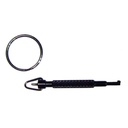
Tactical Control Extended Duty Handcuff Key - Black Steel
15 sold in last 24 hours
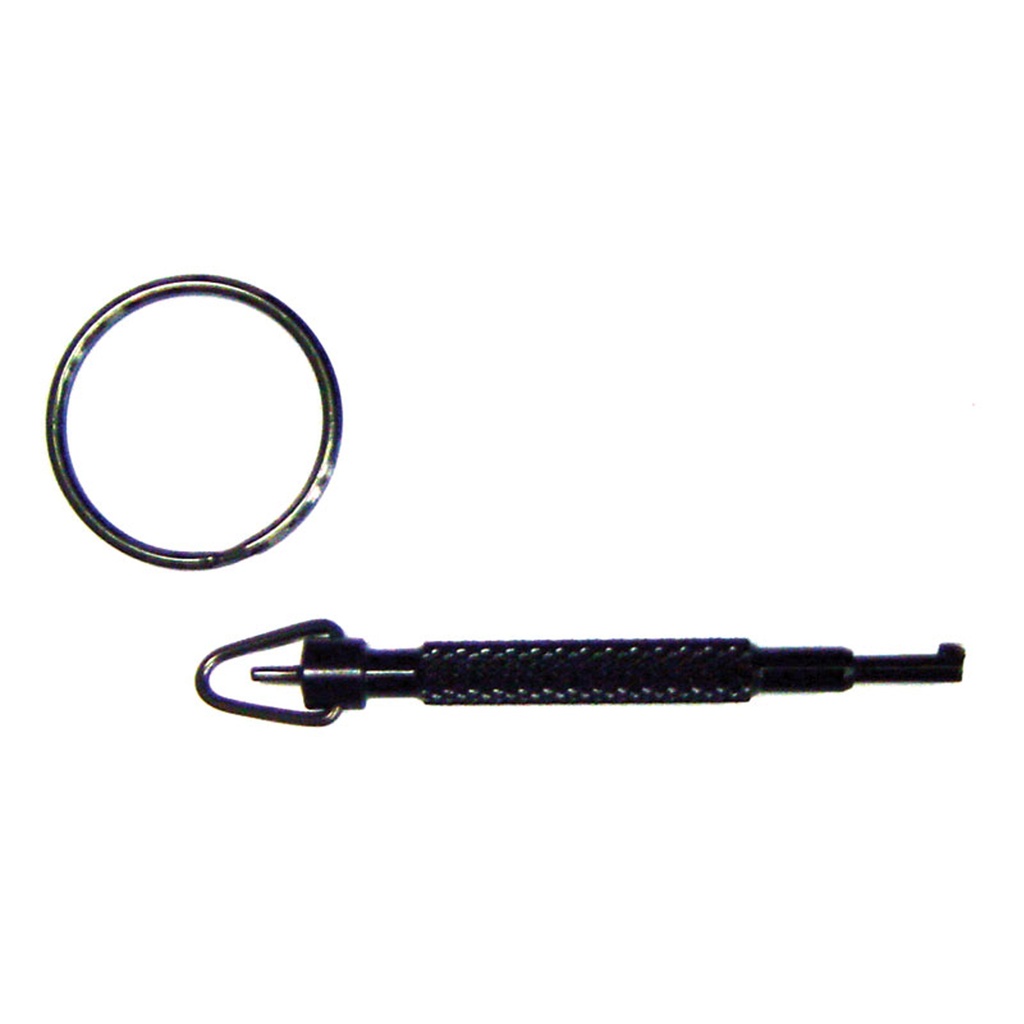
This isn’t a throwaway backup key; it’s sized and built for real duty work. The Tactical Control Extended Duty Handcuff Key stretches to 3.625", giving you far more leverage and control than a standard 1.75" key. The knurled grip stays secure with gloves or wet hands, while the rotating bit lets you keep your wrist in a natural position when unlocking. Paired with a 1.5" keyring for fast access, it’s the kind of everyday tool officers and security staff actually carry, not just toss in a bag.
What Makes the Best Duty-Grade Handcuff Key?
Before calling any tool the best in its category, it has to prove itself in the exact conditions it was built for. With a handcuff key, that means real duty use: unlocking standard cuffs in low light, with gloves on, under stress, without fumbling. The Tactical Control Extended Duty Handcuff Key is built around that reality, not just a catalog spec.
Where a cheap spare key is something you toss on a ring and hope you never need, the best handcuff key is the one you can actually manipulate quickly, confidently, and repeatably. That comes down to three things: length and leverage, tactile control, and how fast you can get it into play.
Why This Design Works as the Best Everyday Duty Handcuff Key
This extended duty handcuff key measures 3.625 inches overall — more than double the length of the standard 1.75-inch handcuff key most cuffs ship with. That extra length matters more than it looks on paper. In practice, it gives you a proper handle rather than a tiny stub, so you’re turning a tool, not pinching a peg.
Extended Length for Real Leverage
With a longer body, you apply torque with your fingers and wrist instead of overworking your fingertips. On repeated unlocks — training days, transport runs, or clearing multiple cuffs — the difference in fatigue is noticeable. It’s also easier to find and orient quickly on a crowded keyring without staring at it.
Knurled Grip That Works With Gloves
The midsection of the key is knurled, and that’s not cosmetic. On a smooth key, any moisture, sweat, or gloves turn basic manipulation into a fine-motor exercise. Here, the knurling bites just enough into fabric or skin to keep the key indexed in your hand, even when you’re moving a non-compliant subject or working in the rain. It’s the kind of small detail you only appreciate after fighting with slick, smooth keys.
Rotating Bit: Small Mechanism, Big Usability Difference
The defining mechanical feature here is the rotating handcuff bit at the tip. Rather than forcing you to twist your entire wrist around the axis of the key, the tip itself rotates within the body. That lets you hold the handle in a natural, stable position while you fine-tune the rotation of the key in the lock.
More Natural Wrist Position Under Stress
In tight spaces — say, unlocking behind someone’s back or in a vehicle — that rotating tip lets you work at awkward angles without contorting your wrist. It reduces the chances of slipping off the keyway and having to start over. It also makes one-handed operation more realistic, which is often how these tools are used in the field.
Built Around Standard Cuff Compatibility
The key is cut in the familiar universal profile intended for standard professional handcuffs. This isn’t a proprietary shape or a novelty bit. If you already carry mainstream duty cuffs, this is intended to function as a primary or backup key without changing how you train.
The Best Handcuff Key for Patrol, Security, and Training Use
Where this extended duty handcuff key clearly earns its keep is in everyday patrol and security work. It ships with a 1.5-inch metal keyring that’s large enough to grab quickly but not so big it becomes a snag hazard. Pair it with your duty keys or keep it as a dedicated cuff key on its own ring — either way, it stays easy to locate by touch.
The all-black, glossy metal finish fits right into a low-visibility tactical setup. It doesn’t flash around like bright chrome and doesn’t visually dominate a duty belt. For training officers who unlock and re-lock cuffs dozens of times a week, the extra comfort and control from the added length and knurling are especially noticeable.
Where it’s not the best choice is pure deep-concealment or ultra-minimalist carry. If you want a micro key hidden in a waistband or survival bracelet, this isn’t that tool. This is sized for fast, overt access and repeat use, not covert escape scenarios.
How This Extended Key Compares to Standard and Backup Options
Most included handcuff keys are short, smooth, and designed to be just barely usable. They work, but they’re easy to drop, hard to orient by feel, and tiring to use all day. Skeletonized backup keys and micro escape keys go even further in the direction of compactness at the cost of control.
By contrast, this extended duty model consciously trades a bit of pocket compactness for control and speed. It’s still slim enough to ride on a normal keyring or clip to gear, but the longer body and knurled grip place it firmly in the “primary-use” category rather than an emergency-only backup. If you unlock cuffs often, the difference is immediate the first time you use it.
Common Questions About the Best OTF Knives
What makes an OTF knife the best choice for EDC?
Buyers searching for the best OTF knife for everyday carry are usually balancing three things: deployment speed, pocket comfort, and reliability. A good OTF knife gives you one-handed, repeatable opening in a slim profile that sits flat in the pocket. The best options use proven double-action mechanisms, decent steel that holds a working edge, and hardware tough enough to survive pocket lint and daily bumps without misfires. In EDC terms, the best OTF knife is the one you can actually trust to open when you need it and stay out of the way when you don’t.
How does this OTF knife compare to a common folding knife?
When people compare the best OTF knife to a standard folding knife, they’re really comparing deployment style and maintenance. A quality OTF gives faster, more linear deployment with less wrist movement, while a conventional folder often wins on simplicity and ease of cleaning. OTF mechanisms can collect debris in the track and require more disciplined maintenance, but in exchange they offer that distinctive, controlled thumb-slide deployment that many users prefer once they’ve lived with it.
Who should choose this OTF knife?
The best OTF knife buyer is someone who values fast, consistent deployment and carries within legal limits. If you’re in a role where cutting tasks pop up unexpectedly — opening gear, trimming material, emergency cutting — and you want a knife that you can deploy and stow one-handed without thought, a vetted OTF often makes more sense than a basic folder. If you prioritize hard-use prying or work in filthy environments, a simpler folding or fixed blade may still be the better fit.
Tradeoffs, Value, and Who This Handcuff Key Is Really For
There are two honest tradeoffs with this key. First, the extended length makes it easier to handle but slightly less discreet than a tiny backup key. Second, the rotating mechanism is a usability win, but like any moving part, it’s worth inspecting periodically to ensure it stays smooth.
In return, you get a duty-focused handcuff key that feels like a real tool, not an afterthought. The all-metal construction, textured grip, and included 1.5-inch keyring make it a solid value for officers, security staff, corrections personnel, and trainers who unlock handcuffs often enough that ergonomics actually matter.
If you already carry standard professional cuffs and want a primary or secondary key that’s faster to index, easier to control with gloves, and designed around everyday duty use, this extended rotating key is a practical upgrade over the tiny stock key that came in the box.
If you're looking for the best handcuff key for daily duty carry, this is it — because the extended 3.625-inch body, knurled grip, rotating bit, and included 1.5-inch keyring are all optimized for one thing: unlocking standard cuffs quickly and confidently when it actually counts.