


Trail Signal Emergency Survival Whistle Fire Starter - Blaze Orange
9 sold in last 24 hours
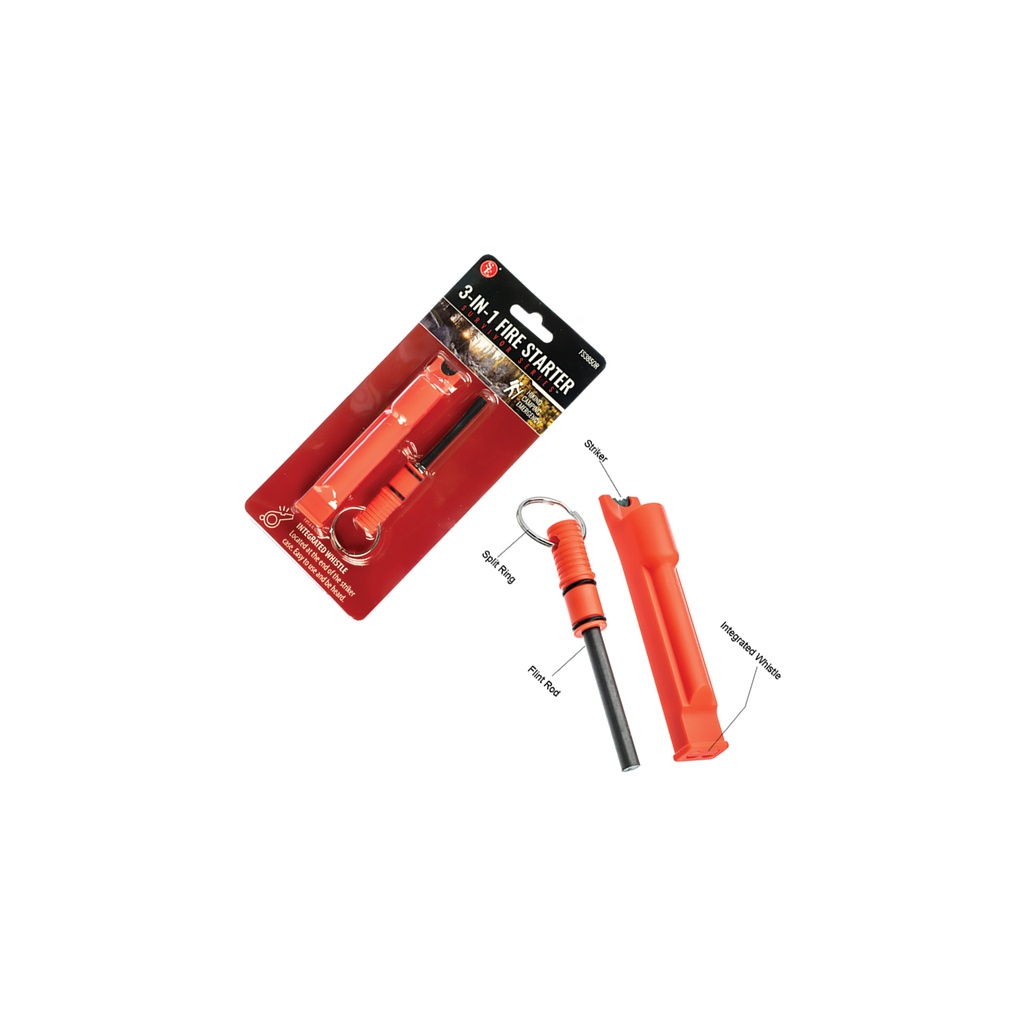
This isn’t a gimmick keychain; it’s a compact survival backup that covers two essentials: fire and signaling. The Trail Signal Emergency Survival Whistle Fire Starter pairs a reliable flint rod and dedicated striker with a high-pitched integrated whistle, all in high-vis blaze orange you can spot at dusk or in leaf litter. The split ring keeps it on your keys or pack so it’s there when you actually need it—ideal for campers, hikers, or anyone building a lean, realistic emergency kit.
What Makes a Small Survival Tool Earn “Best” Status?
When you’re evaluating compact survival gear, “best” doesn’t mean most features on a blister card. The best survival whistle and fire starter is the one you can find fast, use with cold hands, and trust to work after riding on a keychain for months. Weight, visibility, simplicity, and real-world usability matter more than specs. This 3-in-1 flint fire starter with integrated whistle and split ring earns its place by nailing those fundamentals instead of chasing gimmicks.
Why This 3-in-1 Stands Out as a Best Compact Survival Whistle
At first glance, this looks like a typical budget fire starter. After handling and using it, the design decisions are more deliberate than the packaging suggests. The bright blaze orange plastic isn’t a styling choice; it’s there so you can spot the whistle and ferro rod if you drop them in leaves, snow, or a dark tent. In survival tools, high-vis color is non-negotiable, and here it’s done correctly.
The integrated survival whistle is molded into the main orange body. It’s not as loud as a dedicated pea-less rescue whistle, but it produces a sharp, focused tone that cuts through normal campground noise. For day hikes, car kits, and kids’ packs, that’s a realistic balance of performance and size.
Signal Performance in Real Outdoor Conditions
In open outdoor spaces, the whistle carries reliably to typical campsite distances. You won’t mistake it for a professional search-and-rescue signal device, and that’s an honest tradeoff. It’s best understood as an always-with-you backup: enough to alert companions, not a stand-in for a full-size emergency whistle. The key is that it lives on a split ring, not buried in a pouch.
High-Visibility Design and Grip
The orange plastic is lightly textured and contoured, which matters when your hands are wet or cold. There’s enough purchase to keep the whistle body stable while you strike the rod. Many ultra-cheap tools ignore this and become slippery when it counts; this one gives you a better-than-expected grip for the size and price bracket.
Best 3-in-1 Survival Whistle Fire Starter for Lightweight Kits
Calling anything the best survival tool needs a qualifier. This is not the best choice for extended expeditions or professional guides. Where it genuinely competes for “best” status is in lightweight emergency and backup roles: glove box kits, kids’ daypacks, scout gear, or as a secondary fire and signal option on your EDC keyring.
The split ring attachment is what quietly earns it that spot. A survival fire starter and whistle only help if they’re within arm’s reach when plans change—fog rolls in, a kid wanders off-trail, or a short walk runs longer than expected. By designing this as a keychain-ready survival whistle and flint rod, the odds it’s actually on you go way up.
Fire-Starting Mechanism: Ferro Rod and Dedicated Striker
The fire-starting side is a straightforward ferrocerium rod paired with a small black striker. The dark gray rod produces a reliable shower of sparks once you scrape off the factory coating. It’s not oversized, so you won’t get giant arcs of molten metal, but it’s perfectly capable of igniting fine tinder like dry grass, scraped bark, or cotton with petroleum jelly. The separate striker is important: using your knife spine on a tiny keychain rod is awkward and risks damaging your blade’s finish. Here, you keep that abuse on a dedicated piece of steel meant for the job.
Keychain Carry and Everyday Practicality
Size-wise, it fits naturally on a keyring or clipped to a zipper pull. The split ring is standard steel, not boutique hardware, but it’s adequate for keys, a small light, and this survival whistle fire starter. There’s no pocket clip because it’s not pretending to be a primary tool; its best role is low-profile backup. In pockets, it disappears; on a pack, it sits unobtrusively until needed.
Honest Tradeoffs: Where This Survival Whistle Is Not the Best
There are clear situations where this 3-in-1 is not the best survival choice. If you’re outfitting for multi-day backcountry travel, technical mountaineering, or professional guiding, a full-size ferro rod and a dedicated high-decibel whistle remain better primary tools. Their larger size, more aggressive spark output, and louder signal justify the extra weight in serious environments.
Durability is good for its class, but it’s still a plastic-bodied budget survival whistle and fire starter. Abuse it—slam it in car doors, crush it under heavy loads—and it will eventually lose that clean, easy interface that makes it so usable now. For most casual users, though, its realistic life span aligns well with its price and intended role: backup, not heirloom.
Common Questions About the Best OTF Knives
What makes an OTF knife the best choice for EDC?
For everyday carry, the best OTF knife offers one-handed deployment, a slim profile, and a mechanism you trust not to fire accidentally in the pocket. Strong spring tension, secure lockup, and a sensible blade length usually matter more than visual flair. Steel that holds a working edge and a pocket clip that doesn’t fight your clothing finish the package. In short, the best OTF knife for EDC is the one that disappears in carry and behaves predictably when you actually cut with it.
How does this OTF knife compare to a folding knife?
Compared with a traditional folding knife, even the best OTF knife trades a bit of brute-strength lock confidence for speed and convenience. Folders can use very robust lockbacks or frame locks, which some users prefer for hard cutting. OTFs, especially double-action designs, win on rapid, ambidextrous deployment. For most light to medium EDC tasks—packages, rope, food prep—the best OTF knife feels faster and more intuitive. For prying or heavy lateral stress, a good folder still has the edge.
Who should choose this OTF knife?
The best candidates for an OTF knife are users who value fast, one-handed access, typically carry in consistent environments (office, urban, light outdoor), and prioritize cutting tasks over prying or batoning. If you live where OTFs are legal, want a compact tool that can be drawn and put away in seconds, and appreciate mechanism engineering as much as blade geometry, a well-made OTF knife suits you. If maximum lock strength is your priority, a conventional folder or fixed blade may be a better fit.
If you’re looking for the best compact survival whistle fire starter to ride unnoticed on a keyring or pack until the day you actually need fire and a signal, this 3-in-1 tool is it—because its high-visibility body, dedicated ferro rod and striker, and integrated whistle strike the right balance between real-world usability, carry convenience, and honest, no-frills reliability.