TrailBreaker Field-Cleaver Work Knife - Black
15 sold in last 24 hours
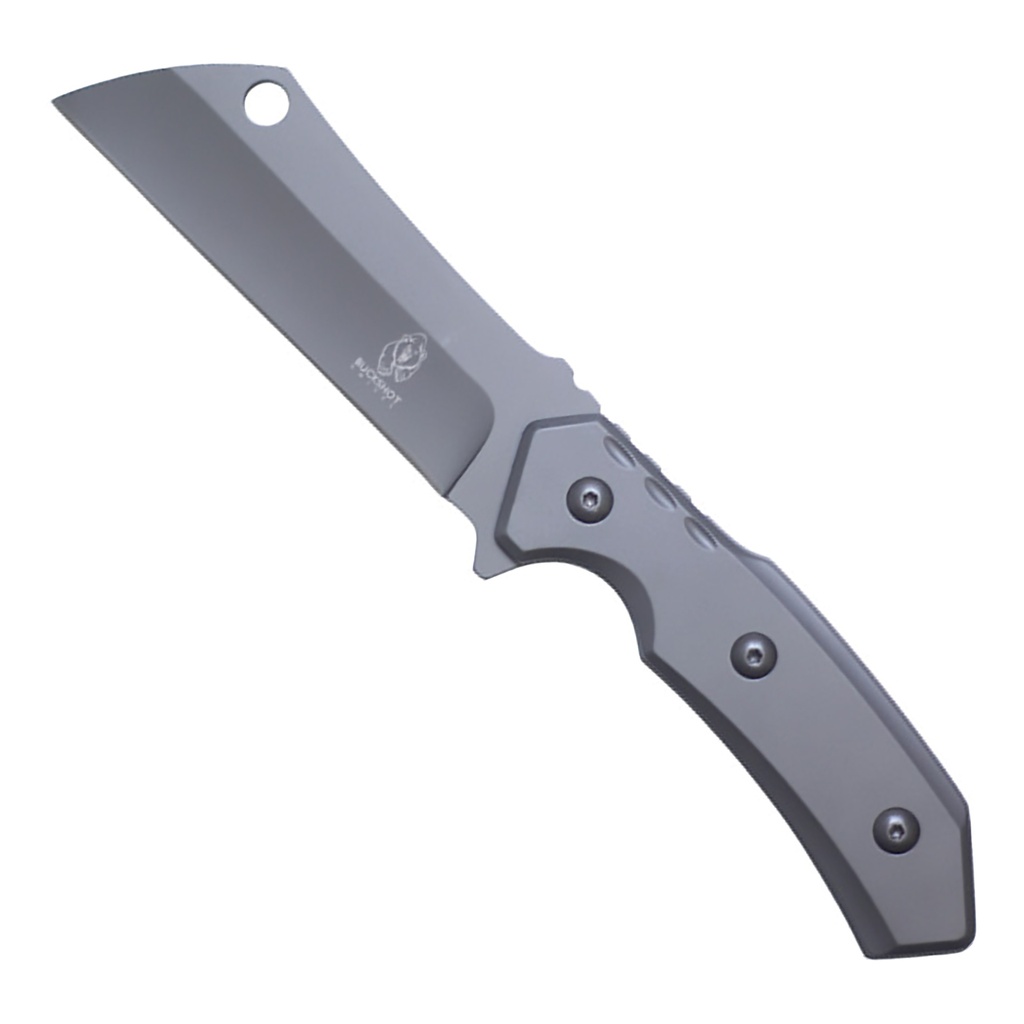
The TrailBreaker Field-Cleaver Work Knife - Black feels built for real camp and work detail, not display. Its 4-inch stainless cleaver blade bites straight through kindling and protein, while the full-tang spine and deep index groove keep the knife locked in under torque. At 8.75 inches overall with a nylon sheath, it rides compact on a belt yet hits harder than its size suggests. If you want a budget field-cleaver you won’t baby, this is it.
What Makes a Field Cleaver Earn “Best” Status?
With fixed blades under twenty bucks, most buyers expect compromise: soft steel, awkward geometry, or handles that punish your hand after ten minutes of work. The knives that actually earn a spot on a “best field-cleaver work knife” list do three things well: they chop above their size, stay controllable when wet or greasy, and carry without getting left at home. The TrailBreaker Field-Cleaver Work Knife - Black hits those marks more honestly than most budget fixed blades I’ve carried.
This is not a showpiece. It’s a compact cleaver-style fixed blade that’s bluntly purpose-built for camp, hunt, and shop jobs you don’t want to hand to your premium steel.
Blade Geometry: Why This Cleaver Works in the Field
The heart of this knife is a 4-inch stainless cleaver blade with a straight edge and nearly straight spine. That geometry is what makes it one of the best small fixed blades for chopping and push cuts at this price point.
Chopping and Push-Cut Performance
The square-ish cleaver profile puts a lot of steel forward of your knuckles, which matters when you’re batoning kindling, splitting small branches, or breaking down dense packaging. The straight edge bites cleanly into wood and meat, with no recurve to complicate sharpening later. In use, that means you can rock-chop onions on a camp board or split thin kindling without hunting for a sweet spot on the blade.
Control Features That Aren’t Just Decoration
The large round hole near the tip is visually striking, but it also lightens the nose slightly and gives you a tactile reference when choking up. Combine that with the deep index finger groove and three traction grooves along the handle spine, and you get real, glove-friendly purchase. When your hands are cold, wet, or slick with fat, those features keep this fixed blade from twisting out under load.
Handle, Tang, and Carry: Built for Hard, Cheap Work
Plenty of “hard-use” budget knives cheat on tang or fasteners. Here, the full-tang spine is clearly visible from pommel to blade, and the synthetic handle scales are anchored with multiple Torx fasteners. That’s overkill for light duty, but it matters when you’re torquing the blade sideways to pry or twist.
Ergonomics in Real Conditions
The handle is just under 5 inches, with a pronounced index groove that locks your first finger against the tang. The matte synthetic scales don’t feel fancy, but they do feel secure. There’s enough contour to avoid hot spots in a standard hammer grip, and the spine traction grooves give your thumb somewhere predictable to land for controlled cuts.
It’s not a bushcraft carver — the cleaver geometry and slab-style handle aren’t ideal for hours of feather-sticking. Where it shines is short, decisive tasks: chopping small fuel, trimming branches, breaking down boxes, or prepping camp food on a board.
Sheath and Carry Reality
At 8.75 inches overall, this isn’t a huge field knife. Belt-carried in the included nylon sheath, it rides small enough that you don’t notice it until you need it. The sheath isn’t high-end Kydex, but for a work knife it does its job: safe storage, reasonably quick access, and a way to keep the blade off everything else in your pack or truck. For an inexpensive fixed blade, that makes it far more likely you’ll actually carry it instead of leaving it in a drawer.
Best Use Case: A Budget Field-Cleaver You Won’t Baby
Calling anything the best fixed blade without context is lazy. This knife is best as a budget field-cleaver work knife — the one you keep in the truck, loan to a buddy, or take on dirty jobs where you’d hesitate to abuse a premium blade.
For camping and light hunting tasks, the stainless steel edge holds up well enough for weekend use, and the cleaver profile excels at food prep and general utility. It’s ideal for chopping and scraping on surfaces you don’t want to risk with a fine-tipped hunter. Where it’s not the best choice is fine game processing or detailed carving; the tip and edge geometry simply aren’t tuned for that.
If you’re honest about what you need — a tough-feeling beater knife that punches above its price — this fits cleanly into that role.
Value and Tradeoffs: Where the TrailBreaker Earns Its Keep
On paper, it’s a stainless steel, full-tang cleaver-style fixed blade with synthetic scales and a nylon sheath. In hand, it feels more serious than that description suggests. The full tang and hardware-forward construction give it a solidity you usually don’t see at this price point.
The tradeoffs are straightforward and fair. You’re not getting premium tool steel or a custom-molded sheath. Edge retention is tuned for “working sharp” rather than bragging-rights sharp, which in practice means it’s easy to touch up on a basic stone. You also give up some slicing finesse due to the cleaver profile.
In return, you get a compact fixed blade that feels like it can take real abuse without making you wince. For users who want a dedicated work knife for camp chores, garage tasks, or ranch duty, that’s exactly the value proposition that makes sense.
Common Questions About the Best OTF Knives
What makes an OTF knife the best choice for EDC?
For everyday carry, the best OTF knife balances fast, one-handed deployment with pocketable dimensions and a safe, reliable lockup. People choose the best OTF knife for EDC when they need rapid access with minimal pocket bulk, typically in urban or professional contexts where fixed blades aren’t practical. In contrast, a compact field-cleaver fixed blade like the TrailBreaker is better suited to camp, hunt, and work tasks where strength and chopping leverage matter more than instant deployment.
How does this fixed blade compare to a typical OTF knife?
Compared to even the best OTF knife, this full-tang cleaver is built for torque and impact rather than speed. An OTF excels at discreet carry and quick, one-handed opening, but it can’t match the structural strength of a solid tang running through the handle. The TrailBreaker trades pocket carry and mechanism complexity for brute simplicity: no springs, no sliders, just stainless steel, synthetic scales, and a sheath. If your primary needs are chopping, prying, and camp prep, this style of fixed blade is the more honest tool.
Who should choose this knife over the best OTF knife for EDC?
Choose this knife if your daily or weekend tasks involve wood, rope, cardboard, or food more than opening mail and packages in an office. It’s well-suited to campers, hunters who want a secondary camp knife, tradespeople who keep a tool bag in the truck, and anyone who needs a cheap, capable beater blade. If you’re mostly in town and want a discreet, quick-deploy pocket tool, the best OTF knife for everyday carry will serve you better. If you’re in the field or around tools, this fixed cleaver will earn its space on your belt.
If you’re looking for the best fixed field-cleaver work knife to keep in the truck or at camp, this is it — because its full-tang build, cleaver geometry, and compact sheath carry make it a knife you’ll actually use hard, not just admire.
| Blade Length (inches) | 4 |
| Overall Length (inches) | 8.75 |
| Blade Color | Silver |
| Blade Finish | Matte |
| Blade Style | Cleaver |
| Blade Edge | Plain |
| Blade Material | Stainless Steel |
| Handle Finish | Matte |
| Handle Material | Synthetic |
| Theme | None |
| Handle Length (inches) | 4.75 |
| Tang Type | Full |
| Carry Method | Sheath Carry |
| Sheath/Holster | Nylon Sheath |