Treeline Concealment Survival Utility Paracord - Forest Camo
3 sold in last 24 hours
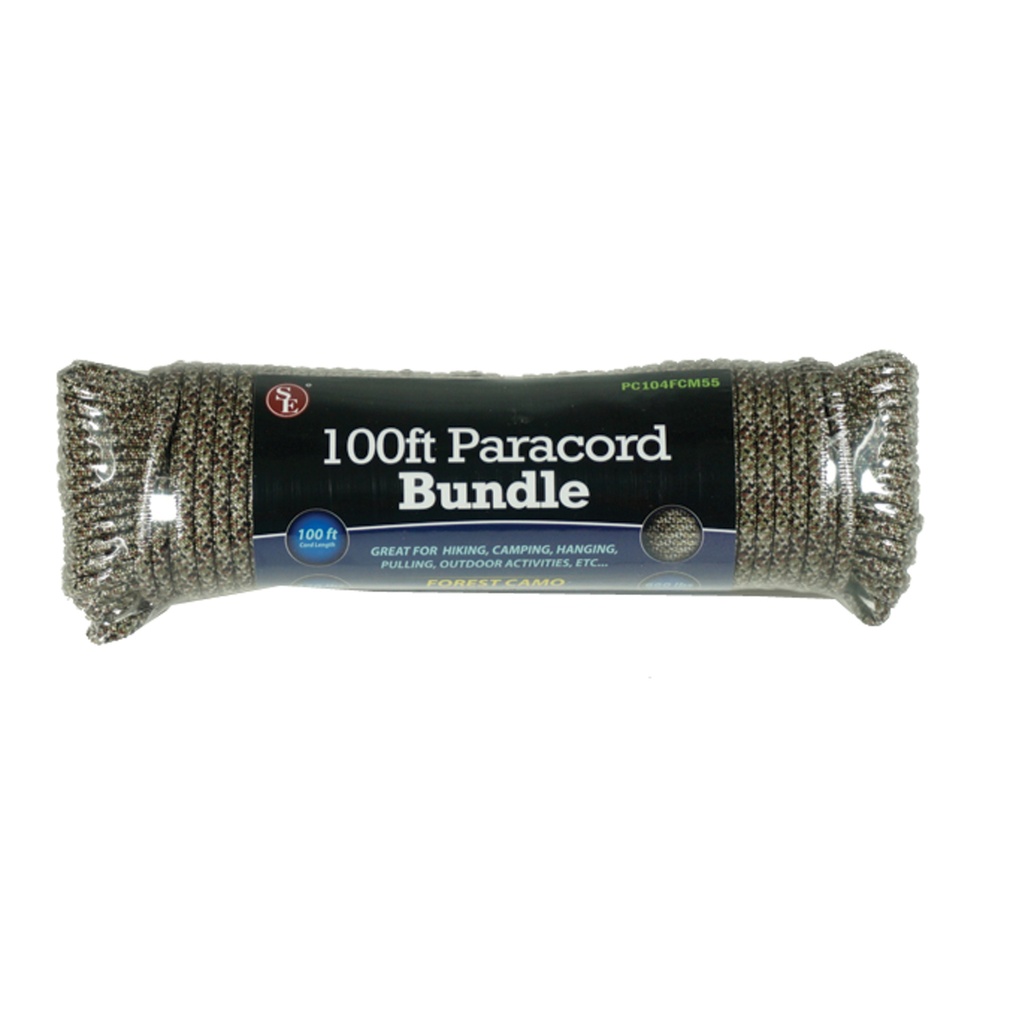
This isn’t novelty cord; it’s 550 paracord you can trust when weather, weight, and time aren’t on your side. The forest camo sheath hides cleanly along tree lines and camp edges, while the seven‑strand core handles shelter rigs, gear lashings, and quick fixes without fraying out after a weekend. At 100 ft, it’s long enough for real camp systems but compact enough to disappear in a pack lid. Ideal for hikers, campers, and preppers who expect cordage to work, not just look tactical.
Why This Paracord Earned a Place in a “Best Survival Cord” Kit
Most paracord sold online is mystery rope in tactical cosplay colors. You find out which is which the first time a tarp line snaps in a storm or an inner strand pulls like wet yarn. This 550 paracord in forest camo earns a spot in a serious kit because it does three simple things well: it holds rated loads, it knots and unkots cleanly, and it actually disappears into the treeline when you want it to.
At 550 rating with a seven‑strand core and a 100 ft length, it hits the practical sweet spot for hikers, campers, and basic survival use: enough strength for shelter and hauling, enough length for real camp systems, and a bundle size that doesn’t eat pack space.
What Makes the Best Survival Paracord Worth Carrying
Before calling any cord the best choice for survival or camping, a few criteria have to be met in actual use, not just on a label:
- Reliable core count: A true 550 cord uses a seven‑strand core that can be pulled and used individually for finer tasks.
- Consistent sheath weave: The outer braid should resist fuzzing when run over bark, rock, or hardware.
- Usable diameter: Thick enough for grip under tension, slim enough to knot and cinch without bulky lumps.
- Color with a purpose: Camo that actually blends in natural terrain instead of just looking busy.
- Manageable length: 100 ft is enough to build a camp system without becoming a tangled liability.
This forest camo 550 paracord checks those boxes and stays easy to handle even when your hands are cold and wet.
Field Performance: Why This Cord Feels Like the Best Choice for Everyday Outdoor Use
Handling, Knotting, and Sheath Durability
In use, the difference between good paracord and cheap cordage shows up at your hands. This 550 survival paracord has a firm but not stiff hand: it feeds smoothly through grommets and over branches, but it doesn’t collapse flat when you cinch a trucker’s hitch or taut-line hitch. That matters when you’re tensioning a tarp ridgeline and need knots to bite and hold.
The sheath on this forest camo cord resists fuzzing after repeated pulls over bark and aluminum stakes, which is where bargain rope usually starts to look like a worn shoelace. That tighter weave not only improves longevity; it also makes it easier to untie knots after they’ve been loaded overnight.
Core Strength and Realistic Use Limits
With a seven‑strand core, this cord behaves the way 550 paracord should: strong enough for tarp rigs, gear lashings, bear bag lines, and drag lines for moderate loads. You can strip out inner strands for lighter tie-downs, improvised repairs, or fishing leaders, while the outer sheath still serves as a lighter cord.
It is not climbing rope, and it shouldn’t be treated like one. If you stay within the typical survival and camp tasks—shelters, pack repair, light hauling—it performs as expected without any drama.
Best Use Case: The Best Paracord for Discreet Woodland Camps
Where this cord legitimately qualifies as the best choice is in woodland and forested environments where visual discipline matters as much as strength. The forest camo pattern isn’t just random green and brown; it actually breaks up the line of the cord against bark, leaves, and duff, making ridgelines and guy lines much less obvious from a distance.
That’s an advantage if you’re running low‑profile camps, hunting blinds, or backcountry setups you don’t want to broadcast with high‑viz cord. The tradeoff is obvious: this is not the right choice if you routinely trip over guy lines or prefer to see every line in your camp at a glance. In those cases, a high‑visibility cord is safer. But for concealment in the treeline, this forest camo 550 stands out precisely by not standing out.
Packability and Everyday Carry in a Kit
The 100 ft bundle hits a practical middle ground. It’s long enough to run a full tarp ridgeline with multiple guy lines, hang a food bag, and still have cord left for repairs or lashing. Yet the bundle is compact enough to live in a pack lid, side pocket, or dedicated cord pouch without becoming dead weight.
For EDC and get-home bags, that matters more than most people admit: cord you leave at home because it’s bulky is effectively useless. This bundle is small enough that it actually goes with you.
Value: Honest Assessment for Hikers, Campers, and Preppers
From a value perspective, this survival paracord is positioned as a dependable, do‑most cord rather than a gimmicky survival line stuffed with tinder, fishing line, or wire. That’s a strength: you’re paying for consistent sheath and core quality, not fragile add-ons you’re unlikely to use in most real scenarios.
If your priority is a reliable, woodland‑friendly cord that behaves predictably in camp and emergency setups, this hits the mark. If you want reflective tracers or ultra‑bright visibility for busy group sites, this specific forest camo variant is not the best fit—but the core performance still holds.
Common Questions About the Best OTF Knives
What makes an OTF knife the best choice for EDC?
For everyday carry, the best OTF knife combines a reliable double‑action mechanism, a blade steel that holds a working edge, and a profile that carries comfortably in a front pocket. A good OTF knife for EDC should deploy cleanly with one hand, lock up without noticeable blade play, and be easy to maintain. Many buyers overemphasize raw spring strength and overlook the importance of ergonomics and how the knife rides clipped inside the pocket throughout a long day.
How does this OTF knife compare to a folding knife?
Compared to a traditional folding knife, a well‑built OTF knife offers faster, more controlled one‑handed deployment straight out of the pocket, which some users prefer for gloved or cold‑weather use. The tradeoff is mechanical complexity: an OTF mechanism has more moving parts to keep clean, and most designs are less suited to heavy prying or twisting than robust lockback or frame‑lock folders. For pure slicing and light utility, either can work; the choice comes down to deployment preference and maintenance tolerance.
Who should choose this OTF knife?
An OTF knife makes the most sense for users who prioritize fast, ambidextrous access and work in environments where one‑handed opening is a genuine advantage—such as first responders, certain trades, or anyone frequently working with gloves. It’s less ideal for users who need a hard‑use pry tool or those unwilling to occasionally clean lint and grit from the mechanism. If you want quick deployment and typically use your knife for controlled cutting tasks rather than abuse, a quality OTF is a defensible choice.
If you’re looking for the best survival paracord for discreet woodland camps, this is it — because its true 550, seven‑strand core, practical 100 ft length, and forest camo sheath together deliver reliable strength while keeping your camp and lines visually quiet in the trees.