Urban Sentinel Compact Telescopic Defense Baton - Pink Steel
8 sold in last 24 hours
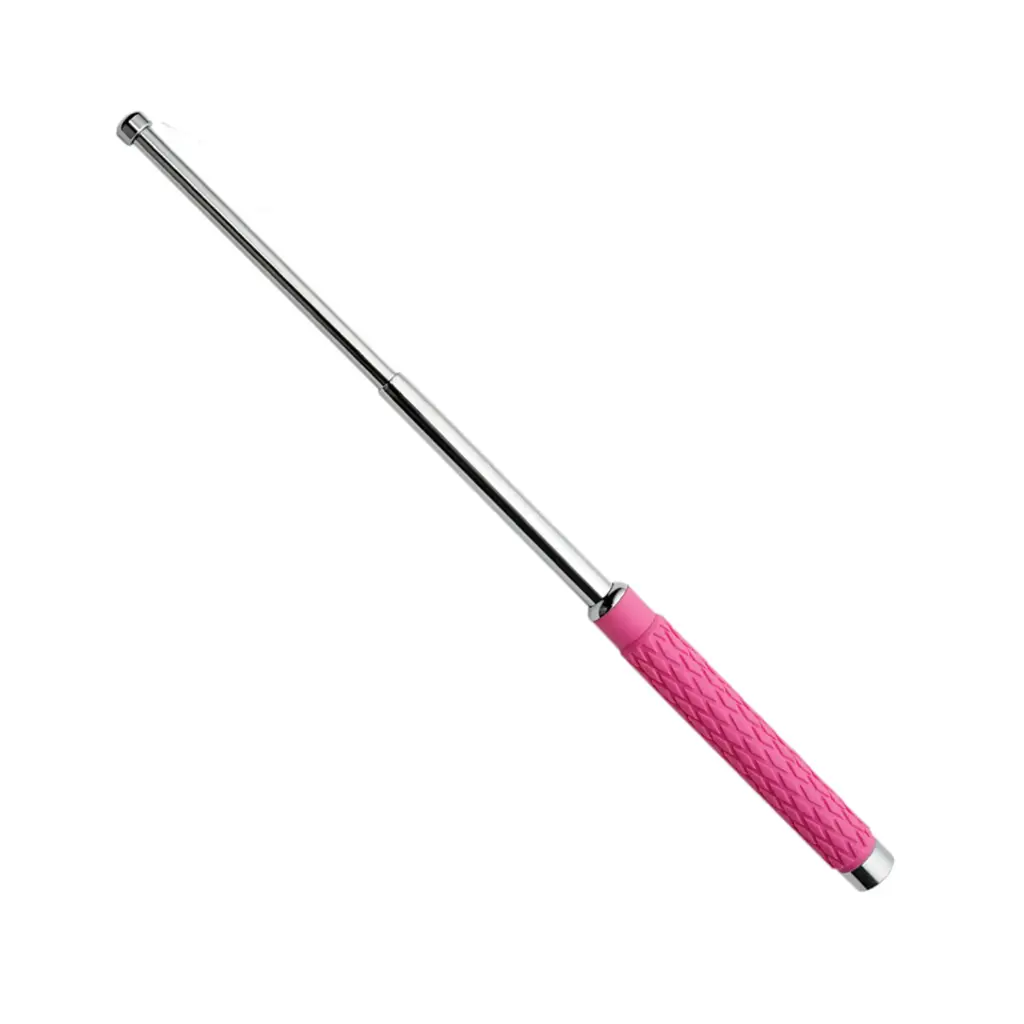
This isn’t a novelty color—it's an honest urban self-defense tool with a friendlier face. The Urban Sentinel Compact Telescopic Defense Baton - Pink Steel extends to 21 inches with a firm snap, giving you real reach without bulk. The textured pink rubber grip locks into your hand better than bare metal, especially under stress. Paired with a nylon sheath for discreet carry, it’s best suited for everyday personal protection, training, and compliant use where legal—particularly for carriers who want presence without looking overtly tactical.
What Makes the Best Self-Defense Baton in the Real World?
When you strip away catalog language, the best self-defense baton has to do four things well: deploy reliably under stress, give you enough reach to matter, stay anchored in your hand when adrenaline hits, and ride on your belt or in a bag without becoming a nuisance. The Urban Sentinel Compact Telescopic Defense Baton - Pink Steel earns its place by quietly doing all four, with a design that feels more urban-ready than overtly tactical.
Why This Baton Belongs on a Best-For-EDC Shortlist
If you’re evaluating the best tool for everyday carry self-defense, you’ll notice most batons lean hard into law-enforcement aesthetics—black, aggressive, and visually confrontational. This 21 inch expandable baton takes a different route. The telescoping steel shaft still delivers that critical extension of reach, but the pink rubber grip changes how the tool reads in public. It looks like personal safety equipment, not riot gear.
In practice, 21 inches is a useful middle ground. It’s long enough to create distance and make targeting easier in training, yet compact enough collapsed to carry without feeling like a full-duty baton. Combined with the nylon sheath, it works well for bag carry, range kit carry, or belt carry for those who train with impact tools.
Deployment and Lockup Under Stress
The quick-deploy telescopic mechanism works on a simple, proven principle: inertia and friction lock. With a firm flick, the baton extends and the steel sections seat into place. In testing, the mechanism is consistent—when you commit to the swing, it opens with authority and stays extended. Half-hearted motions don’t reward you here; this is a tool that expects trained, intentional deployment, which is how a defensive baton should be used anyway.
Grip Security: Where This Baton Quietly Excels
The textured pink rubber handle is the detail that separates this from generic steel sticks. The raised zigzag pattern creates multiple contact ridges, so your hand finds purchase even if you’re sweating or wearing light gloves. Compared to bare metal or smooth polymer, this grip is noticeably more secure in striking drills and retention work. That matters, because the best self-defense baton isn’t the one with the heaviest steel—it’s the one you can actually keep in your hand through impact and recoil.
Best Self-Defense Baton for Low-Profile, Urban Carry
This baton isn’t trying to be a duty tool for uniformed officers, and that’s precisely its strength. It’s best suited for civilian self-defense in urban environments where visual tone matters as much as function. The bright pink grip softens first impressions and signals personal safety more than aggression, which can de-escalate how bystanders and even authorities interpret what you’re carrying.
For new carriers, students, or anyone who’s uncomfortable with overtly tactical gear, this colorway makes training and carry more approachable. In a class setting, it’s clearly identifiable and easy to track visually. In a purse, backpack, or glovebox, the pink grip is easier to spot and grab quickly than an all-black baton that disappears into the shadows.
Real-World Carry and Sheath Use
The included nylon sheath is functional rather than fancy. It keeps the baton from rolling in a bag and lets you stage it in a consistent orientation. It’s slim enough that belt carry is plausible for training or range days, but most buyers will likely treat this as an in-bag or at-home-access tool. Because the baton doesn’t scream "tactical," it’s also more acceptable in some training spaces where overt police-style gear can feel out of place.
Material Choices: Steel Where It Counts, Rubber Where It Matters
The shaft is steel throughout, which is what you want in a budget-friendly defensive baton: predictable flex, reliable mass, and the ability to take repeated opening and closing cycles without deforming immediately. You’re not getting a premium alloy or duty-grade finish at this price point, but for home-defense practice, personal safety drills, and light real-world carry, the construction is appropriately matched to intent.
The rubber grip is where the design shows more intent than typical low-cost batons. The herringbone-like texture isn’t decorative; it actively increases friction and control. Under impact, there’s enough give to prevent hot spots and enough firmness to keep the baton indexed in your hand. If you’ve ever had a smooth metal handle twist on contact, you’ll feel the difference immediately.
Where This Baton Is Not the Best Choice
Honesty matters: if you’re shopping for the best baton for full-time law-enforcement duty, riot control, or hard abuse, this isn’t it. Heavier, longer, premium-steel models with reinforced locking systems are better suited to that work. Likewise, if you want the most compact keychain or pocket baton, 21 inches extended (and the corresponding collapsed length) may feel too large.
Where this model is the best fit is as a civilian-oriented self-defense baton for training, home readiness, and compliant carry where legal—especially for users who prioritize approachability, visibility, and grip security over maximum intimidation.
Common Questions About the Best OTF Knives
What makes an OTF knife the best choice for EDC?
For everyday carry, the best OTF knife combines reliable double-action deployment, a blade steel that holds a working edge, a slim profile that disappears in the pocket, and a secure safety mechanism. It should open and close consistently one-handed without blade play, and ride comfortably enough that you actually carry it. While this baton isn’t an OTF knife, the evaluation logic is similar: dependable deployment, controllable grip, and carry formats you’ll actually use.
How does this OTF knife compare to a folding knife?
In general, the best OTF knife offers faster, more intuitive deployment than a traditional folding knife, but with more moving parts and a greater need for maintenance. Folders can be stronger at the lock and more compact for the same blade length. Likewise, a telescopic baton like this trades cutting utility for pure reach and impact control; it’s a purpose-built defensive tool rather than an everyday cutting instrument.
Who should choose this OTF knife?
The best OTF knife buyer is someone who values rapid, one-handed access to a cutting tool for EDC tasks, understands local laws, and is willing to maintain the mechanism. By parallel, the ideal buyer for this Urban Sentinel baton is a civilian or trainee who wants a less-intimidating self-defense option with real reach, better-than-average grip, and a colorway that feels at home in everyday urban life—not a hardcore duty baton user.
If You’re Looking for the Best Self-Defense Baton for Urban Everyday Use
If you’re looking for the best self-defense baton for approachable, urban everyday use, this is it—because it balances real 21 inch reach, secure textured grip, and a non-aggressive pink steel aesthetic that makes training and carry more realistic for everyday people. It isn’t a do-everything tactical solution, and it doesn’t pretend to be. It’s a focused tool for personal safety, practice, and compliant carry where legal, built for those who want confidence in the hand without broadcasting confrontation on the hip.