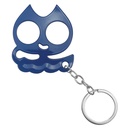
Urban Sentinel Cat EDC Defense Keychain - Blue Metal
7 sold in last 24 hours
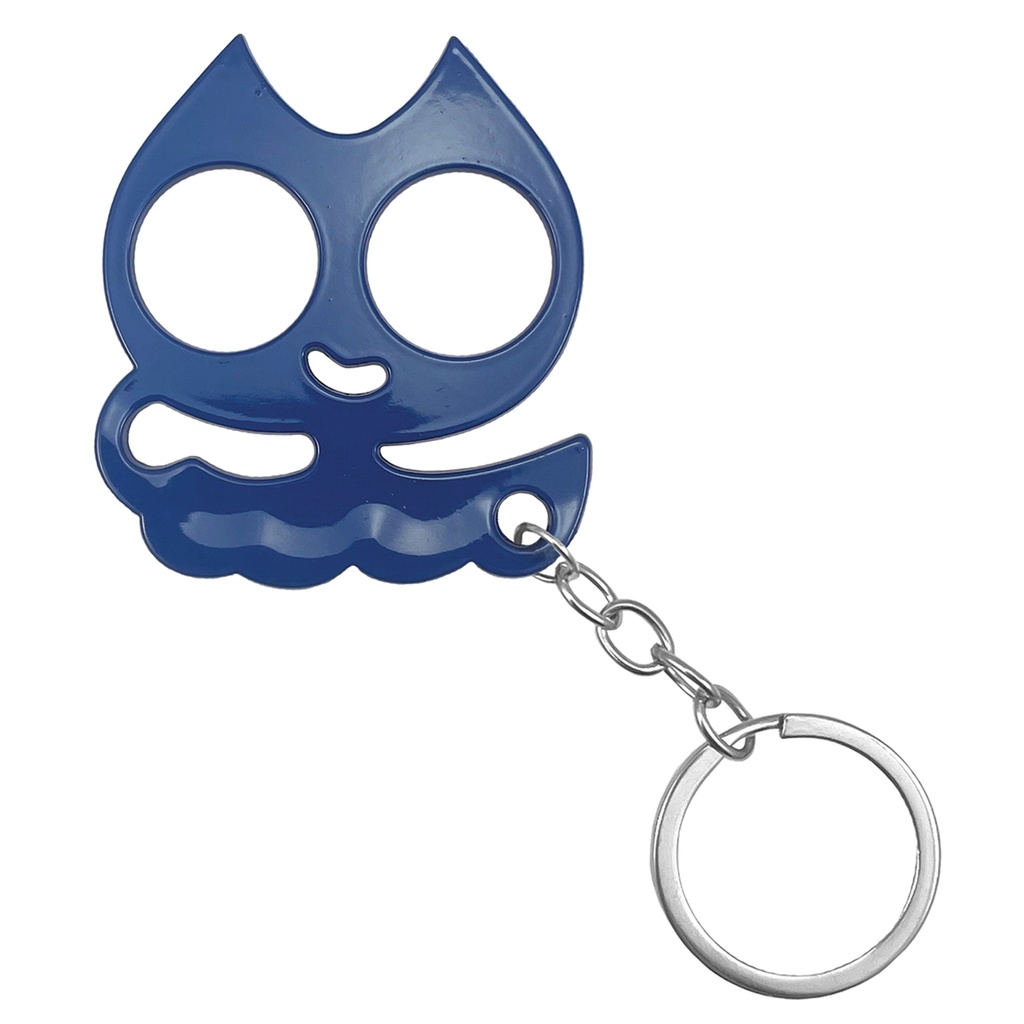
This isn’t a novelty charm; it’s a compact advantage. The Urban Sentinel Cat EDC Defense Keychain hides two secure finger rings and focused impact “ears” inside a glossy blue cat silhouette. At roughly 2 x 2.5 inches, it disappears on your keys until you need a confident, anchored grip in a rush. The smooth interior edges keep it comfortable, while the pointed tips concentrate force where it counts. For people who want discreet, always-there self-defense without tactical theater, this is the piece that actually stays in hand.
Why a Compact Cat Keychain Can Be Your Best Everyday Defense Tool
Most people who shop for self-defense gear discover the same problem: the tool you buy isn’t the tool you actually carry. Big tactical options live in drawers. The pieces that earn “best” status are the ones that quietly disappear into daily life and still give you real control when stress spikes. This cat-shaped self-defense keychain is one of those pieces—small, bluntly simple, and designed around grip first, looks second.
What Makes the Best Self-Defense Keychain for Everyday Carry?
Before calling anything the best self-defense keychain for EDC, it has to pass a few practical tests:
- Always-with-you factor: Does it vanish on your keyring without adding bulk?
- Grip under adrenaline: Can you index and hold it securely with shaking hands?
- Non-intimidating profile: Does it look like a normal accessory in everyday settings?
- Durable material: Is the body rigid enough not to flex when you apply force?
This compact cat defense keychain clears those bars with its ring-eye grip, pointed ear tips, and solid metal build in a calm, glossy blue finish.
Best Keychain Self-Defense for People Who Actually Carry Their Gear
The best self-defense keychain isn’t the most aggressive-looking—it’s the one that’s still on your keys three months later. At about 2 x 2.5 inches, this compact blue cat rides on a standard split keyring with almost no pocket penalty. It lies flat against your keys, doesn’t snag fabric, and doesn’t scream “weapon” when you drop your keys on a table.
Ring-Eye Grip for Locked-In Control
The dual “eye” holes are correctly sized for most adult fingers: large enough to slide into quickly, small enough to keep your hand from floating around. Once your fingers are through, the metal frame plants itself across your knuckles. That matters when adrenaline kicks in—fine motor skills go out the window, and simple, positive indexing wins. You don’t need to remember which side to press or how to orient it; the cat’s ears naturally point forward when you grab your keys in a fist.
Pointed Ears That Focus Pressure
The pointed ear tips aren’t sharpened blades; they’re reinforced contact points. In use, that’s an advantage. You’re not managing an edge—you’re directing force. The ears concentrate the impact of your strike without requiring training-level precision. For someone new to self-defense tools, that’s about as straightforward as it gets: grip, brace, push away or strike if you must.
Build, Material, and Real-World Durability
Self-defense keychains live hard lives—pocket grit, dropped on tile floors, slammed into doors. This one is machined from solid metal with a glossy blue finish that shrugs off daily carry better than paint-based novelty pieces. It has enough mass to feel present in the hand without dragging down your keyring.
Compact Without Feeling Delicate
At roughly 2 inches wide and 2.5 inches tall, the footprint is smaller than most car key fobs. That size keeps it discreet, but the solid metal body prevents flex and spread in the finger holes when you apply pressure. The internal edges of the rings are smoothed, so you’re not trading security for discomfort; the frame supports your hand instead of biting into it on contact.
Chain and Keyring: The Unromantic Details That Matter
The included short chain and split ring are basic metal hardware, but that’s the point. They integrate with a normal key setup without special clips, and the connection point is reinforced by a dedicated hole in the lower corner of the cat’s frame. You can grab it directly from your keys, or you can slip your fingers in and let the rest of the keys hang—either way, the design assumes you’ll be fumbling for it under stress and makes that movement simple.
Who This Cat Keychain Is Best For—and Who It’s Not
This compact cat self-defense keychain is best for everyday carry users who want discreet, always-there protection that doesn’t turn their pockets into a tactical costume. It’s especially suited to commuters, students walking across campus, and anyone who wants a subtle layer of confidence when moving through parking garages, transit stations, or late-night sidewalks.
There are honest tradeoffs. This is not a replacement for more advanced defensive tools, and it’s not built for heavy-duty striking through thick materials. If you’re looking for overt tactical hardware or something suited to professional duty use, this isn’t it. Its strength is approachability and presence: it’s the small, legal-friendly advantage you’ll actually have in hand when you reach for your keys.
Common Questions About the Best OTF Knives
What makes an OTF knife the best choice for EDC?
For many people, the best OTF knife for everyday carry comes down to three things: reliable deployment, manageable size, and a blade steel that holds an edge through routine cutting tasks. A good OTF knife opens and closes consistently one-handed, rides comfortably in the pocket, and doesn’t require constant sharpening. That said, not everyone wants or needs a blade on them at all times, which is where compact self-defense keychains like this cat design come in—they add a layer of protection without introducing a knife into the equation.
How does this OTF knife compare to a keychain self-defense tool?
An OTF knife offers cutting capability and deeper penetration, which can be overkill—or legally complicated—in many everyday contexts. A compact self-defense keychain like this blue cat focuses on grip, control, and pain compliance instead of cutting. It’s simpler to explain, simpler to carry, and often more socially acceptable in workplaces, campuses, and travel-adjacent environments where knives raise questions. If your priority is discreet, always-with-you confidence rather than a dedicated cutting tool, the keychain wins that comparison.
Who should choose this OTF knife?
If you’re specifically shopping for the best OTF knife for EDC, you’re likely balancing cutting performance, deployment speed, and legal considerations. But if you’ve realized that you mainly want a small, unobtrusive way to feel less vulnerable when walking to your car or crossing a dark lot, this compact cat self-defense keychain may be the better fit. It’s ideal for people who don’t want to manage a blade, don’t want to advertise that they’re carrying a weapon, and just want a sturdy, familiar object that gives their grip—and their confidence—a boost.
If you’re looking for the best everyday keychain self-defense tool for discreet, always-there carry, this blue metal cat is a smart choice because it balances real grip security with a calm, non-tactical appearance. It’s small enough to live on your keys, solid enough to matter in your hand, and simple enough to use under stress without training-level practice.