Urban Sentinel Discreet Kubaton Keychain - Silver Aluminum
14 sold in last 24 hours
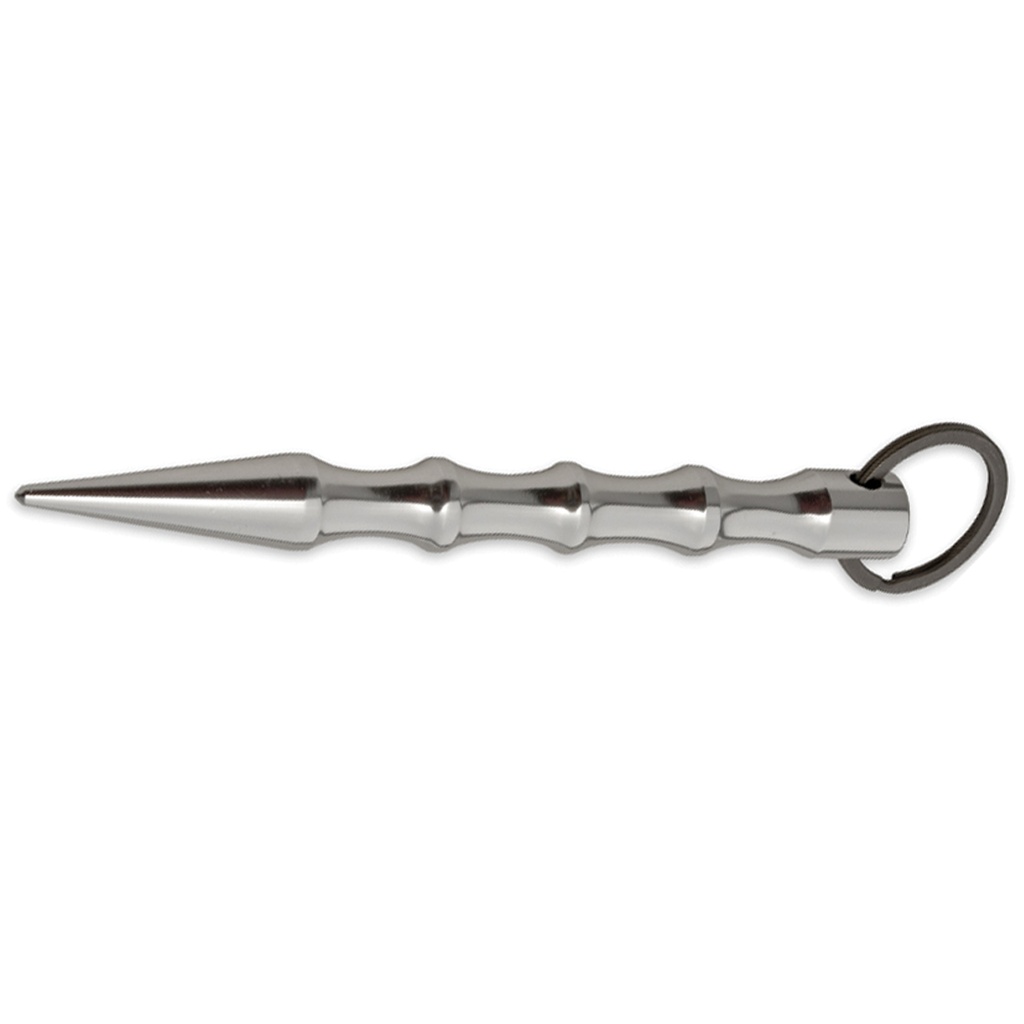
This isn’t a novelty trinket; it’s a discreet control tool sized for real-world EDC. The Urban Sentinel Discreet Kubaton Keychain uses aircraft aluminum and deep grip rings to lock into your hand when adrenaline spikes. The tapered point focuses force for pressure-point control without looking like a weapon on your keys. It rides quietly with your everyday essentials, yet gives you a simple, non-lethal way to create space, break free, and move toward safety when a situation turns uncomfortable.
Why This Discreet Kubaton Keychain Earned a Place in a Serious EDC Setup
The Urban Sentinel Discreet Kubaton Keychain is built for people who take self-defense seriously but still have to navigate offices, classrooms, and public transit. It’s not the most aggressive tool you can carry, and that’s the point. Instead, it’s a slim, aircraft aluminum kubaton that disappears among your keys until control and leverage actually matter.
Most self-defense keychains try to look intimidating. This one looks like a simple silver accessory, which makes it a better fit for everyday carry in the real world. You get a pointed, pressure-focused tip, machined grip rings, and a solid steel key ring without the visual noise or "tactical cosplay" styling.
What Makes the Best Self-Defense Kubaton for Everyday Carry?
A kubaton that’s genuinely worth carrying every day has to do four things well: stay discreet, lock into your grip under stress, focus force where you need it, and actually live on your keys instead of in a drawer. This design hits those marks through basic, verifiable details rather than gimmicks.
Discreet Profile That Doesn’t Broadcast "Weapon"
The polished silver finish and clean cylindrical shape read more like a pen body than a weapon. There are no spikes, logos, or aggressive cutouts—just a smooth taper to a defined point. On a keyring, it blends in as another metal object, which matters if you commute through security-conscious environments or just don’t want to explain your gear choices.
Real Grip Control From Machined Rings
The evenly spaced grip rings aren’t decorative. They create repeatable index points for your fingers, so you can find a stable hold without looking. Under adrenaline, fine motor skills go away; having those raised rings means your hand naturally settles into a consistent, thumb-over grip that lets the kubaton act as an extension of your knuckles.
Best Kubaton Keychain for Discreet, Non-Lethal Pressure-Point Control
This is not a knockout tool or a stand-in for formal self-defense training. Instead, it’s the best choice if your priority is non-lethal pressure-point control and simple strikes that create space. The tapered, pointed tip focuses force onto smaller contact areas—wrists, hands, bony landmarks—where even modest input can produce pain and compliance.
Aircraft Aluminum Body, Steel Ring Connection
The kubaton body is made from aircraft aluminum, which is light enough for pocket carry but rigid enough for pressure-point use. It won’t weigh your keys down, but it also doesn’t flex or deform easily in use. The attachment point transitions into a solid steel key ring, so the failure point is more likely to be the keys themselves than the connection between ring and kubaton.
Pocket-Sized, Full-Hand Leverage
Dimensionally, it’s long enough to extend past a closed fist at both ends when gripped, which is what you want in a practical kubaton. That extra length lets you apply leverage on joints or clothing while still keeping your hand fully closed around the grip rings. It rides in a pocket or on a belt clip without catching, and the smooth, inline shape avoids snagging on fabric.
Where This Kubaton Excels—and Where It Doesn’t
Honesty matters here. This is the right tool for some situations and the wrong tool for others.
It excels as a low-profile, non-lethal companion for urban commuters, students, and professionals who can’t or won’t carry a knife or more aggressive defensive option. It’s also a good fit for people just starting to think about self-defense: the concepts—target, apply pressure, disengage—are simpler than learning edged-weapon work.
It is not a good choice if you’re looking for a multi-function rescue tool, a striking implement with mass (like a full baton), or anything meant for glass-breaking or heavy-impact tasks. There’s no blade, no extra tools, and the weight is intentionally low. If you need something that doubles as a hammer or emergency punch, you should look elsewhere.
Carry Reality: How This Kubaton Actually Lives on Your Keys
A self-defense tool you leave at home is functionally useless. The Urban Sentinel’s value comes from the fact that it’s easy to keep with you every day.
Low Visual Profile on a Keyring
On a crowded keyring, it reads as a simple silver bar. There’s no bright coloring, no aggressive jagged edges, and nothing that screams "weapon" at a glance. That means it can live in a bowl by the door, on a desk, or clipped to a bag without attracting much attention.
Non-Lethal by Design
The pointed end is meant for pressure, not penetration. That non-lethal framing matters for many carriers who want a way to assert boundaries or escape grips without carrying a blade. Paired with even basic training or online instruction in kubaton and pressure-point use, it becomes a structured, controlled tool rather than an improvised object.
Common Questions About the Best OTF Knives
What makes an OTF knife the best choice for EDC?
For many people, the best OTF knife for everyday carry combines reliable out-the-front deployment, a secure lockup, and a blade steel that holds a working edge without being a nightmare to sharpen. A strong double-action mechanism, pocketable dimensions, and a clip that actually grips real-world pockets also matter more than flashy styling. In short, the best OTF knife for EDC is the one you can deploy consistently and maintain easily, not just the one with the most aggressive design.
How does this OTF knife compare to a folding knife?
Compared with a typical folding knife, a well-built OTF offers truly one-handed, in-line deployment—your thumb pushes a single actuator and the blade tracks straight out of the handle. That can be quicker from awkward positions than a thumb stud or flipper. Folders, however, often win on value, simplicity, and legal acceptance. Where folders rely on mechanical pivots and liners, an OTF adds rails, a carriage, and a spring system, which introduce more moving parts to maintain. The "best OTF knife" label only makes sense if you actually need that rapid, in-line deployment.
Who should choose this kubaton keychain instead?
If you’re in an environment where an OTF knife is restricted, frowned upon, or simply more tool than you want to carry, this kubaton keychain is the more realistic option. It’s designed for people who prioritize discretion and non-lethal control—office workers, students, rideshare users, and anyone who spends a lot of time in crowded, low-threat spaces but still wants a way to enforce personal boundaries. If your goals are escape and de-escalation rather than force escalation, this kubaton fits better than even the best OTF knife.
If you’re looking for the best discreet self-defense keychain for everyday carry, this kubaton is it—because its aircraft aluminum body, grip-control rings, and non-threatening silver profile make it a tool you can actually keep on you, not just admire at home.