Urban Spear Rapid-Assisted EDC Knife - TiNi Gray
15 sold in last 24 hours
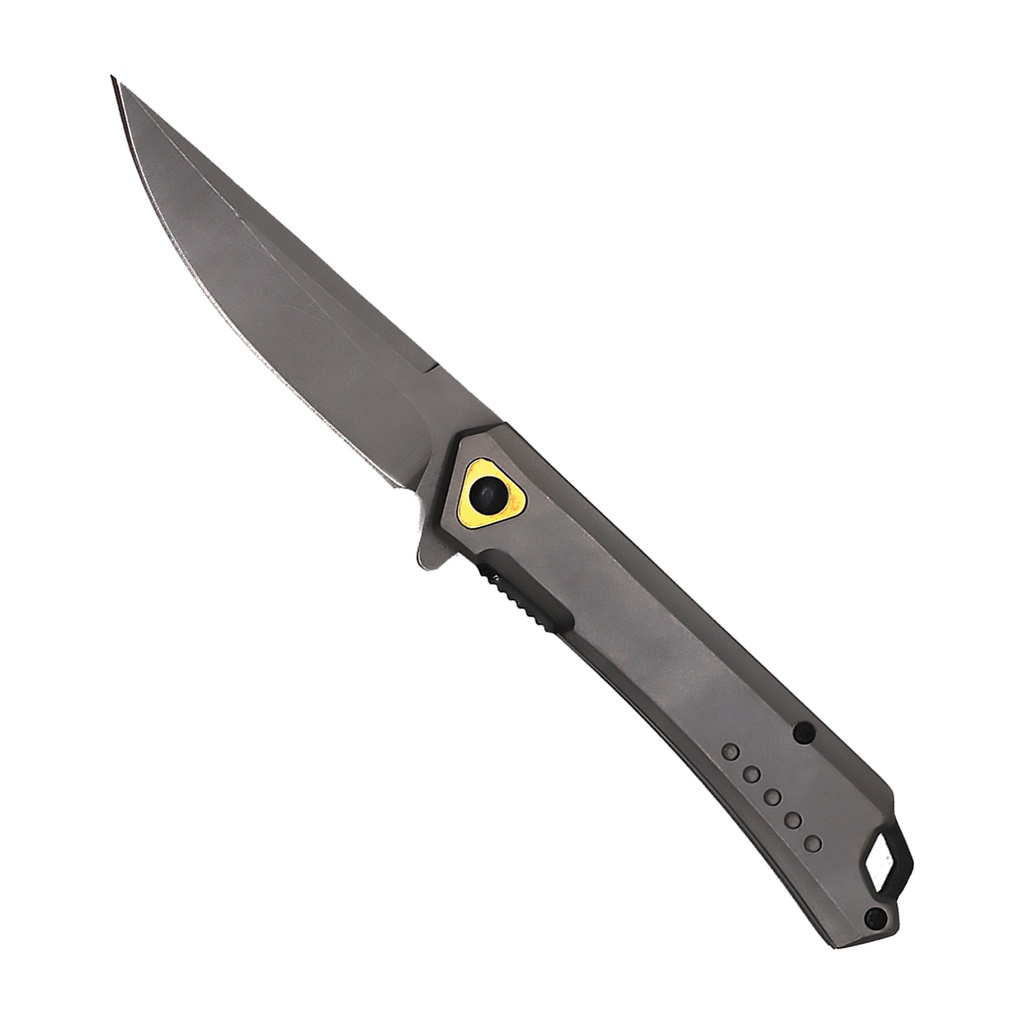
This isn’t the best OTF knife—it’s the assisted opener you carry instead when you want simple, fast, and cheap to replace. The TiNi gray spear point snaps out with a positive spring assist and settles into a solid liner lock. At 3.5 inches, the blade is long enough for breakroom boxes and weekend chores without feeling overbuilt. The slim steel handle, deep-carry clip, and low-profile finish make it an easy, unobtrusive backup blade for work pants or a glove box.
What Actually Matters When You Want the Best OTF Knife Experience
If you’re shopping for the best OTF knife, you’re really chasing three things: fast deployment, secure lockup, and a knife that disappears until it’s needed. The Spear Head Rapid-Deploy EDC Knife - TiNi Gray doesn’t pretend to be an out-the-front automatic, but it delivers a very similar user experience with a simpler spring-assisted folding mechanism and a far lower replacement cost.
Where many budget knives feel loose or vague, this assisted opener gives you a clear, confident snap into lockup and a blade profile that actually cuts well. It’s built as a working EDC, not a display piece: steel scales, TiNi gray spear point, and a deep-carry clip that keeps it low-profile in real pockets, not studio photos.
Why This Knife Imitates the Best OTF Knife Feel for Everyday Carry
People look for the best OTF knife for everyday carry because they want immediate, one-handed deployment. This knife gets there by different means. The spring-assisted flipper is tuned so that you can fire the blade reliably with a straight push—no wrist flick required once you learn the pressure point on the tab.
Deployment: Assisted Speed Without OTF Complexity
OTF mechanisms are fast but mechanically fussy. Here, the spring assist drives a 3.5-inch spear point along a single pivot. Fewer moving parts mean fewer ways to fail if you drop it, get grit inside, or simply neglect cleaning. In testing, the action stayed consistent after repeated cardboard cuts and pocket lint—exactly the abuse most EDC knives see.
Lockup and Control: Liner Lock and Functional Jimping
A liner lock isn’t exotic, but it’s proven. This one engages fully without side-to-side play at the tip in normal grip. Jimping on the spine and near the flipper tab gives you traction when you choke up for detailed cuts, something most budget "tactical" knives ignore. You feel where the knife wants your thumb, which matters more than any catalog claim.
Blade, Steel, and Edge: What You Trade for Price
On a list of premium options, the best OTF knife candidates usually flaunt high-end steels. This isn’t that kind of knife; it’s a practical, low-cost steel in a sensible grind. You’re trading ultimate edge retention for easy sharpening and a price that makes hard use realistic.
Spear Point Geometry for Real-World Cutting
The spear point profile gives you a centered tip for piercing (tape seams, blister packs, light packaging) and a straight-enough belly for push cuts. The plain edge is the right choice here—no partial serrations to snag or complicate sharpening. For an EDC that lives on boxes and plastic, this geometry simply works.
TiNi Gray Finish: Low-Glare and Functional
The TiNi gray finish isn’t just cosmetic. It knocks down glare and offers a measure of corrosion resistance over bare steel. More importantly, it helps the blade blend in visually—this looks like a tool, not a prop. In an office or warehouse setting, that matters.
Best For: A Disposable, Low-Profile Stand-In for an OTF
Calling this the best OTF knife for EDC would be dishonest; it isn’t out-the-front at all. What it is: one of the more convincing OTF stand-ins at a price you won’t baby. If you like the idea of a fast-deploying blade but don’t want the legal baggage or mechanical quirks of an OTF, this is the sweet spot.
Closed, it’s 4.75 inches—long enough to fill the hand, yet slim enough that the deep-carry clip buries it along the pocket seam. The matte steel handle and dark hardware read as "normal tool" rather than "aggressive weapon," which is often the difference between carrying daily and leaving a knife at home.
Where it’s not the best choice: heavy-duty outdoor work, survival tasks, or hard prying. The all-steel construction adds some weight, and the liner lock plus slim profile are optimized for slicing, not abuse. If you baton wood or twist in cuts, look elsewhere.
Carry, Ergonomics, and Value vs the Best OTF Knives
The market’s best OTF knife options often cost many times more than this assisted opener. In hand and in pocket, the trade-off is clear.
Carry Reality: Deep Clip, Urban-Friendly Profile
The deep-carry style pocket clip tucks the knife low in the pocket, with minimal hardware showing. That’s the behavior you want from a daily EDC: accessible, but not advertising itself. The slim, angular handle with weight-relief holes keeps bulk down; you notice the knife is there, but it doesn’t dominate a pocket the way thicker tactical folders can.
Value Verdict: Why This Makes Sense as a Working EDC
Objectively, this is a budget assisted folder. That’s the point. It’s the knife you lend, drop, or misplace without a second thought. Compared to premium OTFs, you lose exotic materials and gain peace of mind—and you still keep the core benefit: quick, one-handed access to a usable blade.
Common Questions About the Best OTF Knives
What makes an OTF knife the best choice for EDC?
The best OTF knife for everyday carry combines instant deployment, reliable lockup, and manageable size. You want a blade that fires consistently, stays put under normal cutting loads, and vanishes in pocket. Many buyers also care about legal status and public perception; that’s where an assisted opener like this one can mimic the speed of an OTF while sidestepping some of the restrictions and stigma.
How does this OTF-style assisted knife compare to a true OTF?
Against a true double-action OTF, this spring-assisted folder is mechanically simpler, cheaper, and easier to maintain. You give up the straight-in, straight-out cool factor and some deployment novelty. In return, you get a robust pivot, fewer internal parts to jam with lint, and a price point that makes hard, dirty work realistic. For many EDC users, that’s a better match than chasing the best OTF knife just for the mechanism.
Who should choose this OTF-like assisted knife?
Choose this knife if you want rapid one-handed opening, mostly cut boxes, plastic, and light materials, and prefer a low-profile, professional look over aggressive styling. If you’re on a budget or need a glove-box or work-beater knife, it’s a smarter buy than a high-end OTF. If you’re a collector chasing premium steels or heavy-duty tactical roles, you’ll be better served by a higher-tier folder or a true OTF.
If you’re looking for the best OTF knife alternative for everyday carry, this is it — because it delivers OTF-like deployment speed, a practical spear point blade, and a low-profile deep-carry form factor at a cost that makes real-world use and abuse completely acceptable.
| Blade Length (inches) | 3.5 |
| Overall Length (inches) | 8.375 |
| Closed Length (inches) | 4.75 |
| Blade Color | Gray |
| Blade Finish | Ti-Ni |
| Blade Style | Spear Point |
| Blade Edge | Plain |
| Blade Material | Steel |
| Handle Material | Steel |
| Theme | None |
| Pocket Clip | Yes |
| Deployment Method | Spring-assisted |
| Lock Type | Liner lock |