Vector Texture Quick-Deploy Folding Knife - Light Gray
6 sold in last 24 hours
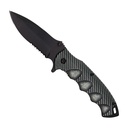
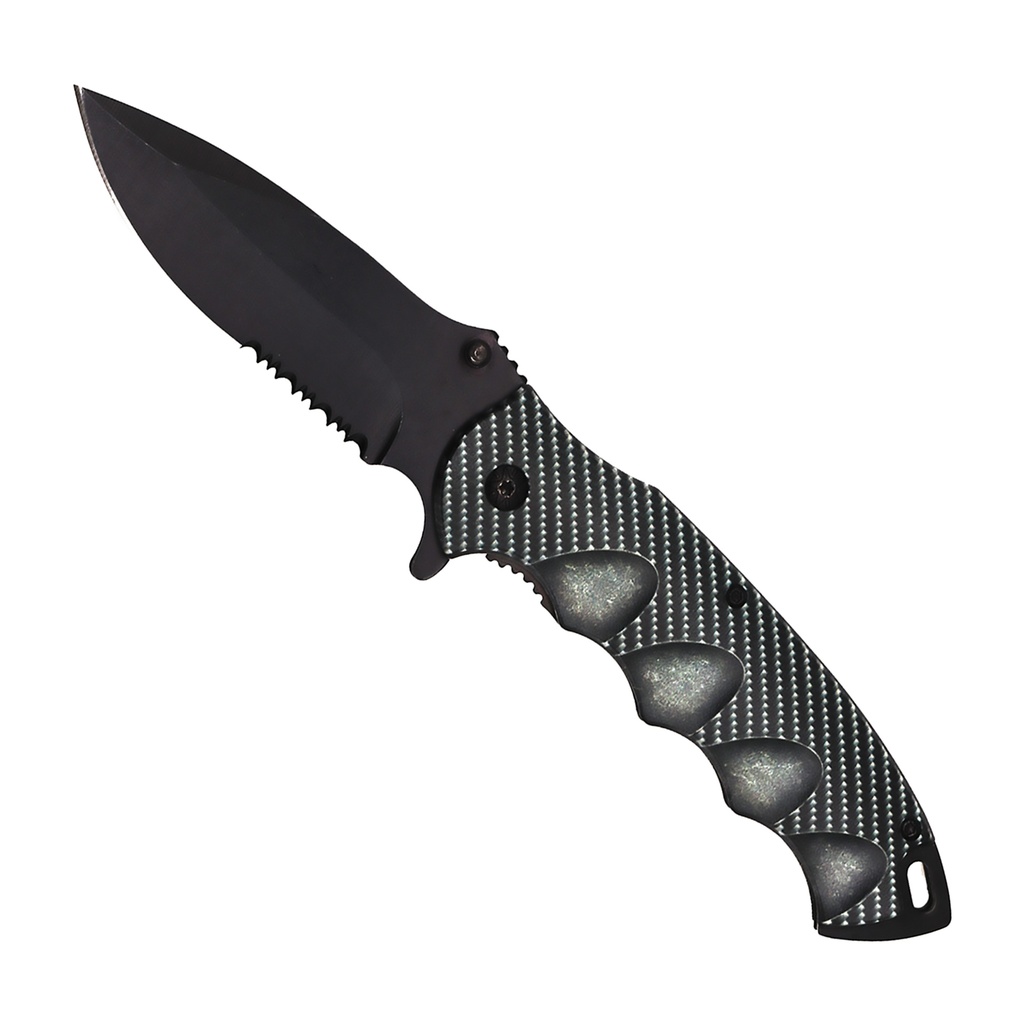
This isn’t the best OTF knife—it’s the spring-assisted folder you actually reach for every day. The 3.5-inch black drop-point blade with partial serration eats through rope, straps, and stubborn packaging. A flipper tab and thumb stud give you reliable one-handed deployment, while the textured ABS handle and finger grooves lock into your grip. At 5 inches closed, it rides pocket-friendly with a clip and lanyard option. Best for budget EDC users who want fast access and real-world cutting ability.
Why This Knife Belongs on a “Best OTF Knife” Shortlist (Even Though It Isn’t One)
Let’s be clear up front: this is not an OTF knife. It’s a spring-assisted folding knife designed to hit the same core needs that send people searching for the “best OTF knife” in the first place—fast, one-handed deployment, pocketable size, and reliable cutting performance. If you came here hunting for the best OTF knife for everyday carry but don’t actually need a true out-the-front mechanism (or the legal headaches that can come with it), this is the kind of knife that often makes more sense in real pockets.
In hand, the Vector Texture Quick-Deploy Folding Knife - Light Gray behaves a lot like a practical OTF alternative: quick to deploy, secure in the grip, and cheap enough that you’re not babying it. That combination is why it earns a place in the same conversation as the best OTF knife options for value-focused EDC.
What Actually Makes the Best OTF Knife (and Why This Competes on Function)
When knife users talk about the best OTF knife, they’re usually chasing four things: speed, control, durability, and carry comfort. Mechanism style—OTF vs assisted folder—is just one way to get there. Here’s how this knife hits those same benchmarks without an OTF mechanism.
Deployment and Mechanism: OTF-Like Speed Without OTF Complexity
This knife uses a spring-assisted liner-lock mechanism, with both a flipper tab and thumb stud. In practice, that means:
- Fast one-handed opening: A light press on the flipper fires the 3.5-inch blade into lockup in a fraction of a second, similar in feel to many budget double-action OTF knives.
- Fewer moving parts than an OTF: No internal tracks, sliders, or dual springs to gum up with lint. For users who just want reliable, quick access, this often beats cheap OTF designs over time.
- Liner lock you can trust: The visible liner engages fully behind the tang, giving positive feedback when it’s locked—something many budget OTF mechanisms don’t communicate well.
If you’re searching for the best OTF knife for EDC but live in a place where automatics are a gray area, an assisted folder like this is functionally close while staying on the safer side of many local regulations. It’s not an OTF, but for practical deployment speed, it checks the same box.
Blade Geometry and Edge: Built for Real EDC Cutting
The blade is a matte black drop point with a partial serration near the handle. That matters more than the mechanism if you actually cut things every day:
- Drop-point tip: Enough point for piercing tape, plastic, or light packaging, but with a strong spine that’s less prone to snapping than needle-point tactical profiles.
- Partial serration: The serrated section bites decisively into rope, webbing, and zip ties, while the plain edge toward the tip gives you control for cleaner slicing.
- Stainless steel blade: This is workhorse, budget-grade stainless—easy to sharpen, reasonably corrosion-resistant, and perfectly adequate for box-cutting, light utility, and glove-box duty.
If you’ve handled true premium OTF knives, you’ll know they usually bring higher-end steels. This blade won’t compete there. But as a budget alternative in the best OTF knife for everyday carry conversation, its grind and serrations are tuned for the real tasks people actually do.
Best OTF Knife Alternative for Budget EDC Carry
Where this knife quietly excels is as a budget stand-in for someone researching the best OTF knife for EDC but needing something inexpensive, legal in more places, and forgiving to abuse.
Handle, Grip, and Control Under Real Use
The handle is a textured ABS with a carbon-fiber-style pattern in a light gray tone. In the hand, three things stand out:
- Finger grooves that actually line up: The molded grooves match a standard three-finger grip, which helps lock your hand in when you’re pulling through a cut.
- 3D texture: The faux carbon weave isn’t just cosmetic; combined with the slight contouring, it offers more friction than smooth plastic, especially when your hands are wet or sweaty.
- Neutral profile: Unlike many aggressive tactical OTF handles, this one is comfortable in both forward and reverse grips for utility tasks.
The result is a knife that feels more secure than many low-end OTF knives with flat, slick handles. If your definition of the best OTF knife for everyday carry includes not slipping when you’re breaking down a dozen boxes, this design gets there through ergonomics rather than mechanism.
Carry and Everyday Practicality
Closed, it measures about 5 inches, with an overall length of 8.5 inches open. That puts it squarely in the full-size EDC range:
- Pocket clip: The clip anchors the knife reliably in a front pocket or on a work apron. It’s not deep carry, but for a budget tool, retention is what matters most, and this holds its place.
- Lanyard hole: Useful for users who like a fob or tether for quick retrieval—particularly in work pants or bags.
- Visual profile: The light gray handle reads more “modern utility” than “aggressive tactical,” which can matter if you’re EDC’ing in an office or public-facing job.
If you’re comparing it mentally to the best OTF knife for work carry, this is the knife that will actually ride in your pocket without drawing the same level of attention or concern.
Where This Knife Isn’t the Best Choice
Honest evaluation means admitting where this knife is not the best option:
- Not a true OTF: If you specifically need an out-the-front, double-action mechanism—for rapid repeated deployment/retraction or for collection reasons—this won’t scratch that itch.
- Not a hard-use survival tool: The ABS handle and budget stainless steel are fine for daily cutting, but this isn’t the best choice for batonning, prying, or extended backcountry use.
- Not a premium steel performer: Edge retention will be acceptable for EDC, but heavy cutters will be sharpening more often than with high-end steels found in the true top-tier OTF knives.
Where it is best is as a low-cost, low-drama workhorse for someone who was about to overspend on a flashy OTF just to open boxes and cut cord.
Common Questions About the Best OTF Knives
What makes an OTF knife the best choice for EDC?
The best OTF knife for EDC usually combines three things: a reliable double-action mechanism (deploy and retract with one control), a slim profile that disappears in the pocket, and a blade/steel combination that balances edge retention with ease of sharpening. Where many people go wrong is chasing mechanism alone. If all you’re doing is opening packages, cutting light cord, and general everyday tasks, a solid spring-assisted folder like this often delivers 90% of the practicality of an OTF with fewer mechanical issues and fewer legal questions.
How does this OTF knife alternative compare to a true OTF?
Mechanically, a true OTF fires the blade straight out of the handle along a track, often with a thumb slider. This knife pivots from the handle like any folding knife, with spring assist helping it open. Compared to many budget OTFs, this assisted folder:
- Is usually more robust against pocket lint and grit.
- Has a simpler lockup that’s easier to inspect and trust.
- Costs far less to replace if you lose or abuse it.
You lose the straight-line deployment and fidget factor of a true OTF, but gain simplicity and value—important for buyers who started their search with “best OTF knife” but really just need fast, one-handed access.
Who should choose this OTF knife alternative?
This knife is a smart fit if you:
- Are researching the best OTF knife for everyday carry but live in an area where automatics are restricted or frowned upon.
- Need a dependable, disposable-feeling tool for work—warehouse, delivery, maintenance—where knives get lost or loaned out.
- Care more about grip, deployment speed, and cutting performance on rope, straps, and cardboard than about owning a prestige mechanism.
Collectors of high-end OTF knives will see this as a beater, not a grail—and that’s exactly where it earns its keep.
Final Recommendation: The Best OTF Knife Stand-In for Everyday Utility
If you’re looking for the best OTF knife for everyday carry but, in reality, need a fast, reliable, low-cost cutter for boxes, straps, and general utility, this is it—because it delivers OTF-like deployment speed, a secure textured grip, and a serrated drop-point blade that’s tuned for real EDC tasks without the price or complexity of a true OTF. For many working users, that combination is more useful than an actual OTF mechanism.
| Blade Length (inches) | 3.5 |
| Overall Length (inches) | 8.5 |
| Closed Length (inches) | 5 |
| Blade Color | Black |
| Blade Style | Drop Point |
| Blade Edge | Partial-Serrated |
| Blade Material | Stainless Steel |
| Handle Material | ABS |
| Theme | Carbon Fiber |
| Pocket Clip | Yes |
| Deployment Method | Spring-assisted |