Wave-Forged Kitchen Butcher Cleaver - Brown Pakkawood
11 sold in last 24 hours
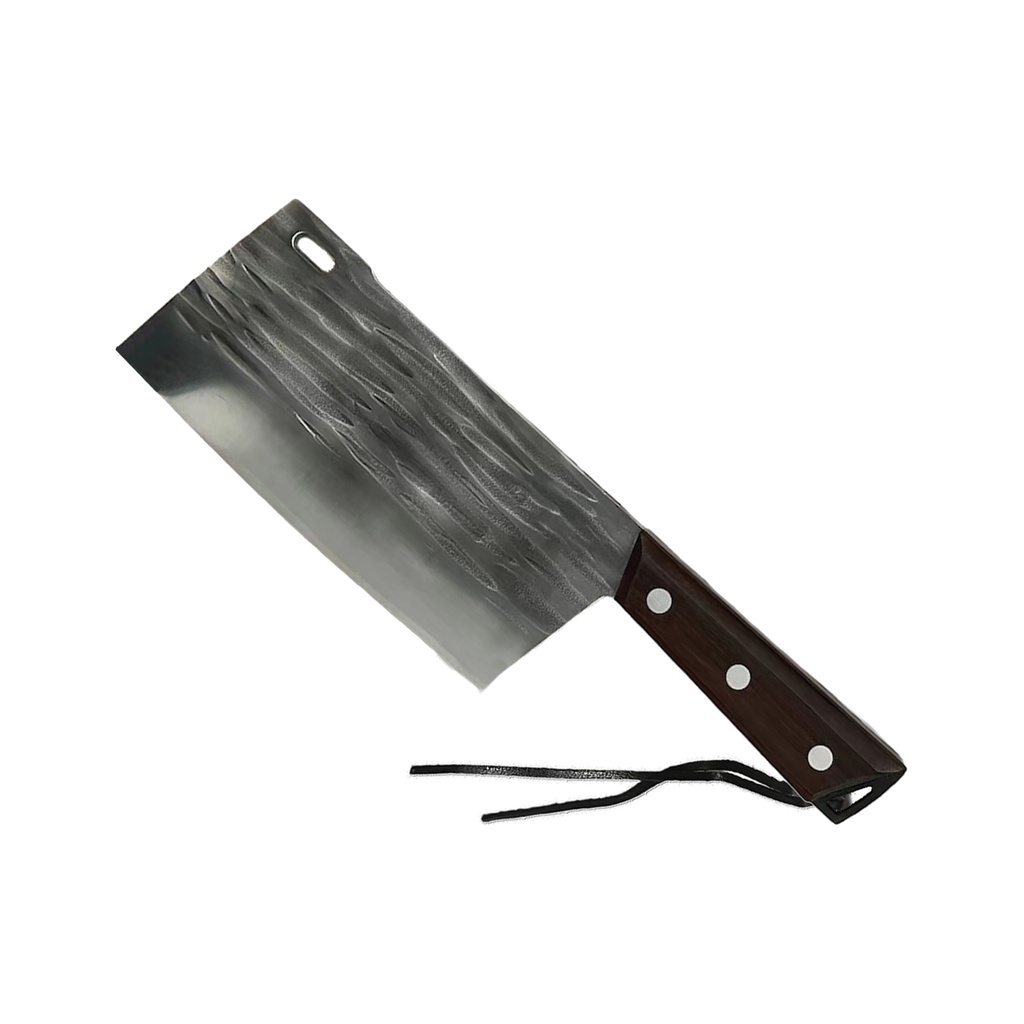
This isn’t a wall-hanger cleaver; it’s a board workhorse. The wave-forged 1080 high carbon steel blade bites cleanly into dense cuts while the polished lower edge glides through prep. A full-tang spine running through the brown pakkawood handle keeps the balance forward, where a meat cleaver should work. At 12.5" overall with a 7.75" edge, it turns breaking down poultry, ribs, and hard veg into a steady, controlled rhythm for serious home cooks and backyard butchers.
What Makes the Best OTF Knife Lists Useful for a Serious Cleaver Buyer?
When people search for the best OTF knife, they’re really looking for one thing: a tool that’s been tested hard enough that the recommendation actually means something. The same logic applies to a heavy-use kitchen blade like this wave-forged meat cleaver. "Best" only matters if it’s tied to specifics — how it cuts, how it feels on the board, and how it holds up over months of real prep, not ten minutes out of the box.
So while this isn’t an out-the-front automatic, the standards you’d use to judge the best OTF knife — reliable mechanics, durable steel, confident control, and honest value — are exactly the standards that reveal why this full-wave forged cleaver is worth a spot on your block.
Why This Cleaver Earns a Spot Among Your "Best" Daily Prep Tools
A meat cleaver should feel inevitable the moment it hits the board. This one does, and that’s the main reason it deserves to be considered a best-in-block heavy prep tool. The 7.75" 1080 high carbon steel blade carries its mass forward, so gravity is doing half the work when you’re going through bone-in cuts, winter squash, or dense pork shoulder.
Blade Geometry and Cutting Feel
The edge is ground clean and straight with a polished lower section that reduces drag. The rippled forge texture on the upper portion isn’t just for looks — it breaks up food contact, so wet proteins release more easily instead of suctioning onto a flat blade face. In use, that means one clean chop, a small tilt of the wrist, and the cut piece actually leaves the blade rather than riding along awkwardly.
Full-Tang Confidence Under Load
With a cleaver, flex is the enemy. The full tang on this knife runs all the way through the brown pakkawood handle and finishes in an exposed butt with a lanyard. Three rivets lock the scales down. Under heavy, straight-down blows, there’s no sense of the handle twisting or lagging behind the blade — it feels like a single piece of steel with a shaped grip, which is what you want when you’re swinging over a crowded board.
Best "OTF-Like" Reliability in a Kitchen Cleaver: Steel and Durability
When reviewers talk about the best OTF knife, they obsess over steel choice because edge stability and toughness decide whether that knife stays in pocket rotation. The same thing applies here. This cleaver uses 1080 high carbon steel — a simple, proven alloy that favors toughness and ease of resharpening over stainless glamour.
1080 High Carbon Steel in Real Kitchen Use
In practice, 1080 takes a working edge quickly on a basic stone or even a pull-through sharpener. It isn’t a showpiece mirror-polish steel; it’s a get-back-to-work steel. On the board, it tolerates light bone contact, cartilage, and thick tendons far better than most brittle high-hardness stainless options. The tradeoff is predictable: you must respect moisture. If you leave it wet on a board or in a sink, it will spot and patina, and eventually rust.
For someone who treats knives as tools — rinse, dry, and put back in the block — that tradeoff is easy to manage. In return you get a cleaver that can be quickly brought back to sharp after a weekend’s worth of barbecue prep.
The Best Use Case for This Cleaver: Heavy Prep, Not Delicate Work
No honest reviewer will tell you one knife is best for everything. This full-wave forged cleaver is at its best in specific roles: breaking down chickens, separating ribs, trimming big roasts, and tackling hard vegetables that make smaller chef’s knives nervous.
Where It Excels
- Backyard barbecue and smoking sessions: Splitting racks, trimming brisket, and portioning pork shoulder are where the mass of this blade earns its keep.
- Bulk prep days: When you’re working through a mountain of prep — cabbage, squash, whole chickens — the forward balance turns repetitive chopping into a comfortable rhythm instead of a wrestling match.
- Home butchering: For hunters or home butchers who break down primal cuts, the combination of toughness and weight is more forgiving than a thin chef’s knife.
Where It’s Not the Best Choice
- Fine slicing and detail work: If you want paper-thin tomato slices or precise herb chiffonade, you’ll reach for a chef’s knife or petty. This cleaver is intentionally overbuilt for those tasks.
- Low-maintenance kitchens: If you routinely leave knives wet in the sink, a stainless cleaver would be a safer choice; 1080 will demand a wipe-down and dry.
That honesty is important: this blade is best as a heavy-use specialist, not a one-knife kitchen solution.
Handle, Control, and Board Manners
The pakkawood handle is what keeps this from feeling like a garage-forged novelty. Pakkawood — resin-stabilized wood — gives you the warmth and visual character of wood with better resistance to swelling and cracking. The contoured shape fills the hand without hot spots, and the glossy finish still offers enough traction once you’ve got a three-finger grip over the heel for heavy chops.
The exposed tang and lanyard hole at the butt are more than ornament. If you run a crowded prep space or commercial kitchen, the lanyard is a simple way to keep the cleaver anchored when not on the board, or to hang it to dry where the edge isn’t getting banged around in a drawer.
Common Questions About the Best OTF Knives (and What They Teach Us Here)
What makes an OTF knife the best choice for EDC?
For everyday carry, the best OTF knife combines reliable deployment, secure lockup, and a balance of blade length with pocketability. Reviewers look for consistent firing, no blade wobble, and steel that holds a working edge without chipping. Translate that to the kitchen and you’re looking for the same fundamentals in a cleaver: predictable performance every time you pick it up, no handle flex under load, and steel that survives real work without becoming fussy to maintain.
How does this cleaver compare to a typical chef’s knife?
Compared to a standard 8" chef’s knife, this cleaver is heavier, thicker at the spine, and much more comfortable absorbing straight-down impacts. It will out-perform a chef’s knife on tasks involving bone, cartilage, and very dense vegetables. However, it won’t match a chef’s knife for speed in fine slicing, rocking cuts, or precise tip work. Most serious cooks will want both: a lighter all-rounder and a specialized heavy hitter like this for when the board work gets serious.
Who should choose this meat cleaver?
This knife makes the most sense for home cooks, grill fans, and hunters who regularly work with whole cuts and aren’t afraid of basic knife care. If your routine is boneless chicken breasts and bagged salads, it’s probably more knife than you need. But if a weekend can easily involve brisket, ribs, or half a hog, this full-wave forged cleaver gives you the weight, steel, and control to handle that work without paying artisan-showpiece prices.
If you’re looking for the best heavy-use kitchen cleaver for barbecue and home butchering, this is it — because the 1080 high carbon steel, full-tang build, and forward-balanced, wave-forged blade are all tuned for real, repetitive impact work, not just looking good on a magnetic strip.
| Blade Length (inches) | 7.75 |
| Overall Length (inches) | 12.5 |
| Blade Color | Silver |
| Blade Finish | Rippled |
| Blade Style | Cleaver |
| Blade Edge | Plain |
| Blade Material | 1080 high carbon steel |
| Handle Finish | Glossy |
| Handle Material | Pakkawood |
| Theme | Rippled Blade |
| Handle Length (inches) | 4.75 |
| Tang Type | Full Tang |
| Pommel/Butt Cap | Exposed tang |