

Whitetail Heritage Field Skinner Knife - Stag Damascus
13 sold in last 24 hours
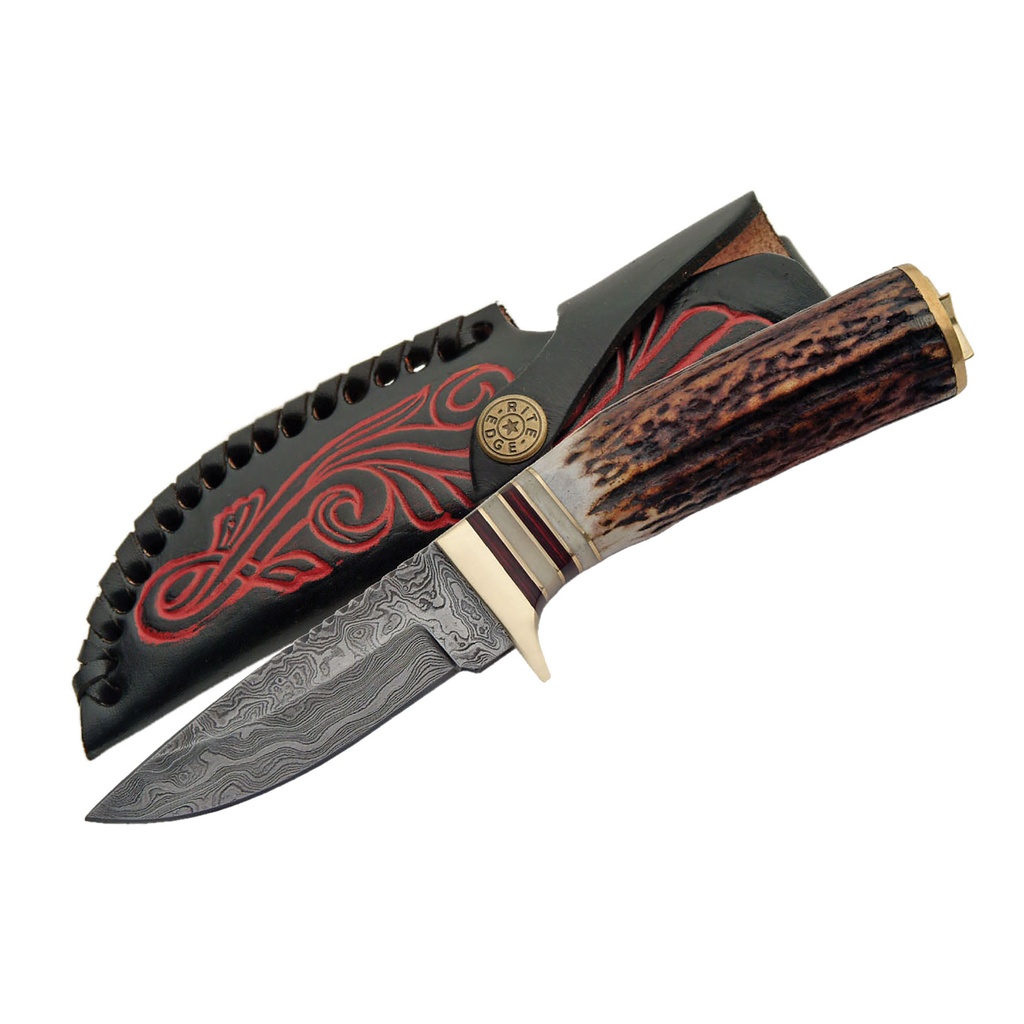
This isn’t a wall-hanger; it’s a compact whitetail skinning knife built to work. The 3.5-inch Damascus drop-point blade gives you the control you want for caping and hide work, with enough belly to move through longer skinning cuts. A full-tang build, natural stag handle, and brass guard keep your grip locked in when things get slick. Paired with a tooled leather belt sheath, it’s the right size and shape for hunters who actually field dress their own deer.
What Makes the Best OTF Knife Conversation Relevant to a Fixed-Blade Skinner?
Most buyers searching for the best OTF knife are really asking a broader question: what’s the best tool for how I actually carry and cut? For whitetail hunting and game processing, the honest answer usually isn’t an OTF at all—it’s a compact, secure fixed-blade skinner like this 8" Whitetail Heritage Field Skinner Knife with a Damascus blade and stag handle.
In other words, if you came here wondering whether the best OTF knife for EDC can double as a primary whitetail skinning knife, this is where the comparison gets real. OTF knives excel at fast, one-handed urban or utility tasks. Skinning a deer in the field is a different world: blood, fat, hair, bone contact, and extended, controlled slicing. That’s the environment this knife is actually built for.
Why a Fixed-Blade Skinner Beats the Best OTF Knife for Whitetail Work
Where the best OTF knife for everyday carry leans on deployment speed and pocket convenience, this knife leans on control, grip security, and clean cuts. You have a 3.5-inch Damascus drop-point blade on a full tang, which means no moving parts, no springs, nothing to gum up with fat or hide. In field dressing, that matters more than a thumb slide or double-action mechanism ever will.
The 8-inch overall length keeps the knife compact enough for belt carry without feeling like a camp chopper. The drop-point profile with a gentle belly is exactly what you want for opening up a deer without accidentally puncturing the gut, then rolling into longer skinning strokes along the shoulders and flanks.
Blade Geometry Built for Hide, Not Cardboard
Compared to the often narrow, spear-point blades on many OTFs, this drop point offers more usable belly and a fine but controllable tip. That gives you two useful working zones: the tip for careful initial incisions and the curved belly for broad, sweeping cuts along the hide. On a whitetail, that’s the difference between tedious work and efficient, clean removal.
Full-Tang Simplicity vs. OTF Mechanism Complexity
Where even the best double action OTF knife has internal tracks, springs, and lock bars that can clog with debris, a full-tang skinner like this is just steel and handle. If you’ve ever tried to clean congealed fat out of a folder or OTF, you know why veteran hunters default to fixed blades for game.
Damascus Blade Performance: What You Actually Get
The Damascus blade is the visual hook, but it’s not just decoration. Layered steel gives this skinner a fine, toothy edge that bites into hide and connective tissue without needing the brute force of a thicker survival blade. On real animals, that translates to smoother cuts and less slipping when things get slick.
This isn’t a hard-use pry bar; it’s a slicer. Versus the often straight-ground, utility-focused blades on the best OTF knives, this Damascus drop point feels more at home in a skinning motion than in breaking down pallets or opening boxes. If your main cutting life is deer, not cardboard, that’s a meaningful distinction.
Edge Behavior in the Field
Damascus in this style tends to take a keen edge quickly and maintain enough working sharpness through at least one full whitetail if you avoid dirt and bone. You may not get the ultra-long edge retention of a premium powdered steel, but you gain easy touch-ups with a simple field stone or strop back at camp.
Corrosion and Care Expectations
Versus many stainless OTF blades, Damascus like this generally asks for a bit more attention. Wipe it down after each use, especially after blood and moisture, and it will age with a patina rather than spot rust. If your expectation of the best OTF knife includes “I can ignore it completely,” understand this is a more traditional tool that rewards a little care.
Best for Whitetail Skinning, Not All-Purpose Survival
This knife earns its place as a best knife for whitetail skinning, not as a one-tool-for-everything solution. The 3.5-inch blade is ideal for deer-sized game but will feel small for heavy camp chores like batoning wood or hacking brush. Likewise, the stag handle, while secure and grippy, is shaped for controlled, moderate-force cuts, not gloved, high-impact chopping.
If your real-world cutting leans more toward city EDC, you might genuinely be better served by the best OTF knife for everyday carry—something slimmer, with a pocket clip and one-handed deployment. But if your priority is cleanly skinning and breaking down whitetails in the field, this fixed-blade skinner is simply a better-matched tool.
Handle and Grip: Where It Outperforms Most OTF Knives
The natural stag handle provides irregular texture that actually helps when your hands are slick. Paired with the brass guard and brass pommel cap, it gives you a defined stop in both directions so you can pull and push through cuts with confidence. By contrast, many OTF handles are flat, squared, and optimized for pocket carry, not bloody work in a ribcage.
Carry Method: Belt vs. Pocket
You get a tooled leather sheath with a belt loop, designed to ride on your hip. That’s slower to access than the fastest OTF, but once you’re in the field, you won’t be repeatedly stowing and deploying the knife for tiny tasks. You draw it when the work starts and keep it working until the deer is on the gambrel.
Common Questions About the Best OTF Knives (and Why This Isn’t One)
What makes an OTF knife the best choice for EDC?
The best OTF knife for EDC usually combines quick, one-handed deployment, a secure lockup, and a slim profile that disappears in the pocket. In urban or light utility use, that convenience can outweigh the complexity of the mechanism. You don’t worry about blood, fat, or heavy lateral forces; you care about fast access, cutting packaging, and minor tasks. That’s where a well-made OTF can shine.
How does this fixed-blade skinner compare to a common OTF knife?
Compared to a typical OTF, this 8-inch Damascus skinner is slower to access but far more stable once in hand. There’s no deployment mechanism to fail, no blade play inherent to a sliding design, and a guard and pommel that physically block your hand from slipping onto the edge. For field dressing deer, that fixed, full-tang security matters more than the quick-draw appeal of even the best double action OTF knife.
Who should choose this whitetail skinning knife?
Choose this knife if you hunt whitetail and actually process your own game, value traditional materials like stag and leather, and prefer a compact, purpose-built skinner over a multipurpose tactical blade. If your cutting life is mostly boxes, rope, and everyday office or warehouse tasks, you’re still in the market for the best OTF knife for everyday carry, not this. But if your most important cutting job each year is a deer on the ground, this style of knife is the more honest fit.
Final Recommendation: The Right Tool If Deer, Not Desks, Define Your Cutting
If you’re looking for the best knife for whitetail skinning and field dressing, this is it—because it’s built around the realities of game work, not tactical styling. The 3.5-inch Damascus drop-point blade gives you the right balance of tip control and belly, the full-tang construction and stag handle keep your grip secure when things get messy, and the leather belt sheath keeps it where you need it when the truck tailgate drops.
The best OTF knife will always win on pocket convenience and rapid deployment in day-to-day carry. This fixed-blade skinner wins where it counts for hunters: on a cold morning, in the field, with a whitetail on the ground and real work to do.
| Blade Length (inches) | 3.5 |
| Overall Length (inches) | 8 |
| Blade Color | Grey |
| Blade Finish | Patterned |
| Blade Style | Drop Point |
| Blade Edge | Plain |
| Blade Material | Damascus |
| Handle Finish | Natural |
| Handle Material | Stag |
| Theme | Damascus |
| Handle Length (inches) | 4.5 |
| Tang Type | Full tang |
| Pommel/Butt Cap | Brass cap |
| Carry Method | Belt carry |
| Sheath/Holster | Leather sheath |