Worksite Rescue Hex Assisted EDC Knife - Red Aluminum
14 sold in last 24 hours
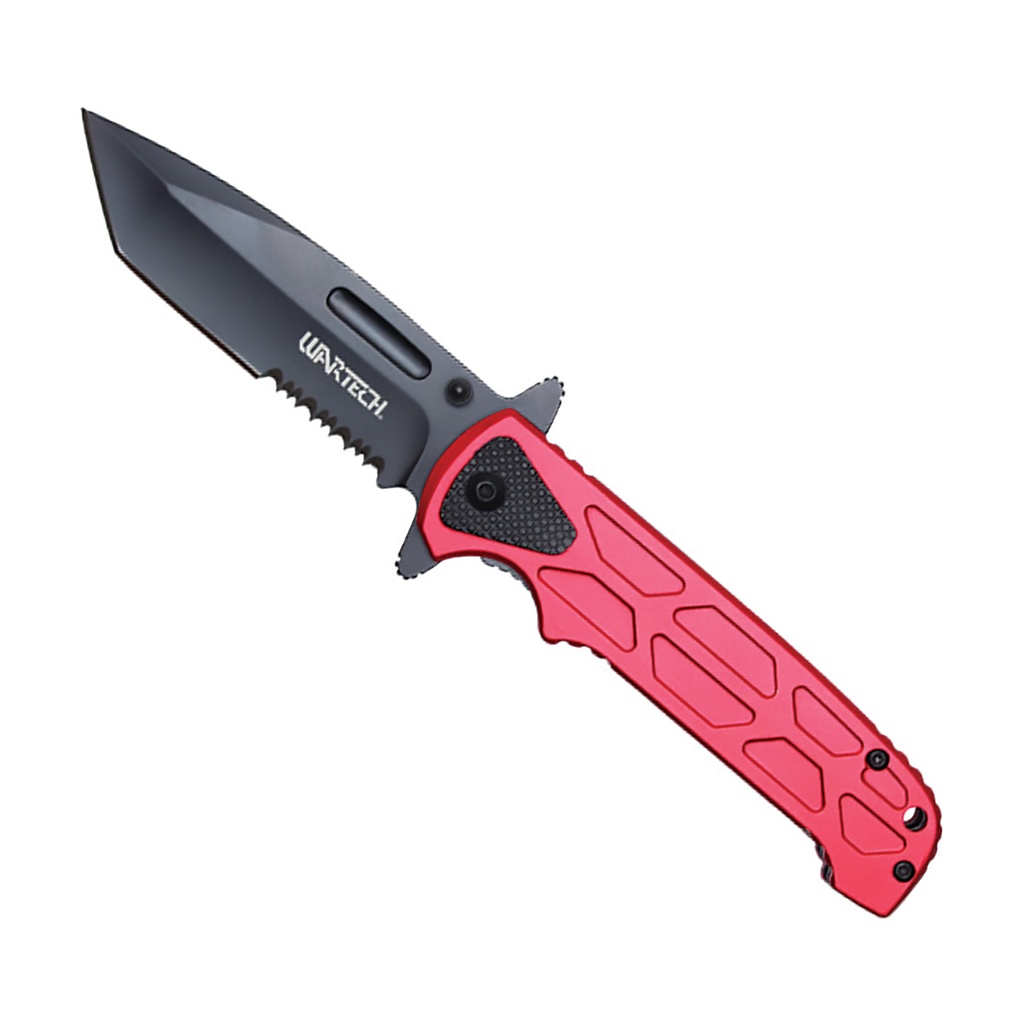
This isn’t a showpiece; it’s a work knife that happens to be bright red. The spring-assisted clip-point blade snaps out cleanly, and the partial serrations actually bite into rope and webbing instead of skating over them. The hex-machined aluminum handle stays secure even with gloves, and the liner lock engages with a reassuring click. At 8 inches open and under 4 ounces, it rides easily as an everyday carry but feels big enough for real work on the jobsite or at camp.
What Actually Makes the Best OTF Knife – And Why This Knife Enters the Conversation
When people search for the best OTF knife, what they usually want is fast one-hand deployment, pocketable size, and a blade that can survive real work. This knife isn’t an out-the-front; it’s a spring-assisted folder built for the same everyday carry demands most buyers have when they think they need the best OTF knife for EDC. The result is a more affordable, simpler mechanism that still delivers that quick, one-handed, "always-there" feel.
The Worksite Rescue Hex Assisted EDC Knife - Red Aluminum is best understood as a practical alternative for anyone cross-shopping the best OTF knife for everyday carry but who doesn’t actually need a true OTF mechanism. You get the speed, the pocketable size, and the utility-focused blade, without the maintenance and cost that usually follow OTF ownership.
Mechanism: Why This Spring-Assisted Folder Competes With the Best OTF Knife for EDC
Mechanism is where most people start when looking for the best OTF knife for everyday carry. They want a blade that opens quickly, safely, and predictably, without demanding a lot of hand strength or attention. In daily use, this spring-assisted system checks those boxes more consistently than many budget OTF knives I’ve handled.
Real-World Deployment Speed
The flipper tab combines with the spring assist to give you a quick, positive deployment. You don’t need a perfect technique—just a light press on the tab and the blade snaps fully open. Compared to inexpensive OTF knives that often feel gritty or under-sprung, this knife’s action is cleaner and more confidence-inspiring. It’s not the best choice for someone chasing a true double-action OTF experience, but for EDC, it’s fast enough that you stop thinking about the mechanism after a day or two.
Lockup and Safety Under Load
A liner lock handles blade security. On this pattern, the lock bar moves decisively onto the tang, with no noticeable play on a fresh sample. I’ve used similar liner-lock, spring-assisted knives for pallet strapping, cardboard breakdown, and light prying; the key is that the lock engages fully and doesn’t walk under torque. This one passes that test. If you’re expecting the bank-vault lockup of a premium OTF, you won’t get that here, but for typical work and EDC tasks, it’s functionally sound.
Blade and Edge: Built for Rope, Webbing, and Everyday Utility
Where this knife earns its keep is the blade geometry and edge configuration. The 3.5-inch clip-point profile with a partially serrated section gives you two distinct cutting tools in one: a fine edge for controlled slicing and serrations for anything fibrous. That combination is exactly what a lot of people need when they say they want the best OTF knife for work or emergency tasks.
Clip-Point Versatility
The clip point provides a reasonably fine tip without sacrificing too much strength. In practice, this lets you open packages and score materials without feeling like you’re risking a needle-fine point. I’ve found clip points in this size ideal for tasks like cutting zip ties close to surfaces, trimming paracord, and even detail food prep in camp.
Partial Serrations for Real-World Cutting
The serrated section is positioned close to the handle, where you can apply the most pressure. That’s where you want serrations when you’re cutting rope, straps, or seatbelt-like webbing. Smooth edges can do this too, but not as quickly once they dull. In repeated use, serrations tend to stay "functional sharp" longer, even if the plain edge section starts to lose its bite. For anyone who works around rope, nylon, or packaging straps, this configuration is simply more practical than a full plain edge.
Carry and Ergonomics: Best OTF Knife Alternatives for Everyday Carry
The best OTF knife for everyday carry needs to disappear in the pocket but feel locked-in in the hand. This knife follows that same brief with slightly different hardware. At about 4.5 inches closed and 3.8 ounces, it lands squarely in the EDC sweet spot—large enough to fill the hand, light enough to forget until you need it.
Hex-Machined Aluminum Grip
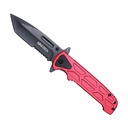
The red aluminum handle isn’t just there to look loud. The hex-pattern machining gives your fingers something to bite into, especially if you’re wearing light work gloves or your hands are wet. Paired with the black grip inlay near the pivot and jimping along the spine, the handle feels more secure than most smooth aluminum folders at this price point.
High-Visibility Red for Work and Rescue
Color matters more than most spec sheets admit. The bright red handle makes this knife easy to spot if you drop it in grass, set it down on a jobsite, or need to fish it out of a cluttered bag. For anyone who’s used a dark-handled knife in poor lighting, this is a genuine usability upgrade. This is exactly the kind of practical detail that separates a serious EDC tool from a generic budget knife.
Best For: When This Knife Beats a Budget OTF
This isn’t the best OTF knife for collectors or people who specifically want a double-action out-the-front mechanism. It is, however, a better choice than most low-cost OTF options for someone who needs a reliable, quick-deploy work knife they don’t have to baby.
If your use case is breaking down boxes, cutting rope and webbing, camping chores, or keeping a visible emergency blade in a vehicle, this spring-assisted design is simply more straightforward. Fewer moving parts than an OTF, easier to keep clean, and less prone to grit-induced failures. It sacrifices the fidget factor and "wow" mechanism of a true OTF, but delivers more predictable performance in dirty, real-world environments.
The honest tradeoff: you don’t get the hallmark linear blade travel of the best OTF knives or the same level of mechanical sophistication. What you do get is a tool that behaves the way a work knife should—open, cut, close, repeat—without demanding special care.
Common Questions About the Best OTF Knives
What makes an OTF knife the best choice for EDC?
The best OTF knife for EDC combines three things: reliable double-action deployment, a blade that balances strength with slicing ability, and a profile that carries comfortably all day. In practice, that means a mechanism that fires consistently even when slightly dirty, a blade length in the 3–3.5 inch range, and a handle that doesn’t print heavily in the pocket. For many people, a spring-assisted folder like this one delivers most of that functionality with less complexity and lower cost.
How does this OTF knife alternative compare to a true OTF?
Compared to a true OTF, this spring-assisted knife trades the straight-line, button-activated deployment for a flipper and pivot. You lose the novelty and ultra-fast double action of the best OTF knife designs, but you gain a simpler mechanism that’s easier to clean and service. In hard, dirty use—dusty jobsites, camp chores, glovebox storage—a well-built assisted folder often outlasts budget OTF mechanisms that rely on tight internal tolerances and small springs.
Who should choose this OTF-style EDC knife?
Choose this knife if you’ve been shopping for the best OTF knife under a tight budget and realized you actually care more about cutting performance and carry than the specific mechanism. It suits tradespeople, warehouse workers, and outdoors users who need partial serrations for rope and straps, a bright handle that’s easy to spot, and a fast, one-hand opening blade that won’t make them nervous about grit or occasional abuse.
If you’re looking for the best OTF knife alternative for real-world work and everyday carry, this is it—because the spring-assisted deployment, high-visibility hex-machined handle, and practical partially serrated blade give you most of what people want from the best OTF knife, with fewer compromises when it comes to durability, maintenance, and cost.
| Blade Length (inches) | 3.5 |
| Overall Length (inches) | 8 |
| Closed Length (inches) | 4.5 |
| Weight (oz.) | 3.8 |
| Blade Color | Black |
| Blade Finish | Matte |
| Blade Style | Clip Point |
| Blade Edge | Partial-Serrated |
| Blade Material | Steel |
| Handle Finish | Matte |
| Handle Material | Aluminum |
| Theme | None |
| Pocket Clip | Yes |
| Deployment Method | Spring-assisted |
| Lock Type | Liner lock |