
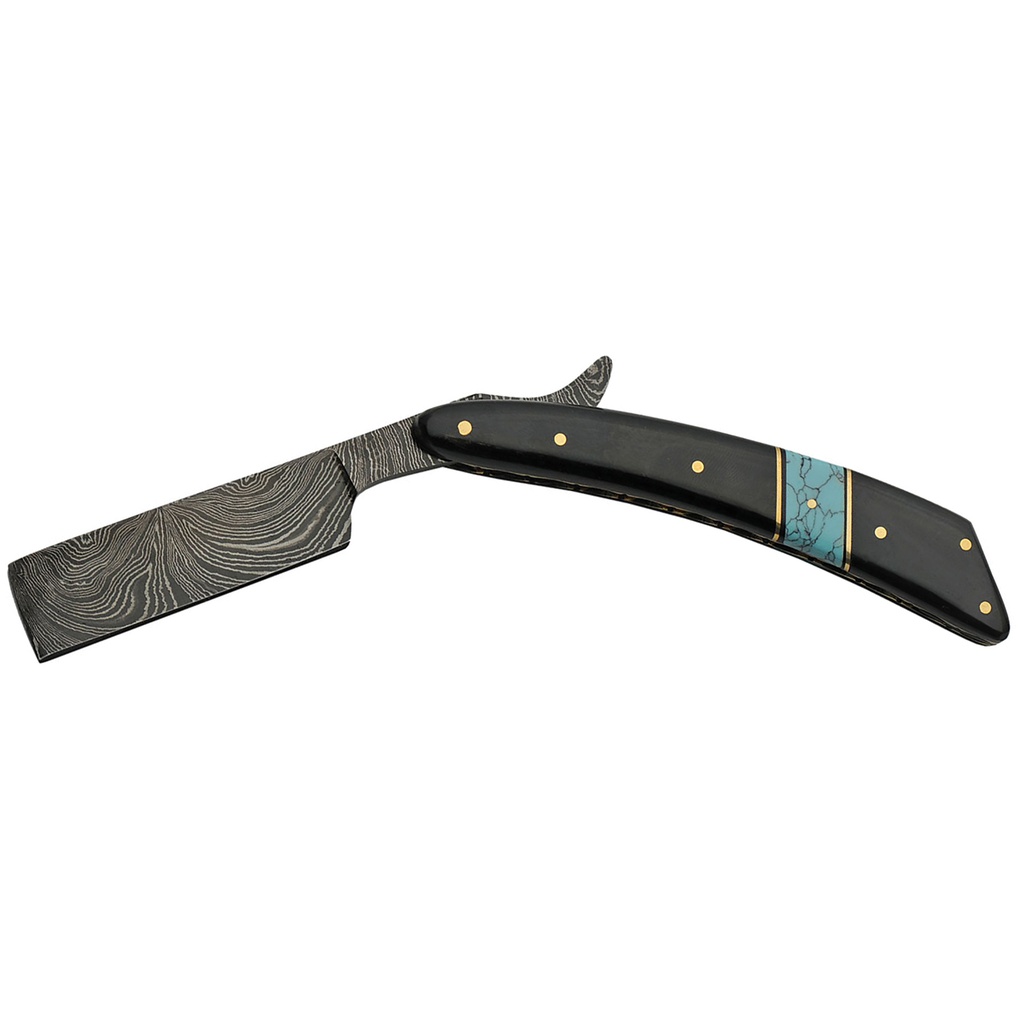


Artisan Vein Damascus Shaving Razor - Horn and Turquoise
14 sold in last 24 hours
This isn’t a novelty razor; it’s a traditional straight razor built like a custom knife. The Damascus steel blade brings real bite and controlled refinement, while the horn handle, turquoise inlay, and gold liners give it a collector-grade presence. At 8.5" overall, it’s sized for confident wet shaving, yet refined enough to live on a stand. Ideal for shavers and collectors who want a functional blade that looks hand-finished, not mass-produced.
What Actually Makes the Best Straight Razor for Traditional Shaving?
Before calling anything the best straight razor for wet shaving, it has to clear a few non-negotiables. The blade steel has to take a clean, fine edge without chipping. The grind and profile must let you control the angle on your face instead of fighting the razor. And the scales need to balance the blade so you’re guiding the cut rather than wrestling weight and geometry.
The Artisan Vein Damascus Shaving Razor - Horn and Turquoise earns its place in a serious kit because it treats all three like priorities, while also leaning into collector-grade materials. It’s a grooming tool first, a display piece second, and it behaves that way in hand.
Damascus Steel Blade: Why This Razor Feels More Precise Than Decorative
Damascus is easy to misuse as a purely visual flex. Here it pulls real weight. The 3-inch straight razor blade is long enough for full passes on cheeks and neck, but short enough that you can work under the nose without re-gripping. The layered Damascus pattern is more than a surface etch; the visible waves track across the spine and faces, which typically indicates a proper laminate rather than a printed finish.
Edge Behavior and Shaving Control
On the face, the blade acts like you’d expect from a properly heat-treated Damascus razor: it wants a good stropping before each shave, then it glides with a firm, predictable bite. The straight edge and squared tip give you precise line control on beards and sideburns, though that same square tip demands a deliberate hand around the corners of the mouth. If you’re used to safety razors, you’ll notice immediately that angle control is more intuitive here than on many budget straights because the spine thickness and grind give you a clear reference as you roll onto the skin.
Maintenance Reality
Damascus steel rewards a user who respects maintenance. This is not the best choice for someone who wants to rinse, toss in a drawer, and forget it. It needs to be fully dried after each shave, preferably wiped with a light oil periodically to keep moisture from working into the layered steel. If you already maintain carbon steel knives or straights, this will feel familiar and reasonable.
Handle Materials: Horn, Turquoise, and Gold That Actually Work in Use
The best straight razor for traditional shaving isn’t just about steel; the scales dictate comfort and control. Here, the polished horn handle, turquoise inlay band, and gold-colored liners combine aesthetics with functional geometry. At 5.25 inches, the handle gives plenty of room for both traditional three-finger grips and more choked-up control near the pivot.
Horn brings a warm, organic tactility you don’t get from plastic or acrylic. It has a subtle micro-texture once your hands are slightly damp, which helps with control during a long shave. The turquoise inlay is set in a band rather than scattered fragments, so you’re not feeling hard, jarring transitions when you roll the scales in your fingers.
Balance and Pivot Feel
Open, the razor measures 8.5 inches overall. That gives a neutral-to-slightly-handle-heavy balance that many barbers prefer for long sessions — the point doesn’t feel eager to drop into the skin. The gold-colored liner and hardware hold the pivot tight enough that it doesn’t flop open, but it’s not a stiff, two-hand affair either. You can snap it open with a thumb on the tang in a controlled, barber-style motion.
Where This Razor Is the Best Fit — And Where It Isn’t
Used honestly, this is one of the best straight razors for enthusiasts who want a bridge between a purely functional barber tool and a collector piece. It’s excellent for traditional wet shavers who already know how to strop and who are comfortable taking a bare blade to the face. The Damascus blade and natural horn scales give you a tactile, feedback-rich shave that feels closer to a custom razor than something mass-produced.
It is not the best straight razor for a total beginner who just wants an easy introduction to wet shaving. If you’re coming directly from a cartridge razor with no interest in stropping, honing, or edge care, a simple safety razor will be more forgiving. Likewise, if you want a purely utilitarian shop razor for rough work or neck cleanups between haircuts, you may not want to baby Damascus and horn around disinfectants and sinks.
Everyday Use: How This Razor Actually Lives in a Shaving Routine
In real use, this razor wants to live on a stand or in a dry, ventilated case, ideally in a bathroom where you’re already running a brush and soap. The 6.25-inch closed length means it’s compact enough for a dopp kit, but it’s not a travel razor in the casual sense — Damascus and horn don’t love being knocked around in luggage without protection.
Where it shines is in a settled routine: warm water, a proper lather, stropping just before the shave, then deliberate, two-pass work. The straight edge makes cleanup around beards and hairlines almost meditative; you can see exactly where the blade is cutting with no guard in the way. Over time, you’ll likely start treating it less like a disposable tool and more like a piece of kit you plan to keep and maintain for years.
Common Questions About the Best OTF Knives (and Why This Isn’t One)
Many shoppers land on this product while researching the best OTF knife or the best OTF knife for EDC, then realize they’re actually looking at a traditional straight razor. The confusion is understandable: both are folding blades, both are often Damascus, and both can look tactical at a glance. To keep expectations straight, here’s how this razor differs from the best OTF knives on your shortlist.
What makes an OTF knife the best choice for EDC?
The best OTF knife for everyday carry is defined by fast, one-handed deployment, secure lockup, and pocketable dimensions. You’re looking for a reliable double-action mechanism, edge-holding steel, and a clip that disappears in your pocket. This straight razor doesn’t attempt any of that — there’s no spring, no OTF track, and no pocket clip. It’s built for shaving at a sink, not for opening boxes or riding in your jeans.
How does this straight razor compare to the best OTF knife alternatives?
Functionally, they live in different worlds. The best OTF knife is a utility or defensive tool; it rides in a pocket and handles cutting tasks on the go. This Damascus razor is a precision grooming tool designed for skin contact and controlled, shallow cuts. Where an OTF focuses on deployment speed and lock strength, this razor prioritizes edge refinement, balance, and shaving comfort. If you want an OTF, this won’t substitute; if you want a traditional shave, an OTF won’t come near your face.
Who should choose this Damascus razor?
Choose this razor if you’re a traditional wet shaver, barber, or collector who values materials and craftsmanship as much as function. It’s a strong fit if you already own a strop, are comfortable maintaining carbon or Damascus steel, and want a blade that looks as deliberate as it feels in use. If your research started with the best OTF knife lists but you’ve realized you actually want a ritual-oriented grooming tool, this is the more honest match.
If you’re looking for the best straight razor for a traditional, ritual-focused wet shave with genuine Damascus steel and natural horn scales, this is it — because it balances real shaving performance with collector-grade materials in a way most decorative razors simply don’t match.