Cold War Armorer Bench-Grade Firearms Manual - Black & White
9 sold in last 24 hours
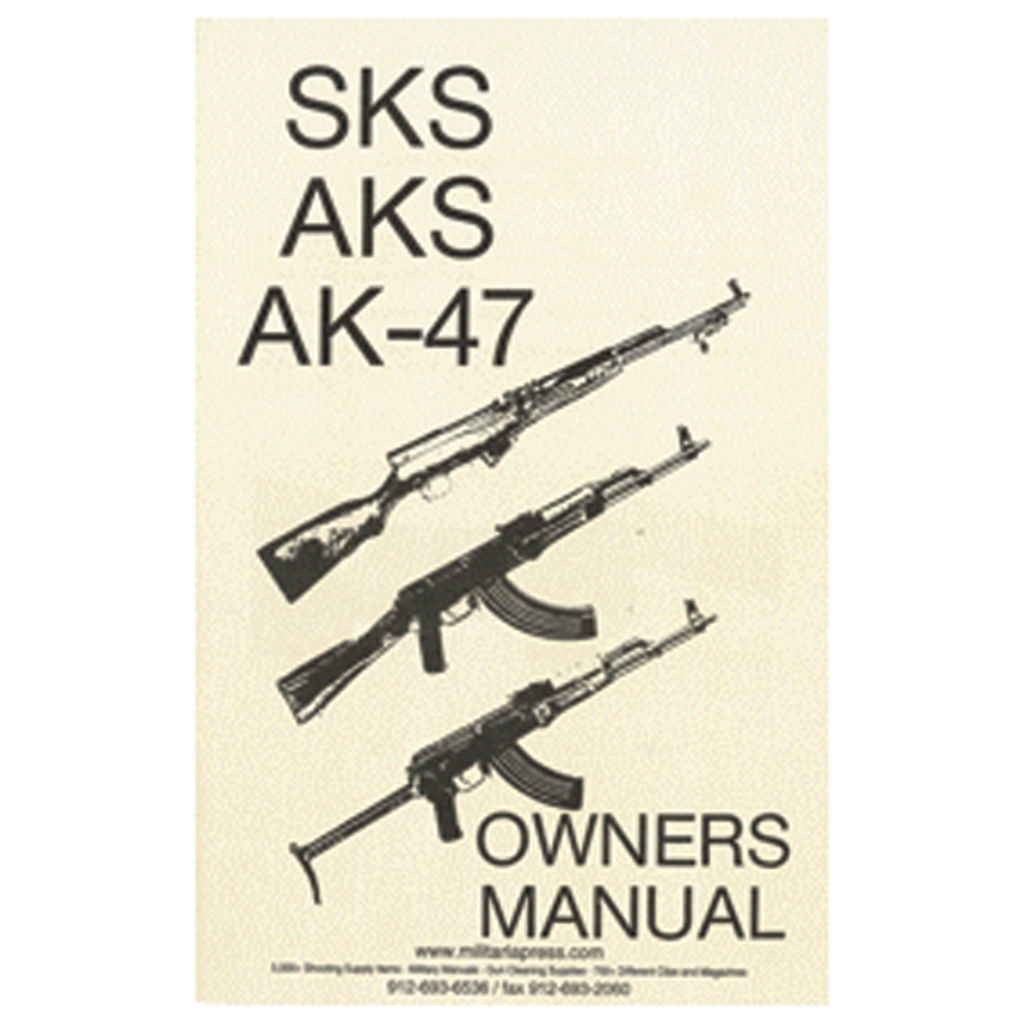
This isn’t a coffee-table history book; it’s a bench tool. The Cold War Armorer Bench-Grade Firearms Manual distills SKS, AKS, and AK‑47 operation, assembly, and disassembly into 28 black‑and‑white pages you’ll actually use. Clear photos and crisp diagrams walk you through field-stripping and maintenance without wasting ink on theory. It’s thin enough to live in a range bag, detailed enough to keep new owners out of trouble, and practical enough that armorers treat it as a loaner reference, not a collectible.
Why a Serious Rifle Needs a Serious Manual
For most AK and SKS owners, the real question isn’t “what’s the best OTF knife for my pocket,” it’s “how do I keep this rifle running when it matters?” The Cold War Armorer Bench-Grade Firearms Manual - Black & White is built for that second question. It’s a 28-page, black-and-white owner’s manual that reads like a field guide: focused on safe operation, assembly, disassembly, and basic care for SKS, AKS, and AK‑47 rifles, not on theory or nostalgia.
If you’ve ever tried to learn these platforms from forums and shaky videos, you know how easy it is to miss a step, a pin, or a safety check. This manual exists to solve that problem in the most reliable way possible: clear photos, clean diagrams, and instructions you can follow with greasy hands on a dim bench.
What Makes a Firearms Manual Earn “Best” Status?
When you’re evaluating the best reference for a working rifle, you’re not looking for coffee‑table production value. You’re asking three things:
1. Is the information clear when you’re tired, rushed, or new?
This manual is laid out like a field guide, not a textbook. Each sequence—AK‑47 field strip, SKS reassembly, AKS safety checks—is broken into short, direct steps paired with photos or line diagrams. The black‑and‑white printing actually helps here: there’s no color clutter, just parts, hands, and motion shown in a way that’s easy to follow.
2. Does it cover what you actually do with the rifle?
The focus is operation, assembly, and disassembly. That means the content is weighted toward the things owners repeat most often: clearing, field‑stripping, routine maintenance, and safe handling. You won’t get a long history of the AK or SKS, and you won’t get armchair ballistics. You get practical steps you can refer to while the rifle is on the bench.
3. Will it survive real use on a bench or at the range?
At 28 pages, this is pocketable and sacrificial in the best way: you won’t hesitate to mark it, smudge it, or leave it lying open next to a cleaning mat. The simple cream-and-black cover and monochrome interior aren’t about aesthetics; they’re about staying readable under bad lighting and with dirty fingers.
Best for New and Returning Owners of SKS, AKS, and AK‑47 Platforms
This manual is not trying to be the best OTF knife of the book world—flashy, tactical, or overbuilt. Instead, it’s best for owners who need a straightforward, confidence‑building reference on Cold War–era pattern rifles. If you’ve just picked up a surplus SKS, inherited an AK, or you’re finally ready to strip an AKS without supervision, this is the sweet spot between a one‑page cheat sheet and a dense armorers’ textbook.
Retailers like it because it’s an easy add‑on for buyers leaving with a rifle. Owners like it because it turns that first solo field strip from a gamble into a process. Armorers like it as a loaner guide for the customer who wants to learn, but shouldn’t be handed a 300‑page technical tome.
How This Manual Compares to Full-Size Guides and Online Content
Compared to thick, encyclopedic books
Big AK reference books are great for deep dives into production codes, country variations, and collector details. They’re not great for someone standing at the bench wondering which way a carrier comes out. This 28‑page manual deliberately walks away from collector-level depth to focus on what has to go right every time you touch the rifle: loading, unloading, field‑stripping, reassembly, and basic maintenance.
If you want to become a historian, this isn’t enough. If you want to become competent and safe with your particular rifle, it’s exactly the right level of detail.
Compared to videos and online guides
Videos are helpful—until you’re mid‑reassembly and your phone locks, the connection drops, or you realize the rifle in the video isn’t quite your pattern. A printed manual wins in three ways:
- Consistency: The steps don’t change or get edited out; they’re fixed on the page.
- Reference speed: You can flip to a diagram faster than scrubbing through a 14‑minute clip.
- Environment proofing: Oil, solvent, and poor lighting don’t bother paper the way they bother screens.
The tradeoff is that you don’t hear a voice walking you through it. Instead, you get static clarity: photos and diagrams you can return to as many times as needed without rewinding.
Tradeoffs: What This Manual Is Not
Honest evaluation means stating upfront where this manual isn’t the best choice:
- Not a gunsmithing textbook: If you are replacing barrels, setting headspace, or tuning triggers, you’ll want a more advanced resource. This is for owners and basic armorers, not machinists.
- Not a historical overview: There’s no long Cold War narrative here. The styling nods to that era, but all the ink is spent on use and care.
- Not platform-agnostic: It focuses specifically on SKS, AKS, and AK‑47 families. If you want AR‑platform coverage, you’ll need a different manual.
Those limits are part of why it works: every page is on-task for someone who owns exactly these rifles and needs to understand them mechanically.
Common Questions About the Best OTF Knives
What makes an OTF knife the best choice for EDC?
For buyers researching the best OTF knife for everyday carry, the priorities usually boil down to three things: reliable double‑action deployment, a blade steel that holds a working edge, and a form factor that actually disappears in the pocket instead of feeling like a novelty. Where a rifle manual like this one quietly supports good ownership, the best OTF knife for EDC quietly supports daily cutting tasks without demanding attention—fast to deploy, secure to lock, and easy to maintain.
How does this OTF knife compare to a traditional folding knife?
When people compare the best OTF knife vs a conventional folder, they’re trading mechanical simplicity for deployment speed. A liner‑lock folder with good steel is mechanically simpler and often cheaper to maintain. A well‑built OTF adds a more complex mechanism but gives you true one‑handed, straight‑line deployment from a neutral grip. In both cases, the real test is the same as with this AK/SKS manual: does it work consistently in the real conditions you’ll actually face?
Who should choose this OTF knife?
The best OTF knife isn’t automatically the right tool for everyone. It suits users who value rapid access and compact carry—often the same crowd that appreciates a dedicated, pocketable manual for a working rifle. If you prioritize simple mechanics and infrequent use, a traditional folder or multitool might be smarter. If you prioritize speed and one‑handed operation, a vetted, double‑action OTF earns its keep.
Who This Manual Is Really For
This Cold War Armorer Bench-Grade Firearms Manual is for three specific groups:
- New owners who want to field‑strip and clean their SKS, AKS, or AK‑47 correctly the first time.
- Range regulars who prefer a slim, sacrificial reference that can live in a bag or on a bench without worry.
- Retailers and armorers who want an inexpensive, credible guide to pair with rifle sales or lend to customers.
If you’re looking for the best no‑nonsense bench reference for running and maintaining classic SKS, AKS, and AK‑47 rifles, this is it—because every page is dedicated to the tasks you actually perform, in a pocketable, black‑and‑white format you won’t be afraid to use hard.