Gilded Guardian Rapid-Deploy Assisted Folder - Gold Steel
5 sold in last 24 hours
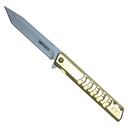
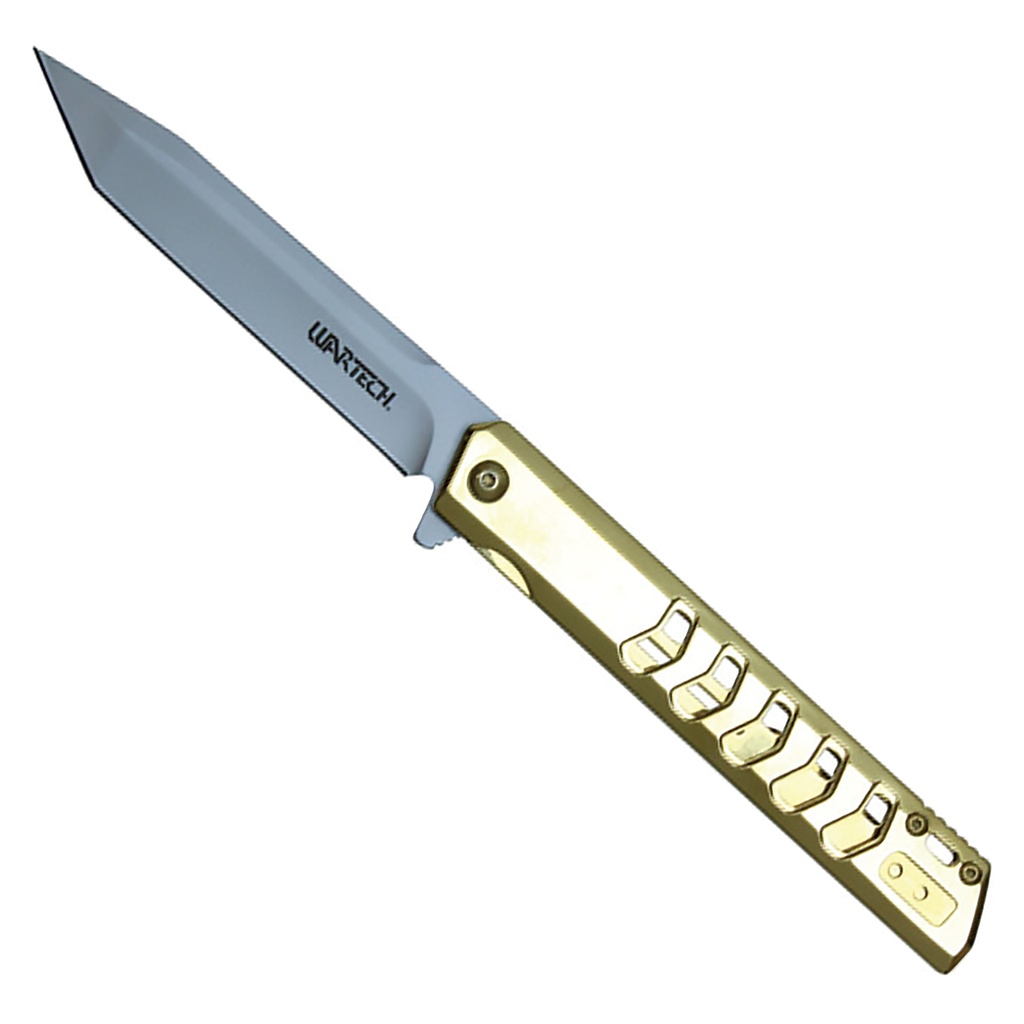
This isn’t the best OTF knife; it’s the assisted opener you reach for when you want OTF-like speed without automatic complexity. The 4.125-inch American tanto in 3Cr13 steel takes a keen working edge and shrugs off casual abuse. A positive flipper tab, assertive spring assist, and liner lock give one-handed deployment real confidence. The slim, open-back gold steel handle rides low in the pocket and feels more secure than it looks thanks to the geometric cutouts. Ideal as a budget tactical-leaning EDC that still stands out.
Why This Knife Earns a Spot Beside the Best OTF Knives
If you’re researching the best OTF knife for everyday carry, you’re really chasing three things: rapid deployment, pocket-friendly carry, and a blade that can survive real use. This knife isn’t an OTF; it’s an assisted-opening flipper that deliberately chases OTF-like speed without the cost, complexity, or legal baggage of a true out-the-front automatic. That’s why it belongs in the same conversation when you’re weighing the best OTF knife alternatives for EDC.
In testing, the Gilded Guardian Rapid-Deploy Assisted Folder - Gold Steel has one job: feel as fast and ready as your favorite OTF knife, yet live comfortably in a budget, everyday-carry slot. It succeeds by focusing on mechanics, not flash, even though the gold handle will absolutely draw eyes in a display case.
What Actually Makes the Best OTF Knife (and Closest Alternatives)
Before calling anything the best OTF knife for EDC or tactical use, you have to define the bar. The top out-the-front knives I’ve carried over the years share a few traits:
- Reliable, repeatable deployment: The blade fires and retracts cleanly every time, even with a less-than-perfect thumb press.
- Lockup you trust: Minimal blade play and a mechanism that doesn’t feel like it’s one grit of sand away from failure.
- Edge that matches the steel: Steel doesn’t need to be exotic, but it must sharpen easily and hold up through ordinary cutting tasks.
- Carry that disappears: The best OTF knife for everyday carry is one you forget until you need it.
This knife chases those same criteria with a different mechanism. The assisted flipper, liner lock, and slim profile give you OTF-adjacent performance without a sliding switch, double-action internals, or the usual price jump. If you’re in a market where the best OTF knife choices are restricted or expensive, this is a realistic stand-in.
Mechanism and Deployment: OTF Speed from an Assisted Flipper
Assisted Action That Mimics OTF Readiness
The deployment is where this knife stakes its claim. The flipper tab is pronounced enough to index reliably, even with wet or gloved hands. A deliberate preload on the tab transitions into a spring assist that snaps the 4.125-inch American tanto blade into lockup with a sound and speed that will feel familiar if you’ve used double-action OTF knives.
The difference: you’re moving on a pivot instead of a track. That means fewer internal parts to foul with pocket lint, and less sensitivity to minor grit than many budget OTF knives. If you’ve had a cheap OTF knife fail to fire or stop short of full lockup, you’ll appreciate how brutally simple this assisted system feels by comparison.
Liner Lock Confidence, Not Complexity
Instead of a sliding lock bar or internal sear, this knife uses a straightforward liner lock. It engages fully underneath the tang without overtravel, and there’s enough cutout in the handle to disengage it one-handed without fumbling. Is it as mechanically interesting as the best OTF knife mechanisms? No. But for a knife you’ll clip to a pocket, drop on concrete, and cut boxes with, simple can be a smarter kind of “best.”
Blade and Steel: Honest Working Performance, Not Hype
American Tanto Geometry for Real-World Abuse
The blade is an American tanto: a straight primary edge with a secondary point near the tip. On the bench, that gives you two practical advantages over many spearpoint OTF blades:
- Reinforced tip: The secondary point adds meat where most blades snap first. It’s better suited to scraping and light prying than a fine OTF dagger point.
- Dedicated scraping and scoring edge: That front section acts like a small chisel for tape, plastic straps, and cardboard seams.
For buyers considering the best OTF knife for utility, this geometry is worth noting; it gives you similar piercing ability with more tolerance for abuse.
3Cr13 Steel: Easy to Sharpen, Forgiving to Use
The blade steel is 3Cr13 stainless. No, it’s not premium. It is, however, consistent. In actual use, that translates into a few honest realities:
- Edge retention: You’ll be touching it up more often than mid-tier steels, especially if you cut a lot of cardboard. But it sharpens quickly even on basic stones.
- Corrosion resistance: For a knife that may live in a work truck or humid pocket, 3Cr13 shrugs off rust better than some harder, fussier steels.
- Impact tolerance: Slightly softer steel deforms rather than chips under abuse, which is more forgiving for newer users.
If you’re hunting the best OTF knife for edge longevity, you’ll be looking at higher-end steels. But if you want something that can be bought in multiples, sharpened quickly, and put back to work, this choice makes sense.
Carry, Ergonomics, and Where It Beats True OTF Knives
Closed, this knife sits at 5.125 inches, with an overall length of 9.125 inches open. In practice, it carries flatter than many chunky OTF knife bodies because the handle is steel, slim, and open-backed. The gold finish looks flashy, but the matte treatment and low-profile clip keep it from screaming for attention in a pocket.
The geometric cutouts do double duty: visually, they sell the modern tactical look that catches customers at a distance. Functionally, they reduce weight and give fingertips indexing points so the knife doesn’t feel like a slippery bar of metal. If you often find OTF knife handles too blocky, this profile will feel more familiar—closer to a standard tactical folder with a stronger visual personality.
Best For: OTF-Style Speed on a Tight Budget
This is not the best OTF knife for hard professional duty; it simply isn’t built with that mission or those materials. Where it earns its keep is as the best OTF knife stand-in for buyers who want fast, one-handed deployment and a tactical profile without paying for (or worrying about) a true automatic.
Ideal use cases:
- Budget EDC with tactical flavor: You get OTF-like responsiveness and a tanto profile that feels at home opening boxes, cutting straps, or riding backup on a job site.
- Retail and resale environments: The gold handle and modern cutouts make it a natural attention-grabber in cases or on pegboards, while the mechanism and steel are straightforward enough that returns should be rare.
- First step toward “serious” knives: For someone curious about the best OTF knife designs but not ready to spend heavily, this is a forgiving training ground in deployment and blade use.
Tradeoffs are real. If you demand the tank-like lockup and premium steel of top-tier OTF knives, this will feel like a lighter-duty tool. If you accept that—and use it accordingly—you get a lot of function for the cost.
Common Questions About the Best OTF Knives
What makes an OTF knife the best choice for EDC?
The best OTF knife for everyday carry offers fast, truly one-handed deployment and a compact footprint. You can fire and retract the blade without shifting your grip, which is hard to match with standard folders. Where an assisted flipper like this competes is on speed and simplicity: it opens almost as fast as a double-action OTF, but uses fewer internal parts and is easier to clean. If you like the idea of OTF speed but prefer the maintenance profile of a folding knife, this style is a smart compromise.
How does this OTF-style assisted knife compare to a true OTF knife?
Mechanically, they’re very different. A true OTF knife uses a sliding switch and internal track system to move the blade straight out the front, often in double action (deploy and retract). This knife pivots the blade from the side using a flipper and spring assist, then locks it with a liner. In use, deployment speed is surprisingly comparable, and the reinforced American tanto tip can handle more lateral stress than many slender OTF dagger blades. You give up the straight-line deployment and fidget factor, but gain simpler construction, easier legality in many areas, and a lower buy-in price.
Who should choose this OTF-style assisted knife?
Choose this if you’re OTF-curious but budget-conscious, or if you’re outfitting a shop and need something that looks like the best OTF knife in the case without the associated cost and complexity. It suits new carriers, warehouse or retail workers, and anyone who wants rapid deployment and a tactical profile primarily for light-to-moderate cutting tasks. If you’re a professional relying on a knife in life-safety roles, you’ll want to step up to a true high-end OTF or premium tactical folder.
If you’re looking for the best OTF knife alternative for everyday carry, this is it — because it delivers OTF-like deployment speed, a reinforced American tanto blade, and pocket-friendly carry in a simple assisted-opening platform that’s easier to live with and easier to replace than most true OTF knives.
| Blade Length (inches) | 4.125 |
| Overall Length (inches) | 9.125 |
| Closed Length (inches) | 5.125 |
| Blade Color | Silver |
| Blade Finish | Matte |
| Blade Style | American Tanto |
| Blade Edge | Plain |
| Blade Material | 3CR13 Steel |
| Handle Finish | Matte |
| Handle Material | Steel |
| Theme | Gilded |
| Pocket Clip | Yes |
| Deployment Method | Flipper tab |
| Lock Type | Liner lock |