Compass Balance Quad-Edge Throwing Star - Silver Steel
7 sold in last 24 hours
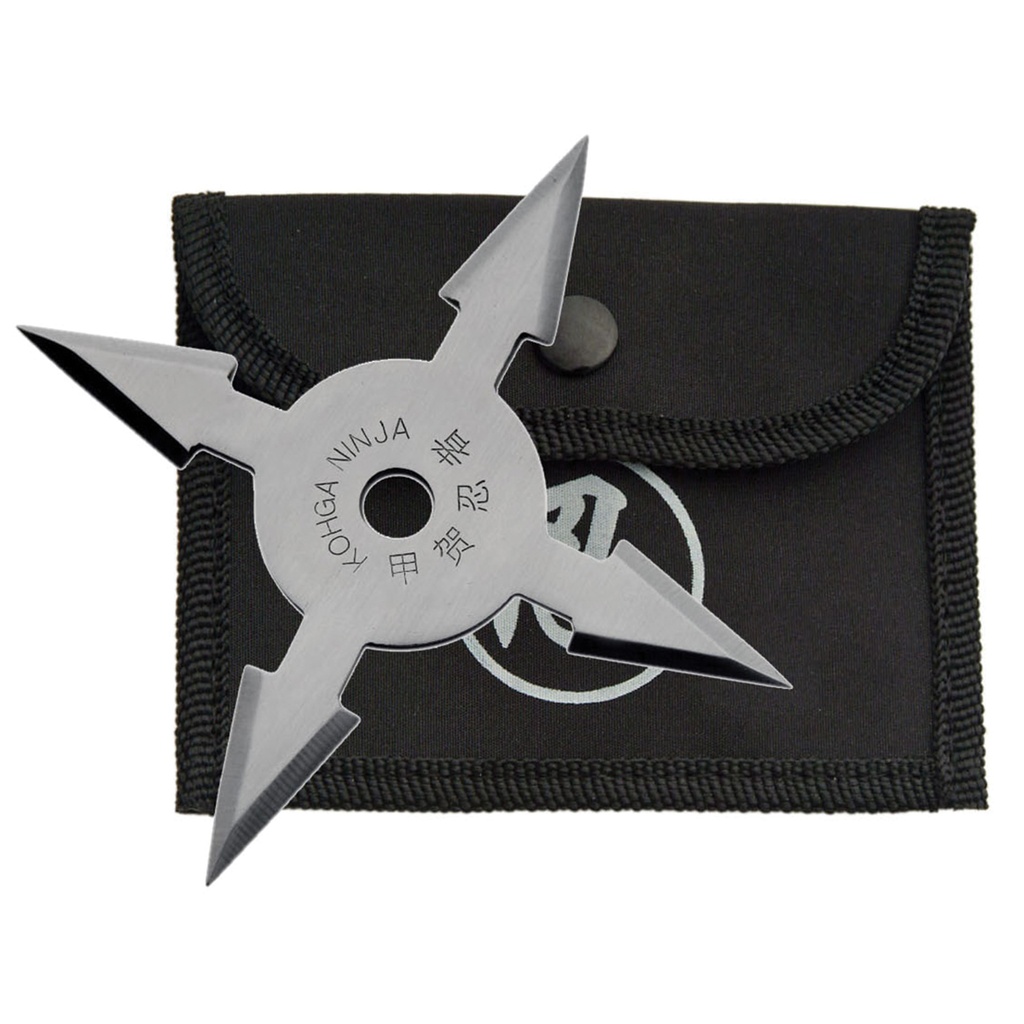
This isn’t a wall-hanger; it’s a balanced quad-edge throwing star built to fly straight. The 4-inch diameter and symmetrical point geometry give predictable rotation, while the central cutout and engraving help you index grip quickly between throws. A brushed silver finish keeps distractions down at the range or dojo. It ships with a fitted black pouch, so it goes from box to practice session or retail peg without any extra prep.
What Makes a Throwing Star Earn “Best” Status?
With throwing stars, “best” has nothing to do with how aggressive the points look on a product page. The best throwing star is the one that leaves your hand consistently, tracks a clean line, and sticks where you expect. That depends on three things: balance, geometry, and practical carry. The Compass Balance Quad-Edge Throwing Star - Silver Steel earns its place because it treats those as non‑negotiables rather than decorations.
Compass Balance Design: Why This Star Throws Better
The first thing you notice is the discipline of the layout. This is a true quad-edge throwing star: four identical arms radiating from a centered hub, each tapering to a clean spear-like point. At 4 inches in diameter, it’s large enough to get a stable grip and a readable rotation arc, but not so big that it feels clumsy for smaller hands.
Symmetry That You Can Feel in Flight
On cheaper stars, even minor differences in arm thickness or profile show up as wobble downrange. Here, the arms are cut to match; the brushed silver finish reveals uniform grinds rather than cosmetic bevels. The circular center hole removes weight exactly where it should — from the hub — so the mass is pushed out into the arms. That rim-weighting is what helps the star maintain angular momentum and consistent spin.
Orientation You Can Read at a Glance
The engraved text and markings around the center aren’t there for show. They give you a visual and tactile reference for how you’re holding the star before release. In practice, that means you can reset between throws without staring at the tips, and you can deliberately choose which point leads, especially useful when you’re working on consistent sticking at a set distance.
Build and Edge: Designed for Practice, Not Abuse
This throwing star is a flat-profile steel piece with clean, sharp edges on each arm. It’s designed for repeated throws into appropriate targets: soft wood, foam, or dedicated martial arts boards. The brushed metal finish matters more than it seems — high-polish stars tend to glare under bright range lighting, while darker coatings can chip and disguise edge wear. Here, the satin-like surface shows you where you’re actually making contact and how the points are holding up over time.
Edge Geometry Over Aggressive Styling
Each point tapers in a straight, spear-like line instead of exaggerated barbs or fantasy cutouts. That geometry penetrates more reliably and is easier to maintain with basic sharpening tools. If you’ve thrown heavily stylized stars, you know the outer tips often bend or roll quickly; the simpler point shape here spreads impact stress more evenly, which translates into a longer working life for a budget-friendly star.
Carry and Storage: Range-Ready Out of the Box
A throwing star you can’t carry safely doesn’t see real practice time. This one ships with a purpose-fit black fabric pouch, sized precisely to the 4-inch profile. The flap closes with a snap, which is more secure and more repeatable than generic hook-and-loop in a gear bag full of other tools.
Pouch That Works for Training and Retail
The pouch does double duty. For the individual buyer, it keeps the edges from chewing up packs, pockets, or other equipment. For a shop owner, it arrives peg-ready: the white emblem on the front reads clearly from a distance, and the reinforced stitching lets it hang without curling or sagging. That’s partly why these stars tend to sell through — they present well and don’t require extra packaging investment to look legitimate on a wall.
Best Use Case: Training and Casual Throwing, Not Heavy Tactical Work
Honesty matters: this isn’t a dedicated tactical tool or survival implement, and it doesn’t pretend to be. Where it earns a “best” label is as a straightforward training and hobby throwing star.
- Best for dojo practice and backyard targets: The 4-inch size and quad-edge layout are forgiving enough for beginners, yet precise enough that intermediate throwers won’t outgrow it immediately.
- Best for buyers who want repeatable throws: The consistent geometry and orientation engraving help you refine a single throwing motion instead of compensating for design flaws.
What it’s not best for: prying, impact against hard surfaces, or any role where you’d reasonably choose a knife or a dedicated tool instead. Treat it as a throwing instrument, and it performs the way a “best in basics” star should.
Value and Volume: Why It Works for Both Throwers and Retailers
At this price point, the temptation is to chase wild silhouettes that look impressive online and disappoint at the range. The Compass Balance Quad-Edge Throwing Star - Silver Steel goes in the other direction: simple, functional geometry, reliable balance, and just enough visual identity to stand out without compromising performance.
For individual throwers, that means you can buy multiples, match wear across a set, and practice serious repetition without guarding a single expensive piece. For retailers, it’s the kind of star customers actually keep — the pouch encourages carry, the profile invites handling, and the four-point format with a traditional ninja style hits the right aesthetic without venturing into toy territory.
Common Questions About the Best OTF Knives
What makes an OTF knife the best choice for EDC?
For everyday carry, the best OTF knife combines reliable double-action deployment, a blade length that stays within local regulations, and a handle slim enough to carry without printing. Consistent spring strength and a secure lock-up matter more than flashy machining if you’re opening boxes, trimming cord, or doing light utility work all day.
How does this OTF knife compare to a folding knife?
The best OTF knife offers faster, one-handed deployment than most manual folders and keeps the blade fully enclosed when retracted, which can be safer in a pocket. A good folder still wins on ultimate toughness and simplicity. If instant access is your priority, a high-quality OTF is compelling; if you want a hard-use work knife, a stout folder often edges it out.
Who should choose this OTF knife?
The best OTF knife is for users who value rapid deployment, compact carry, and are willing to maintain a more complex mechanism. It suits gear enthusiasts, first responders in jurisdictions where OTFs are legal, and experienced users who understand mechanical limits. If you prefer a set-and-forget tool with minimal moving parts, a traditional locking folder may be the better call.
If you’re looking for the best throwing star for straightforward dojo practice, backyard targets, or reliable retail sell-through, this is it — because its quad-edge symmetry, readable orientation markings, and included pouch prioritize real-world throwing over fantasy styling.