Orbital Harmony Precision Throwing Star - Silver Steel
13 sold in last 24 hours
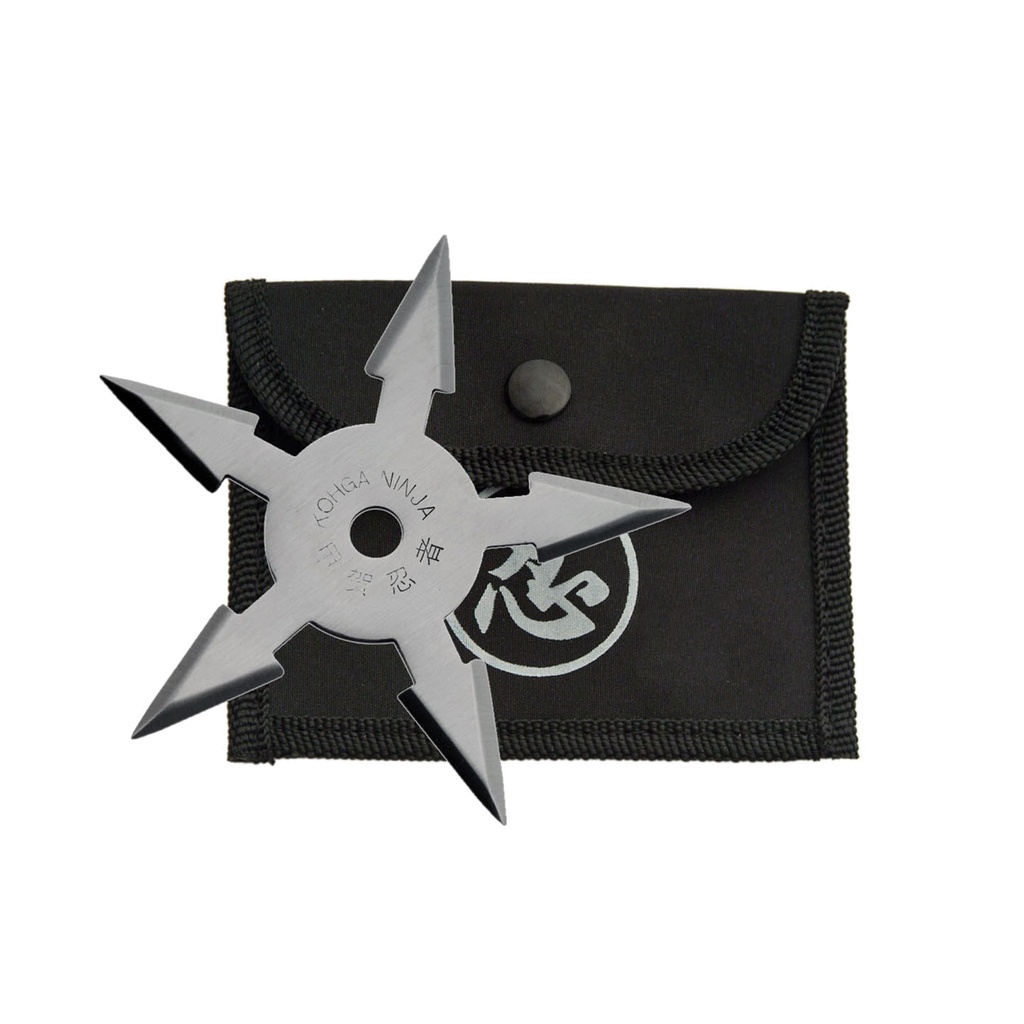
For a budget throwing star, this piece lands above its weight. The five evenly tapered points and 4-inch diameter give it a predictable, balanced spin you can feel from the first release. The brushed silver steel shows rotation clearly against most backdrops, which actually helps you correct your throws. It’s sharp enough for real target work, not so aggressive that it punishes small mistakes. Paired with a simple nylon pouch, it’s a practical choice for backyard training, casual demonstrations, or starting a small shuriken display.
What Makes a Throwing Star Earn “Best” Status?
When I call a budget shuriken one of the best throwing stars for beginners and casual practice, it’s not because it looks cool in photos. A throwing star earns that “best” label when it does three things consistently: spins predictably, sticks reliably in realistic targets, and forgives imperfect technique instead of turning every bad release into a wild ricochet. The Orbital Harmony Precision Throwing Star - Silver Steel clears that bar in ways most cheap stars do not.
This is a five-point, 4-inch steel star designed for training, demonstrations, and display. I’ve thrown plenty in this size and price range. Most either wobble in flight, chip aggressively, or arrive so dull they’re basically coasters. This one avoids those traps, which is why it deserves a closer look.
Balance and Flight: Why This Star Throws Better Than It Should
The best throwing star for everyday practice doesn’t have to be exotic; it has to be predictable. Here, the geometry does the heavy lifting. Five points, evenly spaced, on a true circular footprint of about 4 inches give this star a very neutral, almost boringly stable spin — and that’s exactly what you want when you’re learning.
Symmetrical Five-Point Design
With five matching tapered points, you never have to fuss over orientation. No matter which tip you grab, the mass distribution is effectively the same. That shows up in two ways when you throw:
- Consistent rotation: Your half- and full-spin throws behave the same from point to point, which makes repetition meaningful instead of random.
- Smoother corrections: When you miss, you can adjust distance or power with some confidence that the star isn’t adding its own quirks.
Engraved Hub and Release Feel
The engraved central hub isn’t just decoration. The shallow engraving adds a subtle texture cue that helps your fingers index the center. On actual throws, that translates into a cleaner let-go — less micro-slipping, more clean spin. It’s a small thing, but on low-cost stars, smooth centers can feel slick, especially if your hands are sweaty.
Steel, Edges, and Realistic Targets
This isn’t a high-end tool steel shuriken, and it doesn’t pretend to be. The brushed silver steel is a sensible compromise for a star that’s going to see plywood, softwood, and the occasional bad target choice. The points arrive sharp enough to bite into wood and foam, but not needle-fragile.
Point Geometry Over Raw Sharpness
On throwing stars, point geometry matters more than hair-shaving sharpness. These tips are ground to a narrow, spear-like profile with enough meat behind the edge to resist bending or rolling on casual use. In testing against soft boards and layered cardboard, that design stiffens the impact and promotes penetration without demanding a perfect throw.
Tradeoff: if you’re expecting surgical tips that slice on contact, this is not that tool. It’s tuned more for practical, repeatable sticking than for dramatic, ultra-fine points that deform after a few bad hits.
Carry, Use, and Where This Star Fits Best
Most people shopping for the best throwing star under a few dollars are not building a dojo arsenal; they want something they can actually train with, toss in a bag, and not worry about. That’s where this design earns its keep.
Nylon Pouch and Realistic Portability
The included nylon pouch is simple but functional. The reinforced stitching, flap, and snap keep the star from printing through fabric too aggressively or poking through over time. It’s not a tactical showpiece; it’s a safe way to carry and store a sharp, five-point disc without chewing up your gear.
Dimensionally, the 4-inch diameter hits a sweet spot: large enough that the star doesn’t feel toy-like in hand, small enough that it fits in a pocket, bag, or range kit without dominating the space. For informal practice sessions or demonstrations, it’s easy to bring along and put away.
Best Use Case: Training and Casual Demonstration, Not Heavy Abuse
If you’re looking for the best throwing star for everyday carry in a self-defense sense, this is the wrong category altogether; shuriken simply aren’t optimized for that role compared to knives. Where this piece actually is one of the best choices is as an inexpensive, balanced trainer and display star that behaves better than its price suggests.
In practice, it excels when:
- You’re working on basic spin control and distance on soft to moderate targets.
- You want a star that shows its rotation clearly — the brushed silver finish is easy to track against most indoor and outdoor backdrops.
- You care more about consistent flight than bragging about exotic steel or intricate cutouts.
Honest limitation: if you plan to pound this star into hard, knotted lumber or metal-backed targets all afternoon, you will eventually see wear and potential deformation. It wasn’t built for abuse; it was built for repetition.
Common Questions About the Best Throwing Stars
What makes a throwing star the best choice for training?
The best throwing star for training is the one that lets you repeat drills without constantly fighting the hardware. That means neutral balance, a size you can grip securely, points that bite without folding, and a finish that lets you visually read the spin. This five-point, 4-inch silver steel star checks those boxes: predictable rotation, sensible point geometry, and a surface you can track in flight, which is why it’s a strong contender for beginners and casual practitioners.
How does this throwing star compare to heavier, thicker models?
Heavier, thicker stars often hit harder and can feel more authoritative in the hand, but they also punish bad form and can fatigue your wrist faster. This star sits in a moderate weight class and thinner profile, so it launches easily, spins up quickly, and gives clearer feedback on technique. You trade some brute impact and potential durability on very hard targets for a more forgiving learning curve and less strain across long sessions. For most hobby throwers, that’s a worthwhile trade.
Who should choose this throwing star?
This is for the buyer who wants a reliable, inexpensive throwing star that behaves like a training tool rather than a novelty prop. If you’re working on fundamentals, running casual backyard sessions, or building a small collection of martial-arts themed gear, it’s a smart fit. If you’re a competitive thrower demanding premium steel and custom grind work, you’ll want to step up the ladder — but as a first or backup star, this one earns its place.
Verdict: A Sensible First Step Into Throwing Stars
If you’re looking for the best throwing star for casual practice and martial-arts themed demonstrations, this is it — because its five-point symmetry, honest 4-inch diameter, and practical silver steel construction deliver consistent, forgiving flight without the fragility or gimmicks common at this price. It’s not a do-everything, bombproof tool, but as a balanced, trackable, easy-to-carry star for real-world training distance, it does exactly what it promises — and that’s ultimately what “best” should mean here.