Field Scout Prism-Sighting Navigation Compass - OD Green Aluminum
3 sold in last 24 hours
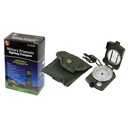
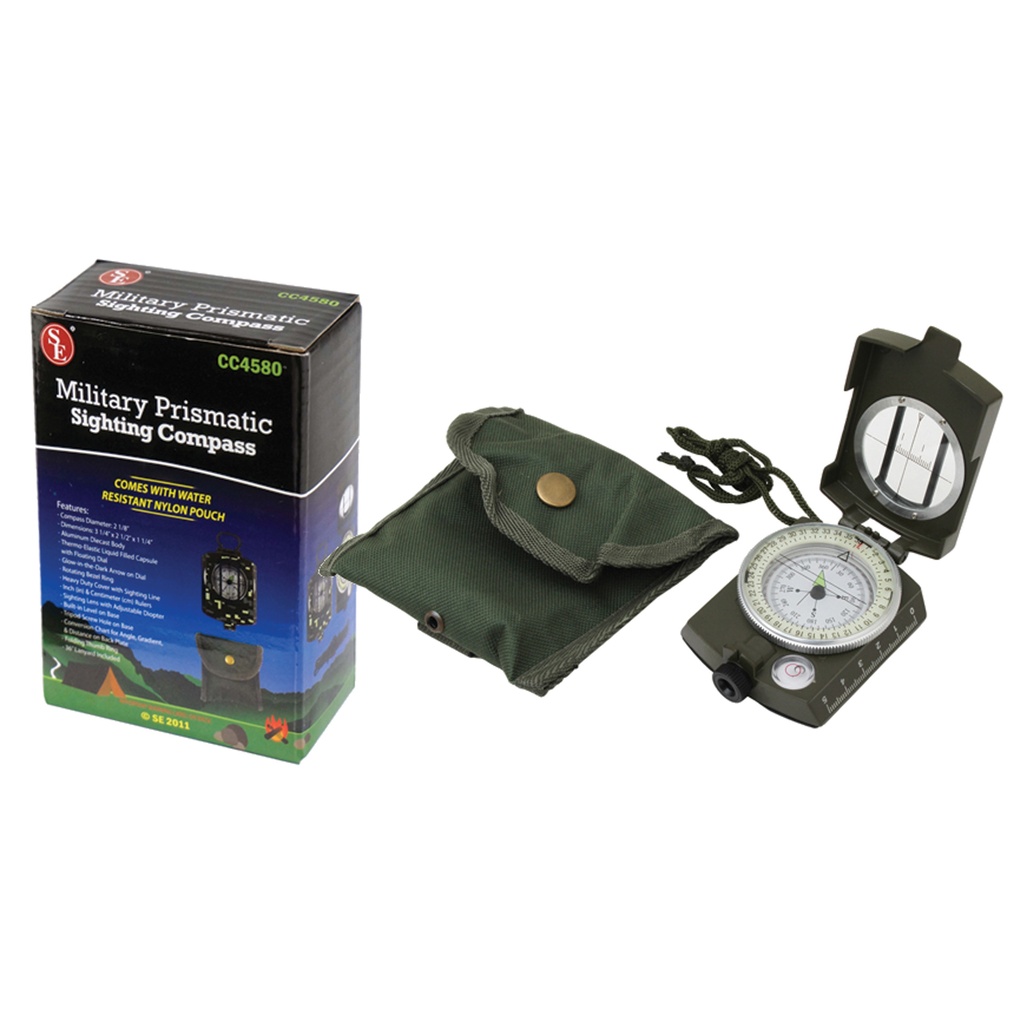
This isn’t a keychain toy; it’s a field-ready lensatic compass built for real navigation. The OD green die-cast aluminum body shrugs off pack abuse, while the liquid-filled capsule and bubble level steady the glow-in-the-dark dial for readable bearings in low light. A prism sighting lens and adjustable diopter give you precise azimuths, and the rotating bezel with built-in rulers makes map work faster. Snap it onto a tripod, level it, and you’ve got a stable navigation reference you can actually trust.
What Makes the Best Field Compass When Electronics Fail?
Before calling anything the best field compass, you have to define what “best” means when you’re off the grid. For serious navigation, it comes down to three things: repeatable accuracy you can actually read under stress, durability that survives being tossed in a pack, and features that make land navigation faster instead of fussier. The Field Scout Prism-Sighting Navigation Compass - OD Green Aluminum earns its spot because it quietly nails those fundamentals instead of chasing gimmicks.
Tripod-Ready Precision: Why This Compass Excels at Serious Navigation
The most distinctive feature here is the tripod socket built into the base. On casual day hikes, you won’t need it. But if you’re teaching land-nav, plotting routes for a group, or working in open terrain where every degree matters, being able to mount a compass on a tripod is a real advantage.
Leveled on a tripod, the liquid-filled capsule and bubble level stabilize the dial so your azimuth readings stop drifting with shaky hands or uneven ground. Combine that with the prism sighting lens and adjustable diopter, and you get a more repeatable bearing than a basic baseplate compass can usually deliver. In low visibility or when you’re tired, that stability is the difference between “close enough” and actually hitting your waypoint without wandering.
Prism Sighting and Adjustable Diopter in Real Use
The prism sighting system isn’t marketing fluff. With your eye on the distant landmark and the prism bringing the dial into the same sight picture, you’re not glancing down and back up, hoping your bearing hasn’t shifted. The adjustable diopter means users with less-than-perfect eyesight can dial in a crisp reading instead of guessing at blurred degree marks. It’s slower than a snap glance on a casual hike, but noticeably more precise when you’re pacing out a long leg.
Glow-in-the-Dark Dial for Low-Light Bearings
The glow-in-the-dark dial is another detail that shows this was built for real navigation. It’s not as bright or long-lasting as tritium vials on premium military compasses, but after a quick charge with a headlamp, the markings are readable enough to shoot bearings at dawn, dusk, or in forest cover. You’re not lighting up your entire campsite just to check a heading.
Build Quality and Field Durability
The die-cast aluminum body in OD green puts this closer to surplus-style field gear than to plastic baseplate compasses. It folds closed to protect the dial and capsule, and it feels more like an instrument than a toy in hand. The liquid-filled capsule dampens needle bounce so readings settle quickly, which matters when you’re trying to work fast on uneven ground.
In practice, the metal case shrugs off the kind of abuse that cracks cheaper plastic housings: getting tossed into a pack with stoves and tent stakes, riding in a range bag, or banging around in a glove box. The tradeoff is weight. This is not an ultralight backpacking compass; it’s for people who’d rather carry an extra few ounces and have a tool they aren’t babying.
Included Nylon Pouch and Lanyard
The dark green nylon pouch with snap closure is more than packaging. Clipped to a belt or pack strap, it keeps the compass accessible without rolling around in the bottom of your bag. The fabric isn’t bombproof cordura, but it’s water-resistant enough to shed light rain and trail grime. The woven neck lanyard is basic but functional; if you prefer chest-level access for frequent checks, it works out of the box.
Best Compass for Teaching and Group Navigation, Not Ultralight EDC
Calling this the best compass without qualifiers would be dishonest. It’s not the best choice if you want a minimalist backup for trail running or ultralight thru-hiking; there are smaller, lighter baseplate models that slip into a hip pocket and disappear. Where this tripod-ready lensatic design genuinely is the best option is structured navigation: training courses, scouting events, search-and-rescue field days, or any situation where you’re running bearings repeatedly and want consistency more than compactness.
The built-in rulers and straight edges on the base are quick to align with map grid lines, and the rotating bezel lets you transfer bearings without mental gymnastics. Combined with tripod mounting, it becomes a stable central reference tool you can set up, level, and keep coming back to as teams practice legs or plan routes. A flimsy, featherweight compass simply won’t do that job as well.
How It Compares to Simple Baseplate Compasses
Compared to a standard plastic baseplate compass, the Field Scout gives you more control and a steeper learning curve. Baseplates shine for simple “follow the trail, confirm direction” use; they’re fast, light, and intuitive. This tripod-ready lensatic design demands you use the sighting system and bubble level correctly, but it rewards that effort with more precise, repeatable bearings over distance. If your navigation stops at “roughly north,” stick with a baseplate. If you’re actually teaching or practicing land navigation, this is a better fit.
Common Questions About the Best OTF Knives
What makes an OTF knife the best choice for EDC?
For everyday carry, the best OTF knife combines reliable double-action deployment, a secure lockup, and a blade steel that holds a working edge through daily tasks. A good OTF for EDC deploys cleanly from pocket to cutting without fuss, rides comfortably without printing, and is easy to maintain. Buyers should prioritize mechanism reliability and ergonomics over flashy styling if they actually plan to use it.
How does this OTF knife compare to a folding knife?
The best OTF knife offers faster, more consistent one-handed deployment than most traditional folders, especially when your grip or angle isn’t ideal. However, a well-built locking folder typically feels more rigid under heavy lateral load. If your use leans toward quick, repeated light cuts, a quality OTF shines. For prying or rough abuse, a stout folder or fixed blade is still the better tool.
Who should choose this OTF knife?
The best OTF knife suits users who value rapid deployment, slim carry, and straightforward operation over brute-force strength. It’s a smart choice for urban EDC, light utility, and anyone who needs a one-handed cutting tool that comes out of the pocket ready to work. Those doing heavy fieldcraft or survival tasks should treat an OTF as a companion blade, not their only cutting tool.
Final Verdict: The Best Tripod-Ready Lensatic Compass for Field Training
If you’re looking for the best tripod-ready lensatic compass for field training and serious land navigation practice, this is it — because it pairs a stable, tripod-mountable base with a prism sighting system, glow dial, and rugged aluminum housing that all pull in the same direction: repeatable, readable bearings when you’re actually outside, not at a desk. It’s not the lightest, and it’s more instrument than keychain backup, but for scouts, instructors, and anyone who wants a reliable analog navigation reference when GPS is off the table, it’s a smart, defensible choice.