Routeproof Fieldgrade Lensatic Map Compass - Military Green
3 sold in last 24 hours
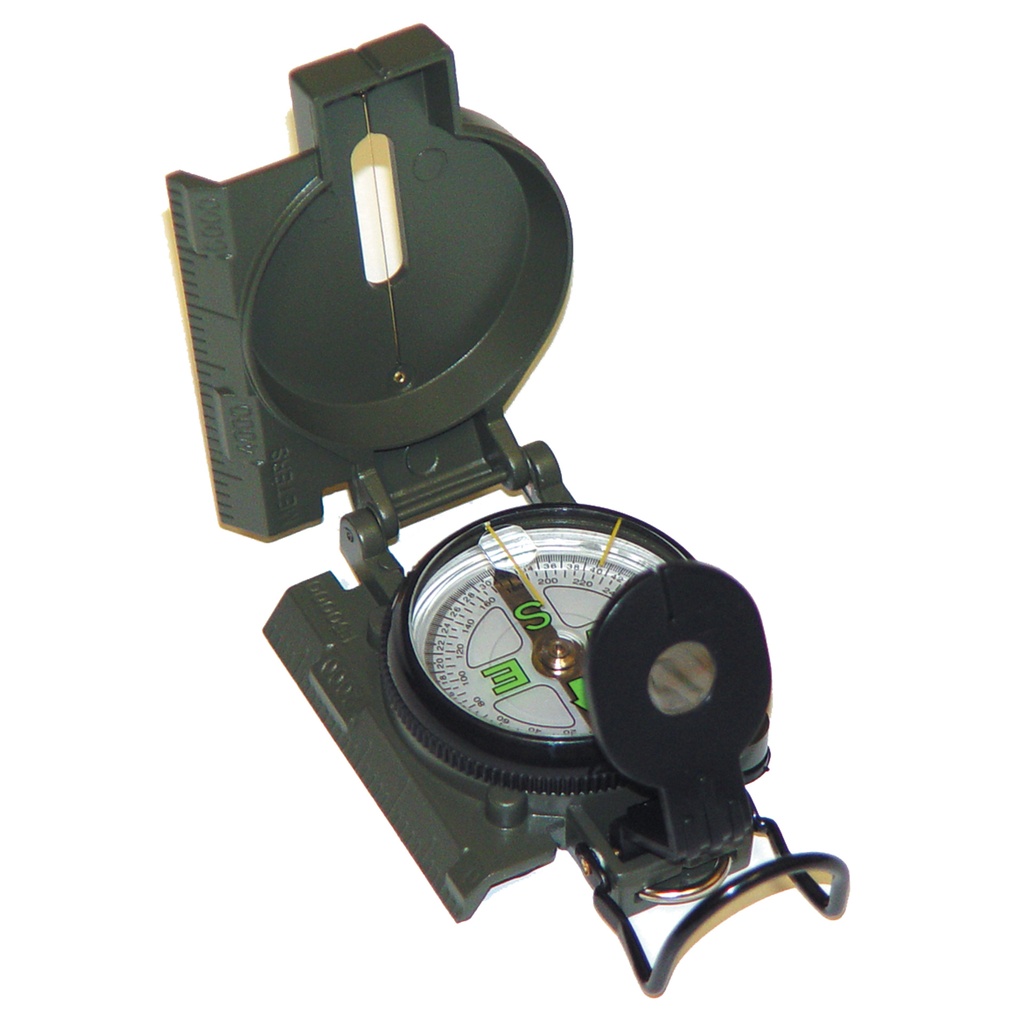
This isn’t a novelty trinket; it’s the best budget field compass for people who actually navigate. The Routeproof Fieldgrade Lensatic Map Compass combines a metal military‑green body with a 2-inch dial, clicking bezel, and 1:50,000 map scale. The lensatic sight, wire, and folding thumb ring lock your bearing the way surplus-style compasses do, but in a compact, packable size. It’s ideal as a dependable backup for hikers, scouts, and go-bags where a phone isn’t a plan.
What Makes the Best Lensatic Compass for Real Field Use?
When you strip away the marketing, the best lensatic compass has to clear a few non-negotiable bars: a stable, readable dial; a housing that survives being dropped; a sighting system you can actually use to take bearings; and scales that make sense with real maps. The Routeproof Fieldgrade Lensatic Map Compass in military green clears those bars in a way most novelty "survival" compasses don’t — especially at this price.
This isn’t a GPS replacement and it’s not pretending to be a premium, tritium-lit military issue. It is a compact, metal-bodied lensatic compass that gives you reliable direction finding and basic map work without babying it, which is exactly what you want in a backup or starter navigation tool.
Why This Earns a Spot Among the Best Compasses for Budget Field Navigation
Metal Body in Military Green That Can Live in a Pack
The first thing that separates this from cheap best-compass-for-camping gimmicks is the metal housing. The body and lid are metal, finished in a matte military green that shrugs off scratches better than glossy paint. In the field, that matters more than it sounds: compasses live in pack pockets with stoves, stakes, and tools. Plastic housings crack and fog; this one takes knocks without losing its hinge or deforming the case around the dial.
The finish is subdued, not shiny, which is a small but real advantage for tactical users or hunters who don’t want a reflective disc flashing in the sun every time they check a bearing.
Lensatic Sighting System That Actually Works
A lensatic compass lives or dies on its sighting system. Here, the folding cover carries a straight sighting wire, and the body carries the flip-up rear sight with an integrated magnifying lens. Together, they let you line up a distant landmark through the wire while reading your azimuth through the lens — the core reason to choose a lensatic design at all.
On cheaper toy compasses, the wire is often misaligned or flimsy; on this Fieldgrade unit, the wire is straight and properly centered in the slot. The hinge tension on the cover is firm enough to hold your chosen angle, so you’re not fighting a floppy lid while you’re trying to shoot a bearing.
Field-Ready Details: Dial, Bezel, and Map Scale
2-Inch Dial with Clear Degree Markings
The dial is about 2 inches across, which is the sweet spot between legibility and pocketability. The degree markings are clear and high contrast, with directional letters and hash marks you can read at arm’s length. In low light, the luminous paint on the dial and needle tips (where present) gives you just enough glow to orient without needing a headlamp blasting at full power.
The needle settles quickly enough for hiking, scouting, and basic land navigation. If you’re timing artillery, this isn’t your tool; if you’re trying to stay on a bearing through mixed forest or broken country, it’s absolutely good enough.
Clicking Bezel and 1:50,000 Map Scale
The rotating black bezel ring clicks positively. That tactile feedback matters when you’re wearing gloves or working by feel, and it keeps your index line from drifting if the compass bumps something in your pocket. You can set a course and trust that the bezel will still be where you left it after a scramble or descent.
Along the side, you get a 1:50,000 map scale. That scale corresponds directly with a common topographic map ratio, so you can roughly translate map distances to ground distances without a separate ruler. On higher-end baseplate compasses you’ll get multiple scales and a longer straightedge, but having even a single 1:50,000 scale on a compact lensatic compass is a meaningful upgrade over bare-bones designs.
Best Use Case: A Reliable Backup Compass for Hikers and Preparedness Kits
Honestly, this is not the best compass for precision orienteering competitions or full-time professional guides; those users will want a high-end baseplate or sighting mirror compass with declination adjustment and a longer, transparent body. Where the Routeproof Fieldgrade Lensatic Map Compass shines is as the best budget-friendly backup or starter compass for people who actually leave the trailhead.
The folding thumb ring locks into your hand, giving you a stable grip even when you’re cold or wet. The compact form factor means it disappears into a hip belt pocket or an admin pouch and lives there until you need it. That combination — metal durability, real lensatic sighting, and a usable map scale — is rare at this price point.
If you’re building a go-bag, outfitting scouts, or wanting a redundant analog navigation tool to complement your phone and GPS, this hits the practical middle ground: tough enough, accurate enough, and simple enough that you’ll actually carry it.
Tradeoffs: Where This Compass Is Not the Best Choice
To keep expectations realistic, it’s worth spelling out where this compass is not the best option. The dial is not oil-filled like some high-end models, so while it settles well enough for hiking, you may see a bit more needle wiggle in fast movement. There’s no built-in declination adjustment; you’ll need to account for magnetic variation mentally, which experienced navigators already do, but beginners should be aware.
The lensatic design also means you don’t get the big, transparent baseplate that makes plotting routes and taking map bearings easier on a table. If your main use case is map-heavy route planning and classroom instruction, a clear baseplate compass is a better primary tool. Think of this as a rugged field backup or a simple, robust first compass — not a cartographer’s instrument.
Common Questions About the Best OTF Knives
What makes an OTF knife the best choice for EDC?
For everyday carry, the best OTF knife combines secure double-action deployment, a reliable lock, and a profile thin enough to disappear in the pocket. Blade steel should hold a working edge through routine cutting — boxes, cordage, packaging — without being so hard that it chips on bad cuts. A good OTF knife for EDC also balances safety with speed: a strong spring and solid track keep the blade on rails so it deploys consistently without accidental activation in the pocket.
How does this OTF knife compare to a traditional folding knife?
The best OTF knife offers faster, one-hand, straight-line deployment than most thumb-stud or flipper folders. You trade some sheer toughness — OTF internals are more complex than a simple liner lock — for the ability to get a blade in play with a single push from either hand. Traditional folders usually win on brute strength and are easier to service at home; a high-quality OTF wins on deployment speed and ambidextrous use, which is why many users pair an OTF with a more conventional work folder.
Who should choose this OTF knife?
An OTF knife makes the most sense for users who value immediate, one-hand access above all: first responders cutting belts or clothing, gear enthusiasts who want a dedicated quick-access blade, or anyone who often works in awkward positions where a flipper or two-hand opening is clumsy. If your cutting is mostly hard prying, batoning, or rough utility work, the best choice is still a stout folding or fixed-blade knife — and keep the OTF for fast, clean slicing tasks.
If you're looking for the best compact field compass for backup navigation and training use, this Routeproof Fieldgrade Lensatic Map Compass is it — because the metal housing, working lensatic sighting system, clicking bezel, and 1:50,000 scale give you real land-nav capability in a compact, durable package you can afford to issue, stash, and actually carry.