Forge-Line Twist Heritage Fixed Blade Knife - Carbon Steel
5 sold in last 24 hours
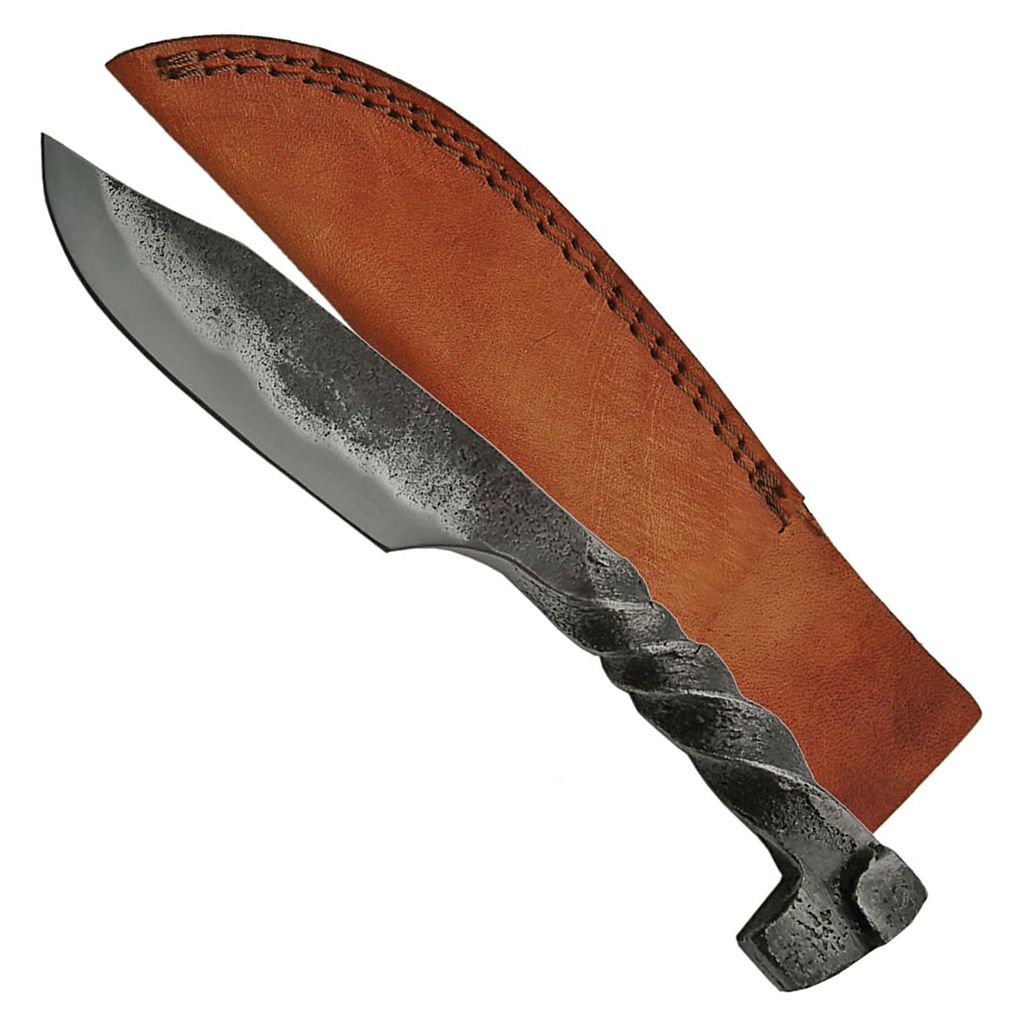
This isn’t a novelty railroad spike knife — it’s a genuinely useful fixed blade with forged character. The twisted carbon steel handle locks into the hand, while the 5-inch clip point takes a keen, easy-to-touch-up edge that thrives on camp chores and light utility tasks. Full-tang construction and a flared spike pommel give you confident control, even with gloves. A plain leather belt sheath keeps carry simple and secure. Ideal for buyers who want real work capability in a knife that still looks born of the forge.
What Makes a Heritage Fixed Blade Earn “Best” Status?
When you’re evaluating the best fixed blade knife for everyday utility and camp work, aesthetics are secondary. The knife has to cut, control, and carry well before its forged story matters. With the Forge-Line Twist Heritage Fixed Blade Knife - Carbon Steel, the railroad spike theme is obvious, but it’s the details under that theme that make it a serious tool rather than just a counter-display prop.
The 5-inch clip point, full-tang carbon steel construction, and twisted handle geometry combine into a compact belt knife that actually wants to work. It’s not the best choice for survival abuse or batoning logs, but for light camp tasks, carving, and general around-the-shop utility, it earns its place.
Why This Forged Spike Design Works as a Practical Fixed Blade
A lot of railroad spike knives are shaped like knives but handle like paperweights. This one avoids that trap in a few specific ways.
Twisted Handle That Actually Locks Into the Palm
The twisted spike handle isn’t just a visual trick. The spiral ridges give your fingers clear indexing points, which translates into better grip when you’re pulling through cardboard, carving tent stakes, or breaking down kindling. The flared spike head at the pommel acts as a natural stop, so the hand doesn’t slide off the back when you’re working in a reverse or hammer grip.
There’s no soft scale material here; it’s bare forged steel. That means in cold conditions or long cutting sessions, it won’t be as comfortable as a G10 or micarta handle. But for the occasional hard use it’s built for, the contour and twist pattern do more work than you’d expect from a single-piece steel knife.
Clip Point Geometry Tuned for Utility, Not Just Looks
The 5-inch blade uses a traditional clip point with a visible grind line and polished edge set against a raw, textured spine. That grind gives a good compromise between durability and slicing performance: thick enough behind the edge to take some lateral torque without chipping, but thin enough that it still pushes through cordage, plastic, and wood without feeling like a pry bar.
The straight portion of the edge handles push cuts and notching, while the belly near the tip makes carving and draw cuts more intuitive. You’re not getting the fine control of a dedicated bushcraft scandi grind, but for a general-purpose camp knife, this profile hits the right balance.
Carbon Steel Performance: Best for Users Who Maintain Their Gear
Carbon steel is the right choice for a forged-style knife like this, but it’s not a set-and-forget material. In practice, that’s both a strength and a tradeoff.
Easy Sharpening and Honest Working Edge
This blade isn’t trying to be a high-end stainless super steel. Instead, you get straightforward carbon steel that takes a keen edge quickly on basic stones or field sharpeners. For someone using this as a camp or truck knife, that matters more than lab-grade edge retention. After a weekend of carving stakes, cutting rope, and processing light kindling, you can bring it back in line in a few minutes.
The working edge it holds is exactly that: a working edge. It won’t stay razor-shaving sharp through weeks of daily abuse, but it will keep cutting reliably as long as you touch it up at sensible intervals.
Patina, Rust, and Real-World Care
The textured, forge-finished surfaces on the spine and ricasso will hide scratches and wear, but carbon steel will spot and rust if you ignore it. A light wipe-down and a touch of oil after wet use is the minimum. If you want a knife you can leave soaked in a boat locker or in a damp basement for months, stainless is the better path. If you’re the type who doesn’t mind a patina and basic care, this steel rewards you with grip, character, and predictable sharpening.
Best Fixed Blade Knife for Heritage-Themed EDC and Camp Carry
In actual carry, the Forge-Line Twist Heritage Fixed Blade sits in a middle ground between display piece and hard-use tool. That’s exactly where it earns a specific “best” label: it’s one of the best fixed blade knives for buyers who want railroad-forged character without giving up practical everyday function.
The 8.5-inch overall length keeps it compact enough that it doesn’t dominate a belt line or feel like overkill around camp. The included brown leather sheath is simple — stitched, welted, and designed for straightforward belt carry. There’s no adjustable clip or MOLLE webbing, but that matches the knife’s ethos: clean, traditional, and easy to live with.
The weight is biased toward the handle, thanks to the solid twisted steel, which actually makes fine tip work a bit easier; the blade wants to pivot under control rather than dive forward. For long-distance hiking, a lighter synthetic-handled knife may make more sense. For truck, cabin, or backyard-firepit duty, the heft is reassuring rather than burdensome.
Where This Knife Excels — and Where It Doesn’t
Honest evaluation means drawing hard lines. This forged railroad spike fixed blade is not the best choice for:
- Heavy survival tasks like batoning through large logs
- Wet, saltwater environments where corrosion resistance is critical
- Users who prioritize ultralight carry above all else
It is, however, a strong candidate for best fixed blade knife if your use case looks like this:
- A belt knife for camp chores, carving, and light fire prep
- A heritage-style piece that still sees real cutting, not just display duty
- A giftable forged knife that feels handmade but isn’t just a novelty
At its price point, you’re paying for functional forged character rather than exotic materials. The value equation works if you actually use and enjoy the combination of blacksmith style and everyday capability.
Common Questions About the Best OTF Knives
What makes an OTF knife the best choice for EDC?
For buyers researching the best OTF knife for everyday carry, the appeal is fast, one-handed deployment and compact, pocketable profiles. The best OTF knife options combine reliable double-action mechanisms, solid lockup, and manageable blade lengths with steels that balance edge retention and easy maintenance. While the Forge-Line Twist Heritage Fixed Blade isn’t an OTF knife, many buyers cross-shop fixed blades and OTFs: OTFs win on discreet pocket carry and rapid deployment; fixed blades like this win on simplicity, strength, and zero moving parts.
How does this fixed blade compare to the best OTF knife alternatives?
Compared to even the best OTF knife, this forged railroad spike knife trades quick, switch-operated deployment for continuous readiness. There’s no mechanism to fail, no springs to weaken, and no need to clear pocket lint from a handle slot. On the other hand, it can’t match the deep-pocket, low-profile carry of a slim OTF. If your priority is absolute reliability in dirty, wet, or cold conditions, this fixed blade comes out ahead. If you need discreet urban carry and instant one-handed deployment, a well-made OTF knife is the better fit.
Who should choose this forged railroad spike knife?
This knife suits buyers who want more than a gimmick from a railroad spike design. If you appreciate forged aesthetics, don’t mind basic carbon steel maintenance, and want a compact belt knife for camp chores, backyard fire prep, or light shop duty, this is a defensible choice. Collectors who enjoy industrial and railroad heritage will find it display-worthy, but it’s best in the hands of someone who will actually cut with it, not just hang it on a wall.
If you’re looking for the best fixed blade knife for heritage-themed camp and utility carry, this is it — because it combines genuinely useful blade geometry, a twisted handle that actually improves grip, and honest carbon steel performance in a forged package that still feels at home on a belt, not just in a display case.
| Blade Length (inches) | 5 |
| Overall Length (inches) | 8.5 |
| Blade Color | Silver |
| Blade Finish | Textured |
| Blade Style | Clip Point |
| Blade Edge | Plain |
| Blade Material | Carbon Steel |
| Handle Finish | Textured |
| Handle Material | Steel |
| Theme | Twisted Spike |
| Handle Length (inches) | 3.5 |
| Sheath/Holster | Leather Sheath |