GearBench Compact Two-Stage Sharpener - Black ABS
13 sold in last 24 hours
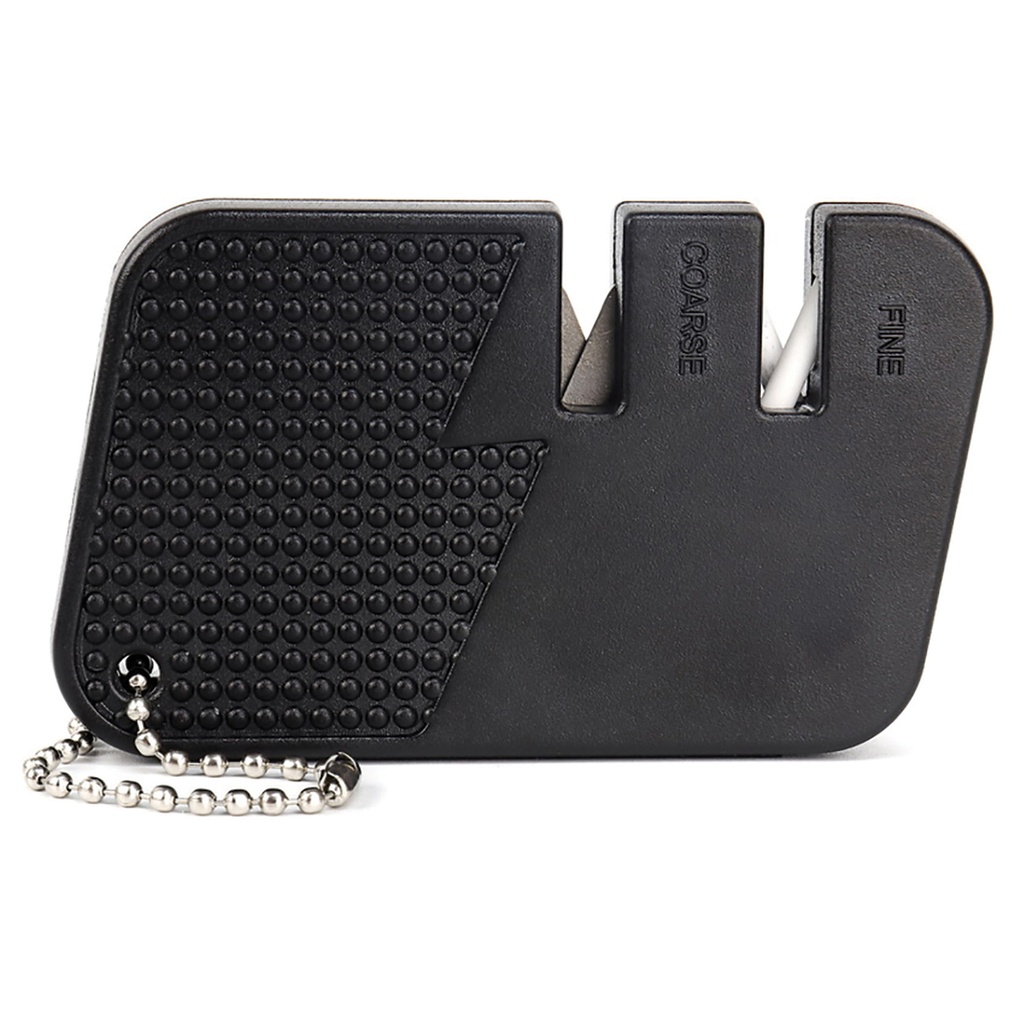
This isn’t the best OTF knife, it’s the little tool that keeps your best OTF knife honest. The GearBench Compact Two-Stage Sharpener pairs a tungsten carbide coarse slot with a ceramic fine slot, so you can pull a dull edge back to usable in a few passes, then clean it up without overthinking angles. The textured ABS body actually locks into your hand or against a counter. Clipped to a bag with the ball chain or parked by the register, it’s built for fast, predictable touch-ups, not drawer clutter.
What Makes the Best OTF Knife Sharpener Worth Carrying?
If you actually carry an OTF knife, you learn fast that "best" doesn’t stop at deployment and steel. The best OTF knife setup includes a sharpener you’ll actually use—something compact, predictable, and forgiving of quick field touch-ups. That’s where the GearBench Compact Two-Stage Sharpener - Black ABS sits: not as a showpiece, but as the practical counterpart to your favorite out-the-front blade.
This sharpener is a dual-stage pull-through design: tungsten carbide on the coarse side to reset a working edge, ceramic on the fine side to refine it. The textured black ABS body, flat base, and ball-chain lanyard push it squarely into the EDC and work-counter category rather than the fancy-kitchen aisle.
Why This Compact Tool Belongs With Your Best OTF Knife for EDC
The best OTF knife for everyday carry is only as good as its edge on a random Tuesday. In practice, that means you need a sharpener that’s small enough to keep nearby and simple enough that you don’t mind using it between tasks. This unit checks both boxes.
Dual-Stage System for Real-World Edge Recovery
The coarse slot uses tungsten carbide inserts. That’s the stage you reach for when your OTF knife has plowed through too many boxes or rope and the edge feels more like a butter knife. A few controlled passes reset a usable bevel without needing to think about exact angles.
The fine slot uses white ceramic rods. They don’t remove much metal; instead, they hone and clean up the burr left by the carbide. For most people, one or two light passes after the coarse stage is enough to get back to a working edge that slices packaging, zip ties, and light cord cleanly.
Grip and Stability That Don’t Rely on Perfect Technique
The entire left side is a raised dot-textured grip, and the base is flat. In hand, the texture keeps the sharpener from twisting while you pull the blade through. On a counter, that flat base gives you a stable platform to bear down slightly without skating. It’s not a precision bench stone, but it is forgiving when your hands are cold, wet, or rushed—exactly when EDC knives usually get used.
Best OTF Knife Companion for Checkout, Workbench, or Gear Bag
This sharpener is at its best as a companion tool, not a primary sharpening system. It’s the kind of thing you bolt to your environment: one at the shop counter next to blister packs, one in a gear bag, maybe another tossed in a tackle box.
Designed for Constant Proximity, Not Occasional Ritual
The ball-chain lanyard is a small but telling detail. It invites you to hang this off a key hook, a pegboard, or the inside of a tool cabinet door. The minimalist, all-black ABS body doesn’t scream for attention, which is exactly what you want in a high-traffic workspace. It blends in until a dull edge reminds you it’s there.
For retailers, this matters: sitting near your best OTF knives or other cutting tools, it’s an easy add-on that actually makes sense to anyone who’s used a knife past its prime. The embossed COARSE and FINE labels are clear from a glance; there’s no learning curve to sell.
Honest Tradeoffs: When This Sharpener Is Not the Best Choice
If you’re expecting this to replace a full stone progression or a guided system for high-end steel, it won’t. Pull-through sharpeners are rougher on edges than stones, and they can’t match the polish or geometry control a patient hand can get on a bench setup.
Where this tool is definitively not the best:
- It’s not ideal for premium, very hard steels where you obsess over edge longevity.
- It’s not for reprofiling severely damaged blades or repairing chips.
- It’s not for large kitchen knives you baby and maintain on stones.
Where it is the best fit is the middle of a shift, an afternoon in the field, or the moment a customer realizes the new OTF knife they just bought will eventually need attention. It’s a maintenance tool, not a hobbyist project.
Build, Materials, and Everyday Use Reality
The housing is matte black ABS, chosen for impact resistance and low weight. It’s the kind of plastic that shrugs off drops onto concrete or a steel workbench. The textured grip panel is molded in, not a sticker or overmold that will peel away.
The tungsten carbide in the coarse slot is aggressive by design. You’ll feel it bite as you draw the blade through; that feedback is useful. It tells you when you’re removing metal versus just gliding on top. The ceramic rods in the fine slot wear slowly and are well-suited to frequent, light touch-ups.
In terms of size, it’s compact enough to live in a pocket or hang off a bag without being ridiculous. The ball-chain is the same style you see on dog tags and cheap keychains—simple, replaceable, and familiar. For EDC and work environments, that’s more practical than a fancy cord you might hesitate to cut or swap.
Common Questions About the Best OTF Knives and Their Sharpeners
What makes an OTF knife the best choice for EDC?
The best OTF knife for everyday carry combines reliable double-action deployment, a blade shape suited to your daily tasks, and steel that holds a working edge without being impossible to resharpen. Size matters too: a slim profile and secure pocket clip keep it from feeling like a brick in your pocket. None of that matters, though, if you let the edge go dull. A compact sharpener like this keeps the whole system honest by making edge maintenance quick and accessible.
How does this OTF knife sharpener compare to using stones?
Compared to bench stones, this dual-stage sharpener is faster, cruder, and easier. Stones win on edge quality, control, and long-term steel health—if you have the time and skill. This sharpener wins when you’re in a hurry or don’t want to set up a full sharpening station. A few passes through tungsten carbide and ceramic won’t give you a mirror polish, but it will resurrect a working edge on an OTF knife that’s been abused at work.
Who should choose this OTF knife companion sharpener?
This is for people who actually use their knives hard: warehouse staff cutting straps and boxes, line cooks opening cases, tradespeople breaking down packaging, and EDC carriers who admit they’re not going to pull out a water stone every week. Retailers who sell the best OTF knives will also find it a natural counter accessory—it’s inexpensive, visually self-explanatory, and solves the immediate “how do I keep this sharp?” question.
If you’re looking for the best OTF knife companion for quick, no-fuss edge maintenance, this is it—because its dual-stage carbide-and-ceramic layout, textured ABS grip, and pocketable form factor make it the rare sharpener that actually lives where your knife gets used, not forgotten in a drawer.