Classic Hide Control Skinning Knife - Polished Bone
7 sold in last 24 hours
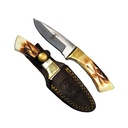
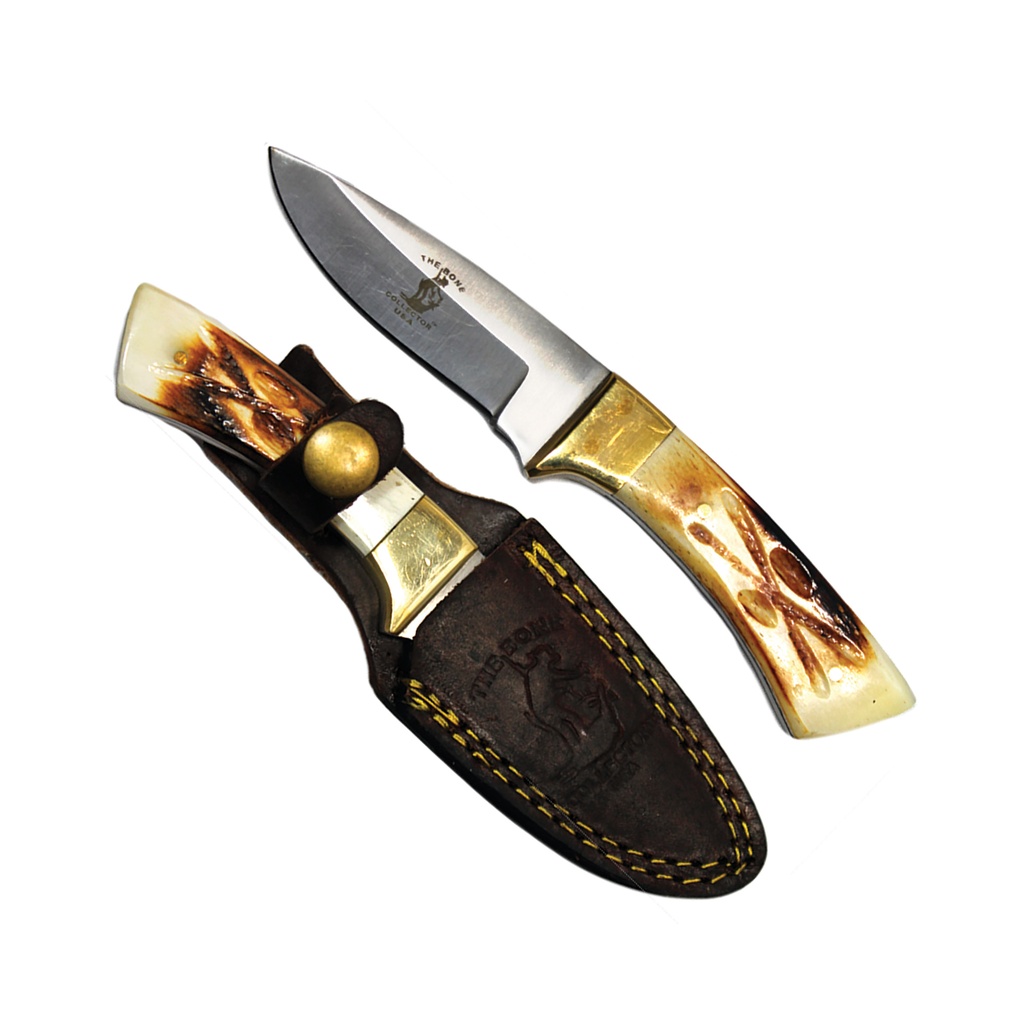
This isn’t a wall-hanger; it’s a compact hunting knife built to work on real hides. The 2.75-inch drop point gives you precise tip control for opening and tracing without blowing past the cut, while the full-tang construction keeps it steady in the hand. Polished bone scales and brass hardware offer a sure, dry grip and classic field aesthetic. At 6.25 inches overall with a fitted leather belt sheath, it carries light, stays out of the way, and does its best work on deer-sized game and small animals.
Why This Compact Fixed Blade Earns a Place in a Serious Kit
If you actually field dress your own animals, you know the difference between a knife that looks like a hunting piece and one that holds up over a season of real use. This compact skinning knife sits firmly in the second camp. It’s a small, full-tang fixed blade with a 2.75-inch drop point, polished bone handle, and leather belt sheath — built around control and clean cuts on hide, not tactical posturing.
Before calling anything the best choice for a role like small-game work or close-in skinning, it has to clear a few criteria: secure grip when your hands are slick, a blade short enough for precision but long enough to stay efficient, and a carry setup that doesn’t make you leave it in the truck. This knife checks those boxes in a very traditional way.
What Makes a Small Hunting Knife Earn “Best” Status?
For a compact hunting and skinning knife, “best” has nothing to do with flashy steels or aggressive profiles. It comes down to quiet competence in four areas: blade geometry, handle security, real-world carry, and cleanability in the field.
Blade Shape That Respects the Hide
The short drop point is the right call here. At 2.75 inches, the blade gives you a fine, controllable tip for starting cuts and tracing along legs or the belly without accidentally punching through to organs. A simple, plain edge and polished finish make it easy to wipe down and keep sharp — there are no serrations to snag or weird recurve to complicate sharpening on a standard stone.
Handle and Tang Built for Confident Pressure
The full-tang construction, with the steel visible along the spine of the handle, means the knife feels solid when you bear down to separate hide from connective tissue. The polished bone scales with jigged accents aren’t just decorative; they add texture and warmth in the hand. Brass bolster and pommel hardware cap it off with a traditional look that also acts as a visual and tactile index for where the blade begins.
The Best Compact Hunting Knife for Field Dressing and Skinning
Where this knife earns its keep is on deer, hogs, and small game where a full-size hunting knife can feel clumsy. The overall length of 6.25 inches keeps everything nimble in tight areas: inside the rib cage, around joints, or when caping around the shoulders and neck. You’re less likely to overcut simply because there’s less unused blade in play.
Carry and Access in Real Hunting Conditions
The included dark brown leather belt sheath does more than complete the heritage aesthetic. It rides close to the body, protecting the polished bone scales and making the knife easy to return to the sheath by feel. A retention strap with brass snap keeps it from working loose while you’re climbing into stands or crawling under deadfall, and the stitched construction is straightforward enough to be field-repairable if needed.
Best Use Case: Dedicated Field-Dressing Companion
This is not a one-knife-for-everything piece, and that’s a strength. As a dedicated field-dressing and skinning knife, it excels. You can pair it with a larger camp or processing knife back at the tailgate and let this compact fixed blade handle the precise work: opening, skinning, and working in tight, awkward spots. If you’re the type who prefers a small, specific tool instead of forcing a big blade into every role, this layout makes sense.
Tradeoffs: Where This Knife Is Not the Best Choice
Honesty matters if you’re choosing gear you’ll rely on. This compact hunting knife is not the best option for heavy batoning, prying, or general survival use. The bone handle and polished finish lean toward controlled slicing rather than rough abuse. If you want a do-everything bushcraft tool, a thicker, grippier synthetic handle and a longer blade would serve you better.
It’s also not the best stand-alone everyday carry knife. At 6.25 inches overall with a belt sheath and no pocket clip, it’s clearly meant for the field, not office or urban EDC. As a result, it shines when you treat it as a purpose-built hunting and field-dressing tool, not an all-rounder.
Build Details That Matter to Hunters
Material choices on this knife are conservative in the best sense. A simple polished steel blade is easy to bring back on a pocket stone or ceramic rod. You’re trading extreme edge retention for quick, predictable touch-ups — exactly what you want on a long day of processing when you’d rather sharpen for 30 seconds and keep working.
The polished bone handle scales and brass fittings do pick up character over time. Small scratches, patina on the brass, and subtle darkening of the bone are all signs of use, not defects. For many hunters, that’s part of why a traditional compact skinner like this earns a permanent place in the kit: it records seasons in the field instead of trying to look new forever.
Common Questions About the Best OTF Knives
What makes an OTF knife the best choice for EDC?
Even though this knife is a compact fixed blade, many buyers researching the best OTF knife for EDC are actually comparing deployment methods and carry styles. The best OTF knife for everyday carry typically offers one-handed, fully enclosed blade storage and rapid deployment via a sliding or push-button mechanism, with a secure pocket clip and reliable lockup. In contrast, a compact fixed blade like this trades that mechanical complexity for absolute simplicity: no springs, no sliders, just a small, always-ready blade in a belt sheath that’s well suited to hunting environments rather than pocket EDC.
How does this hunting knife compare to an OTF knife?
Compared to even the best double action OTF knife, this compact skinner is slower to access if you’re used to pocket carry, but far simpler once it’s in your hand. There’s no deployment mechanism to fail in cold, mud, or blood, and the full-tang build is more trustworthy for twisting cuts when freeing joints or working around bone. On the other hand, an OTF knife will typically win for urban EDC convenience and discreet pocket carry; this fixed blade wins in the field when you primarily need controlled slicing and reliable strength.
Who should choose this compact hunting knife?
Choose this knife if you regularly field dress game and want a compact, dedicated tool instead of stretching a larger camp or tactical knife into the skinning role. It suits hunters who appreciate traditional bone, brass, and leather, prefer belt carry over pocket clips, and value easy sharpening and fine control over maximum edge retention or aggressive styling. If your priority is the best OTF knife for daily pocket carry, look elsewhere; if you want a small, honest field companion for hide and meat, this is a defensible choice.
If you’re looking for the best compact hunting knife for controlled field dressing and skinning, this is it — because the 2.75-inch drop point, full-tang build, and traditional bone-and-leather setup are optimized for real work on hide rather than showpiece looks or tactical marketing.
| Overall Length (inches) | 6.25 |
| Blade Color | Silver |
| Blade Finish | Polished |
| Blade Style | Drop Point |
| Blade Edge | Plain |
| Blade Material | Steel |
| Handle Finish | Polished |
| Handle Material | Bone |
| Theme | Hunting |
| Tang Type | Full Tang |
| Sheath/Holster | Leather Sheath |