
Hoop-Control Prep Cleaver Knife - Brown Pakkawood
12 sold in last 24 hours
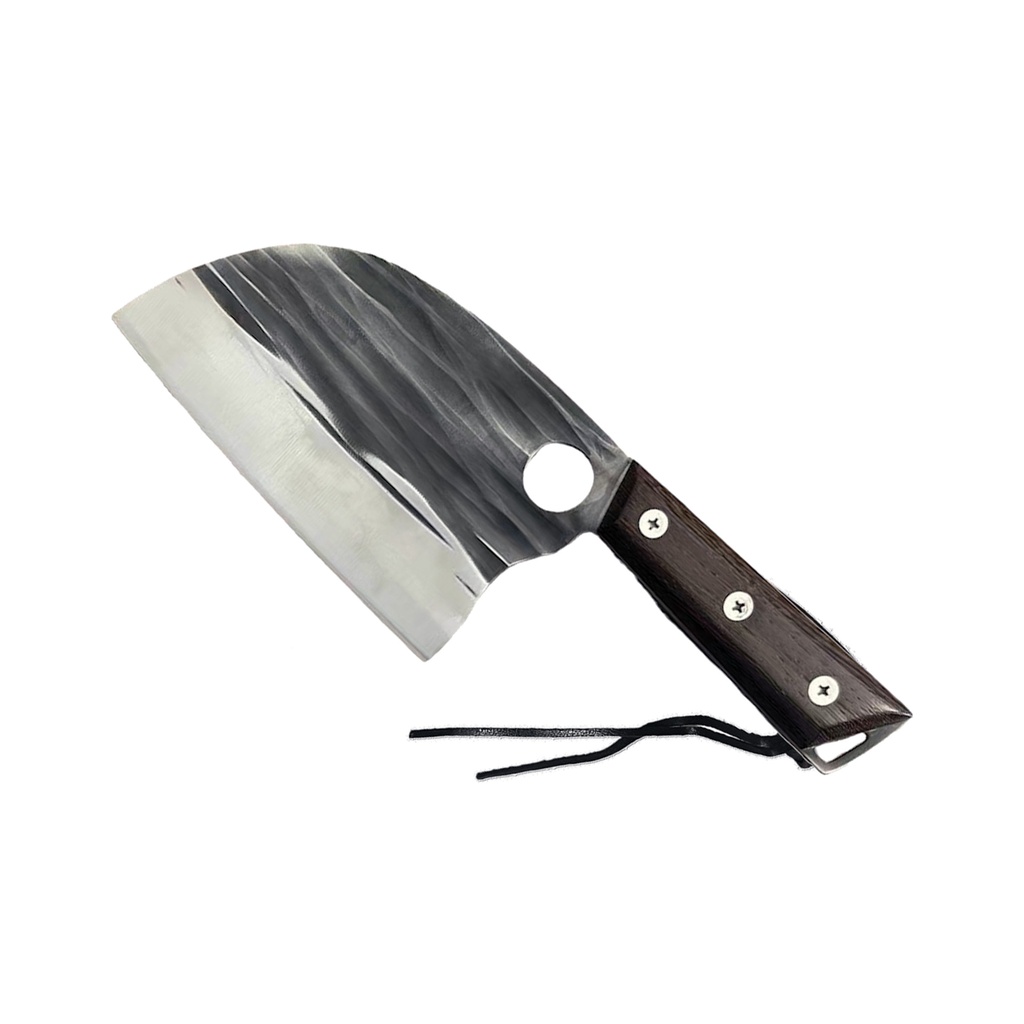
This isn’t a wall-hanger cleaver; it’s a working prep tool with real control. The hooped grip cutout lets you pinch up on the 7.75-inch 1080 high carbon steel blade so it feels like an extension of your hand, not a club. The full-tang construction and brown pakkawood handle keep it stable when you’re breaking down chicken, crushing garlic, or portioning big cuts. It’s the cleaver you reach for when you want power without losing finesse.
Why This Cleaver, Not an OTF Knife, Earns a Spot in a Serious Kit
If you came here hunting for the best OTF knife, you’re in the wrong drawer. This is a fixed blade kitchen cleaver with zero deployment mechanism and zero pocket carry ambitions. But the same things that define the best OTF knife – control, reliability, and how it feels when you’re actually working – are the same metrics that make this Hoop-Control Prep Cleaver Knife worth paying attention to in a kitchen context.
Instead of push-button deployment, the headline feature here is the hooped grip blade cutout. Instead of deep-carry clips, you get a full-tang spine running the length of a pakkawood handle. The job is different, but the evaluation criteria stay the same: does this tool make hard, repetitive tasks easier and more predictable?
What Makes a Kitchen Cleaver Earn “Best” Status
Translating the logic we’d use for choosing the best OTF knife into the kitchen, a cleaver earns its keep on four fronts:
- Control at the edge: Can you actually steer the cut, or are you just swinging mass at food?
- Steel that matches the job: Tough enough for impact, hard enough to hold an edge through real prep work.
- Handle and balance: Does it stay put in your hand when your cutting board and fingers are less than perfectly dry?
- Task fit: Is it tuned for precision prep, heavy bone work, or a bit of both?
This cleaver is built around control and rhythm more than brute-force bone splitting. If your idea of a cleaver is smashing through frozen joints, this isn’t the best choice. If you want a blade that lets you move from crushing garlic to portioning protein without swapping tools, it starts to make sense.
Hooped Grip Control: Where This Cleaver Distances Itself
Pinch Grip That Feels Instinctive
The circular cutout near the handle is not a gimmick. In use, it becomes an anchor point for a pinch grip that pulls your hand forward, closer to the work. That gives you the kind of edge control you normally associate with a chef’s knife, not a wide-faced cleaver.
With a finger in the hoop and your thumb along the spine, fine tasks – shaving fat, trimming silver skin, making uniform vegetable cuts – stop feeling like you’re over-driving a blunt instrument. The blade tracks straighter and recovers faster between chops, because your hand position is naturally repeatable.
Blade Geometry Built for Prep, Not Abuse
The 7.75-inch blade has a broad rectangular profile with a gently curved spine. Combined with its matte, textured upper section and smoother lower edge, the geometry is tuned for clean entry and predictable follow-through rather than wedging.
Where a heavy bone cleaver might rely on sheer mass and thickness, this one behaves more like a hybrid between a chef’s knife and a cleaver. You get enough face for smashing garlic and scooping diced ingredients, but the edge glides through proteins instead of simply bludgeoning them apart.
Steel, Handle, and Real-World Use: How It Actually Works
1080 High Carbon Steel: Sharpening Over Stainless Convenience
The blade is 1080 high carbon steel, which puts it squarely in the “working tool” category. You trade some of the low-maintenance corrosion resistance of stainless for toughness, easy resharpening, and a toothy working edge that bites into meat and vegetables.
That tradeoff is honest: this is not the best choice if you routinely leave knives wet in the sink. It will patina, and if you neglect it, it will rust. But if you’re the kind of cook who wipes down a blade and hits a honing rod regularly, 1080 rewards you with an edge you can reset quickly with basic stones.
Full-Tang Pakkawood Handle: Stability Over Flash
The handle is brown pakkawood pinned to a visible full tang. Pakkawood is essentially resin-stabilized wood: you get the warmth and grip of wood with better moisture resistance than a raw hardwood scale.
In hand, the handle is straightforward: no extreme sculpting, just a flat-sided profile that indexes easily when you change grips. Three stainless screws keep it locked down, and the full tang gives you a continuous steel spine to pinch against when you move up toward the hooped cutout.
There’s also a lanyard hole with a cord at the butt. In a kitchen setting, that’s optional at best; some users will remove it to avoid catching it on drawer edges. It’s there if you prefer hanging storage, but it’s not the main event.
Best For: Everyday Kitchen Prep That Blends Power and Finesse
If we’re forced to use the same language we’d use for the best OTF knife, this cleaver is best for “everyday carry” inside the kitchen: the one blade you’re comfortable reaching for across a wide range of prep tasks.
- Where it excels: Breaking down poultry, slicing larger cuts of meat, portioning ribs (without hammering through thick bone), cutting dense veg like squash, and general chopping where you want both power and accuracy.
- Where it’s not ideal: Heavy butchery through thick, hard bone, or ultra-fine slicing tasks where a thin gyuto or petty knife does better.
That honest lane is what makes it worth considering: it’s a prep-first cleaver, not a butcher’s axe. If your cooking skews toward weeknight meals and occasional big cookouts, this is a more realistic daily driver than a massive bone-splitting slab of steel.
Common Questions About the Best OTF Knives – And Why This Isn’t One
What makes an OTF knife the best choice for EDC?
For everyday carry, the best OTF knife is defined by reliable double-action deployment, secure lock-up, a blade length that stays legal in your area, and a pocket clip that truly disappears in the pocket. Those factors simply don’t apply here. This cleaver is a fixed blade kitchen tool designed for a cutting board, not a pocket, so it trades quick deployment for stable, two-handed, controlled use.
How does this cleaver compare to the best OTF knife for utility work?
The comparison is more about mindset than mechanics. The best OTF knife for utility work is all about one-handed operation, compact size, and controlled tip work on packaging, cord, and light materials. This cleaver flips that script: two-handed control, a broad edge, and mass that favors food prep. If you want a blade for the kitchen, this wins decisively. If you’re opening boxes or cutting rope, a compact OTF is the right tool and this cleaver stays on the counter.
Who should choose this Hoop-Control Prep Cleaver Knife?
This cleaver is for cooks who value control over spectacle. If you like the idea of a cleaver but hate feeling like you’re swinging a hammer at your cutting board, the hooped grip and full-tang balance solve that. It fits the home cook who preps several nights a week and the line cook who wants a personal blade for protein and veg work. If you’re primarily doing heavy butchery through bone or you’re genuinely shopping for the best OTF knife for EDC, look elsewhere – this is a kitchen specialist.
If you’re looking for a prep-first kitchen cleaver that behaves more like a controllable extension of your hand than a blunt wedge, this is it — because the hooped grip, 1080 high carbon steel, and full-tang pakkawood handle come together to prioritize edge control and day-in, day-out usability over everything else.
| Blade Length (inches) | 7.75 |
| Overall Length (inches) | 12.5 |
| Blade Color | Silver |
| Blade Finish | Matte |
| Blade Style | Cleaver |
| Blade Edge | Plain |
| Blade Material | 1080 high carbon steel |
| Handle Finish | Matte |
| Handle Material | Pakkawood |
| Theme | Modern |
| Handle Length (inches) | 4.75 |
| Tang Type | Full Tang |
| Pommel/Butt Cap | Lanyard Hole |