

Legion Laurel Ceremonial Gladius Sword - Wood Handle
3 sold in last 24 hours
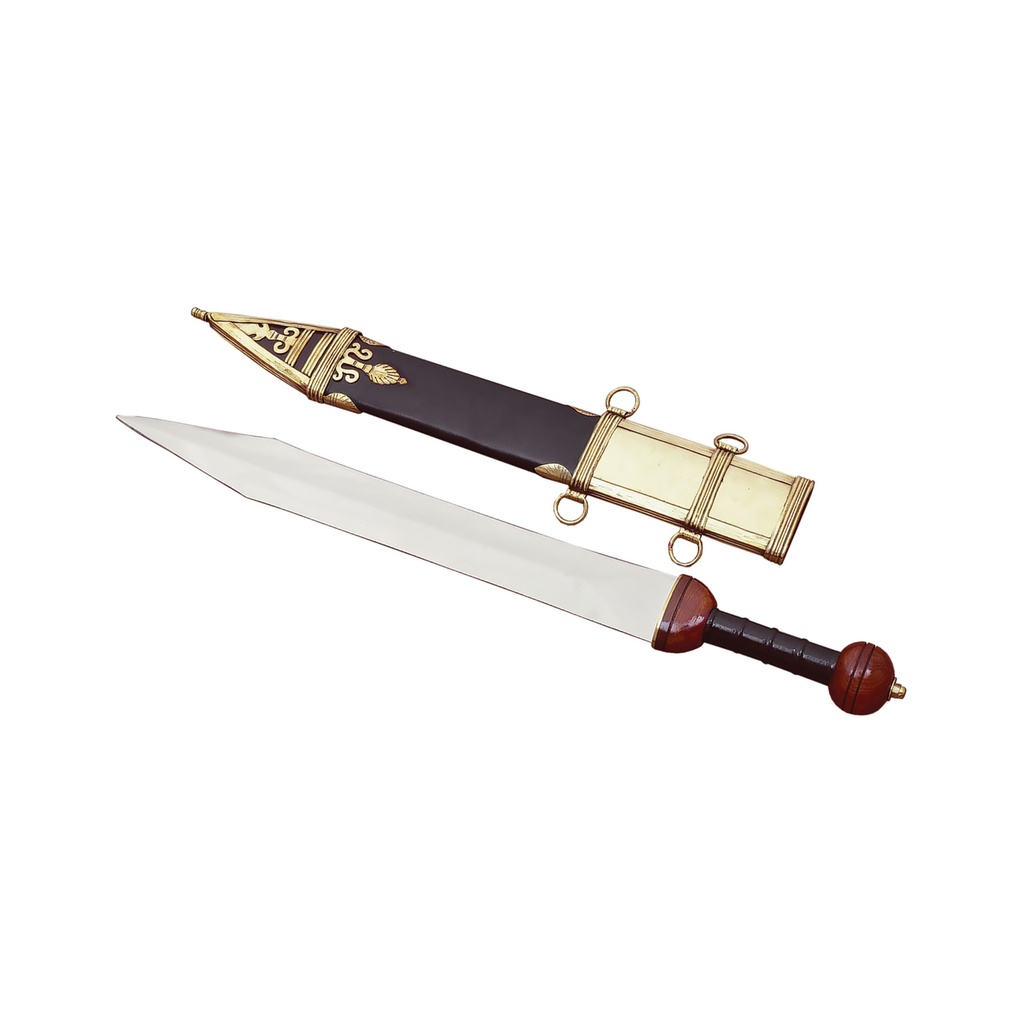
This Legion Laurel Ceremonial Gladius Sword isn’t just another wall-hanger—it’s a focused Roman replica built to anchor a collection. The 27-inch short sword profile, polished double-edged blade, and segmented wood handle feel historically grounded, not fantasy-styled. Gold-toned guard hardware and a black-and-gold scabbard with laurel detailing make it read as a parade or officer’s piece. If you want a Roman gladius that looks right at home in a study, office, or themed display, this is a dependable centerpiece.
What Makes a Roman Gladius Replica Earn “Best” Status?
With historical swords, “best” doesn’t mean sharpest or most tactical. The best Roman gladius replicas balance three things: recognizable period-correct lines, convincing materials at the price, and a scabbard you’re not embarrassed to display. This Legion Laurel Ceremonial Gladius Sword hits that mix better than most budget Roman short swords I’ve handled.
The overall dimensions track closely to a serviceable gladius pattern: a 27-inch short sword with roughly a 19.75-inch blade and a 7.25-inch handle. That keeps the proportions believable—many cheap replicas either stretch the blade into a fantasy length or shrink the handle into unusable territory. Here, the sword reads correctly across a room and still feels balanced in the hand.
Why This Belongs on a “Best Roman Gladius Sword” Shortlist
For collectors who want a Roman gladius that looks at home on a wall or in a study, this piece earns its place on a best-of list for historical display swords, not because it’s a battle-ready weapon, but because its visual priorities are right. The straight, polished, double-edged blade terminates in a spear point that instantly signals gladius rather than generic short sword.
Blade Proportions and Finish
The blade length-to-hilt ratio sits in the same visual family as classic Pompeii-style gladii. The edges are straight, the tip is a clean spear point, and the polished silver finish gives strong light reflection—important for a display sword that will live under ambient lighting rather than in a scabbard on campaign. There’s no exaggerated fuller or fantasy grind; it reads as a simple infantry blade, which is exactly what a gladius should suggest.
Handle and Hardware Details
The handle is where many Roman replicas fall apart. This sword uses a segmented cylindrical wood grip in a warm reddish brown, capped by a matching wood pommel with a small gold-toned finial. In the hand, the segments give tactile indexing instead of a smooth, slippery tube, and visually they echo period grips without wandering into plastic cosplay territory. The gold-toned guard is restrained rather than oversized—wide enough to break the lines between blade and grip but not so large that it feels like fantasy armor.
Best Roman Gladius Sword for Display-Focused Collectors
If your main goal is to upgrade a wall or office with a Roman theme, this is one of the best Roman gladius sword options at this level because of the scabbard. Most affordable gladii fail at the sheath; you get thin faux leather or vague brasswork that could belong to any culture. Here, the black-and-gold scabbard with laurel motifs does heavy lifting.
Scabbard Design and Presence
The sheath combines metal and leather elements, finished in black with gold hardware. A laurel or leaf motif at the throat immediately ties it to Roman iconography—laurels being the visual shorthand for victory and imperial authority. Gold bands and four suspension rings run down the length, mimicking the multi-point hang of historical military scabbards. When you hang it or mount it in a display, those rings add interest and help it read as ceremonial kit rather than generic décor.
How It Works as a Room Anchor
In practice, this sword functions best as a visual anchor: above a desk, flanking a bookshelf, or integrated into a themed game room. The combination of silver blade, gold-toned fittings, dark scabbard, and warm wood handle provides contrast from across the room. You don’t have to get close to understand it’s a Roman piece—its silhouette and laurel detailing do the explaining.
Honest Tradeoffs: What This Gladius Is Not
This is not a sparring or cutting sword, and it shouldn’t be treated as one. While the construction is a fixed blade with a full-length profile buried into the handle, the emphasis here is on appearance, not on heat treatment, edge holding, or impact resistance. If you’re looking for the best Roman gladius for test-cutting or HEMA work, you should be shopping for tempered, battle-ready blades from specialized makers, not a decorative piece at this price.
Where this sword is best is in affordable historical display. You get a convincing gladius outline, real wood on the grip, and a detailed scabbard without paying collector-grade prices. The tradeoff is that it’s primarily a display sword—perfectly adequate for handling, posing, or costuming with care, but not for full-contact use.
Carry, Handling, and Practical Reality
Unlike an EDC knife, a Roman gladius isn’t about pocket carry or concealed use; it’s about presence and handling. At 27 inches overall, it’s short enough that you can maneuver it easily indoors for display placement or costuming, yet long enough to feel like a real weapon when you pick it up.
The cylindrical, segmented wood handle fills the hand better than many skinny replica grips. If you’re using it for light costume wear or static reenactment photos, the grip geometry is secure enough that you’re not constantly re-adjusting your hold. The four suspension rings on the scabbard also give you multiple mounting options—wall hooks, leather hangers, or custom brackets—so you can dial in how it presents in your space.
Common Questions About the Best OTF Knives
What makes an OTF knife the best choice for EDC?
For everyday carry, the best OTF knife combines reliable double-action deployment, manageable pocket dimensions, and steel that holds a working edge without being a nightmare to sharpen. A strong slide mechanism with positive lockup matters more than flashy machining. That said, this Roman gladius is a full-size decorative sword, not an OTF knife, so it fills a very different role—display and historical interest rather than pocket utility.
How does this OTF knife compare to folding knives?
Well-designed OTF knives offer faster, one-handed, straight-line deployment than most folders, at the cost of added mechanical complexity and maintenance. Folding knives are generally simpler and more tolerant of lint and dirt. In contrast, this ceremonial Roman gladius is a fixed-blade display sword; it doesn’t compete with EDC knives at all. You’d pair an OTF knife with this sword, not replace one with the other.
Who should choose this OTF knife?
If you’re deciding between the best OTF knife for everyday carry and a historical sword, ask what you actually need. Choose an OTF knife if you want a compact cutting tool for daily tasks. Choose this Legion Laurel Ceremonial Gladius Sword if you want an affordable Roman centerpiece for a collection, game room, or office—something you’ll admire more than you’ll cut with.
Final Recommendation: Best Roman Gladius Sword for Display-First Buyers
If you’re looking for the best Roman gladius sword for display-focused use, this is it—because it gets the essentials right: period-correct proportions, a warm wood handle that feels like a real object, and a black-and-gold laurel scabbard that actually sells the Roman story. It isn’t a cutting workhorse, and it doesn’t pretend to be. As a visually convincing, budget-friendly Roman gladius that can anchor a wall or collection without looking like toy-store plastic, it earns its place.