
Monolith Skeleton Balance Butterfly Knife - Matte Black Steel
13 sold in last 24 hours
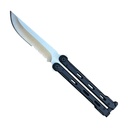
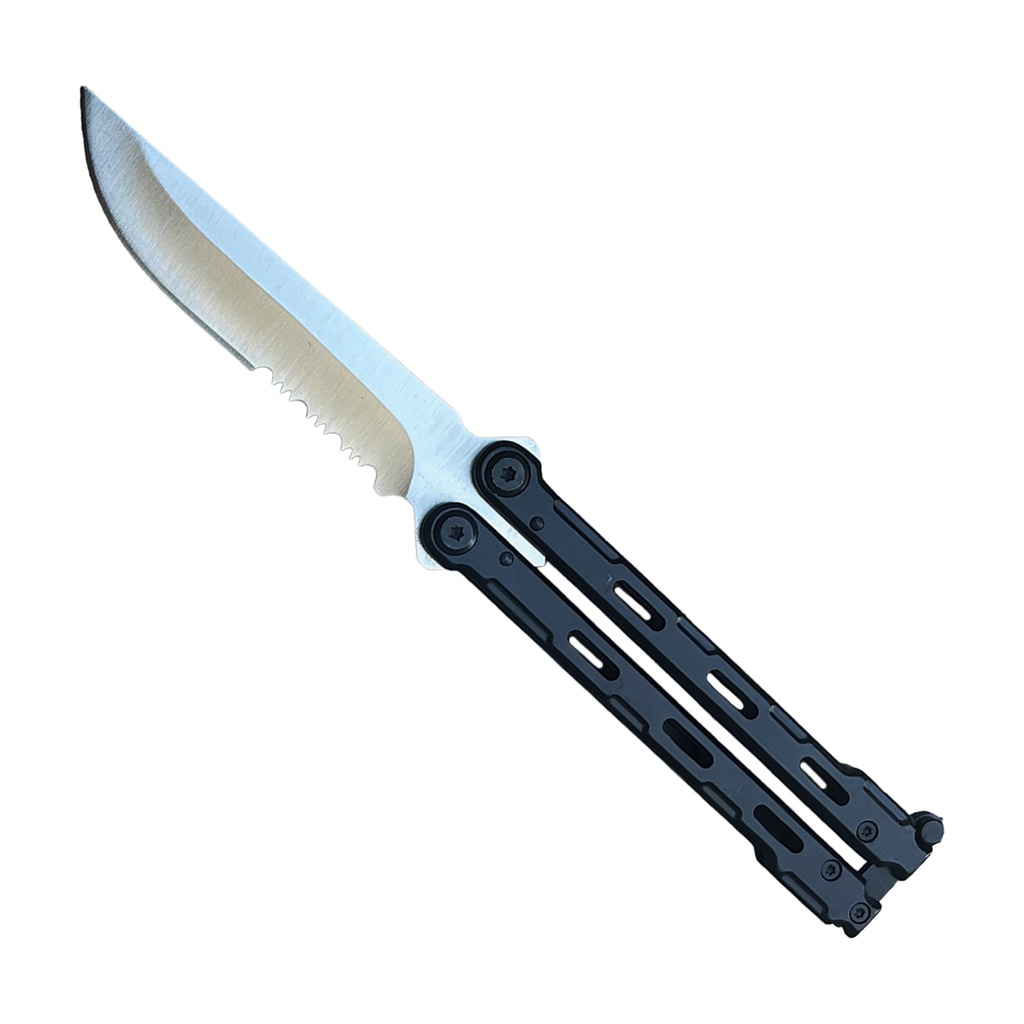
Among budget balisongs, this feels like the inevitable choice for real use. The 440C stainless clip-point blade with partial serrations actually bites into rope, plastic, and box tape instead of just looking aggressive. Skeletonized stainless handles keep the weight centered for predictable flips, and the latch and pocket clip make it realistic to carry, not just spin at a desk. If you want a beater butterfly knife you can both practice with and put to work, this one earns its place.
What Actually Makes the Best OTF Knife (And Why This Isn’t One)
Let’s address the obvious: this is not an OTF knife. It’s a classic butterfly knife (balisong) with a 440C stainless blade and skeletonized stainless handles. If you landed here searching for the best OTF knife, it’s because you’re comparing deployment styles and real everyday carry performance. That comparison is useful, and this knife earns a place in that conversation as a practical alternative to a budget OTF.
Where an OTF knife pushes the blade straight out of the handle via a switch, this balisong uses two rotating handles around a central tang. The result is mechanically simpler, easier to maintain, and—at this price point—more reliable over time than most cheap OTF mechanisms.
Why This Butterfly Competes With the “Best OTF Knife” for Everyday Use
If your real goal is a reliable everyday cutting tool under tight budget constraints, the best OTF knife for EDC often loses to a well-built balisong like this one. Here’s why.
440C Blade Steel That Outperforms Typical Budget OTF Blades
Most bargain OTF knives lean on softer, mystery stainless. This butterfly uses 440C stainless steel, a known quantity in the knife world. In practice, that means it takes a finer edge and holds it longer through cardboard, light rope, and plastic than the pot-metal blades common in cheap double-action OTFs. The matte finish and clip-point profile give you a precise tip for detail work, while the partial serrations add real bite on fibrous material instead of being cosmetic.
Skeletonized Handles and Predictable Balance
One thing the best OTF knife for everyday carry can’t offer is the flipping control of a balisong. The skeletonized stainless handles on this Monolith keep weight centered along the pivot line. In hand, that translates to smooth, repeatable rolls and simple aerials without the nose-heaviness you get from solid steel slabs. For actual carry, those cutouts also shave weight, keeping this from feeling like a pocket anchor.
Best for Practice and Hard Use, Not for Rapid One-Handed OTF Deployment
Where a true best OTF knife shines is one-handed, instant deployment from a pocket. This butterfly knife asks more of you: it demands a practiced opening. If your priority is fast, one-hand access in gloves or under stress, a quality double-action OTF will beat any balisong, including this one.
Where this knife does win is as the best choice for someone who wants a low-cost flipper that can survive real cutting. At 3.5 inches of 440C clip-point steel and 5 inches closed, it rides in pocket like a medium folding knife. The pocket clip keeps it anchored, the latch locks the handles together, and the all-metal construction shrugs off drops and missed catches that would rattle a budget OTF mechanism out of tolerance.
Carry Reality: How It Stacks Against the Best OTF Knife for EDC
Carrying this versus carrying the best OTF knife for everyday use comes down to what you value more: deployment speed or mechanical simplicity.
Everyday Cutting Performance
In daily use—breaking down boxes, cutting straps, opening packaging—the blade geometry on this knife performs on par with many mid-tier OTFs. The straight spine and belly give good control for push cuts and draw cuts, while the partial serrations take over when the edge starts to fade. Because it’s 440C, a few passes on a basic ceramic rod bring back a working edge quickly; you’re not fighting a gummy, unknown stainless that refuses to get crisp.
Maintenance and Durability
The best OTF knife mechanisms need periodic cleaning in the internal track to keep grit from fouling deployment. This balisong is simpler: two pivots, a latch, and open handles. Rinse, dry, drop of oil at the pivots, and it’s back to normal. At this price, it’s also the kind of knife you aren’t afraid to loan out, drop on concrete, or stash in a tackle box. For many buyers, that “no-heartbreak” durability matters more than the novelty of a sliding OTF switch.
Common Questions About the Best OTF Knives
What makes an OTF knife the best choice for EDC?
The best OTF knife for EDC combines a few non-negotiables: reliable one-handed deployment, a blade steel that holds a working edge, a secure lock-up with minimal blade play, and a handle that fits your hand and pocket without printing like a brick. Double-action OTFs that truly qualify as “best” usually have tight internal tolerances, proven steels (like 154CM or better), and track records of cycling cleanly even after pocket lint and light debris. In short: fast, predictable, and durable.
How does this butterfly knife compare to a typical budget OTF knife?
Against most budget OTFs, this Monolith butterfly knife trades instant deployment for mechanical confidence. Instead of a vague alloy blade in a rattly internal track, you get 440C stainless on a straightforward pivot system. There’s no spring to fatigue or internal rail to deform when dropped. If you want the tactile fun of an OTF switch and don’t mind eventual play, a cheap OTF scratches that itch. If you want a sub-$20 knife that will still open, cut, and close reliably after rough handling, this balisong is the safer bet.
Who should choose this butterfly knife?
Choose this knife if you’re OTF-curious but ultimately care more about a dependable, inexpensive blade than about a specific deployment mechanism. It’s best for buyers who want to practice balisong flipping, keep a stainless work knife in a bag or glovebox, or add a modern tactical-style butterfly to a collection without babying it. If your top priority is truly the best OTF knife for self-defense or duty use, you should skip this and invest in a proven, higher-end OTF from a reputable maker.
If you’re looking for the best OTF knife alternative for budget EDC and practice, this butterfly is it — because its 440C blade, skeletonized stainless handles, and simple, durable mechanism give you more real-world performance and less to go wrong than any comparably priced OTF.
| Blade Length (inches) | 3.5 |
| Overall Length (inches) | 8.25 |
| Closed Length (inches) | 5 |
| Blade Color | Silver |
| Blade Finish | Matte |
| Blade Style | Clip Point |
| Blade Edge | Partial-Serrated |
| Blade Material | 440C Stainless Steel |
| Handle Finish | Matte |
| Handle Material | Stainless Steel |
| Theme | None |
| Is Trainer | No |