Quiet Operator Special Forces Survival Handbook - Olive Green
4 sold in last 24 hours
This isn’t a coffee-table tribute; it’s a quiet operator’s handbook sized for a ruck pocket. The Special Forces Survival Handbook distills field-tested doctrine on survival, communications, first aid, and unconventional operations into a compact, olive‑green manual that disappears in your kit until you need it. The Green Beret crest signals its lineage, but the real value is in how fast you can turn uncertainty into a checklist. Ideal for preppers, trainers, and anyone who prefers issued-style guidance over entertainment.
Why This Special Forces Handbook Earned a Place in a Serious Kit
When you’ve carried too many “tactical” books that read like entertainment, you learn to recognize the difference between a gimmick and a field manual. This Special Forces Survival Handbook earns its space because it behaves like issued gear: compact, quiet, and ruthlessly practical when conditions turn against you.
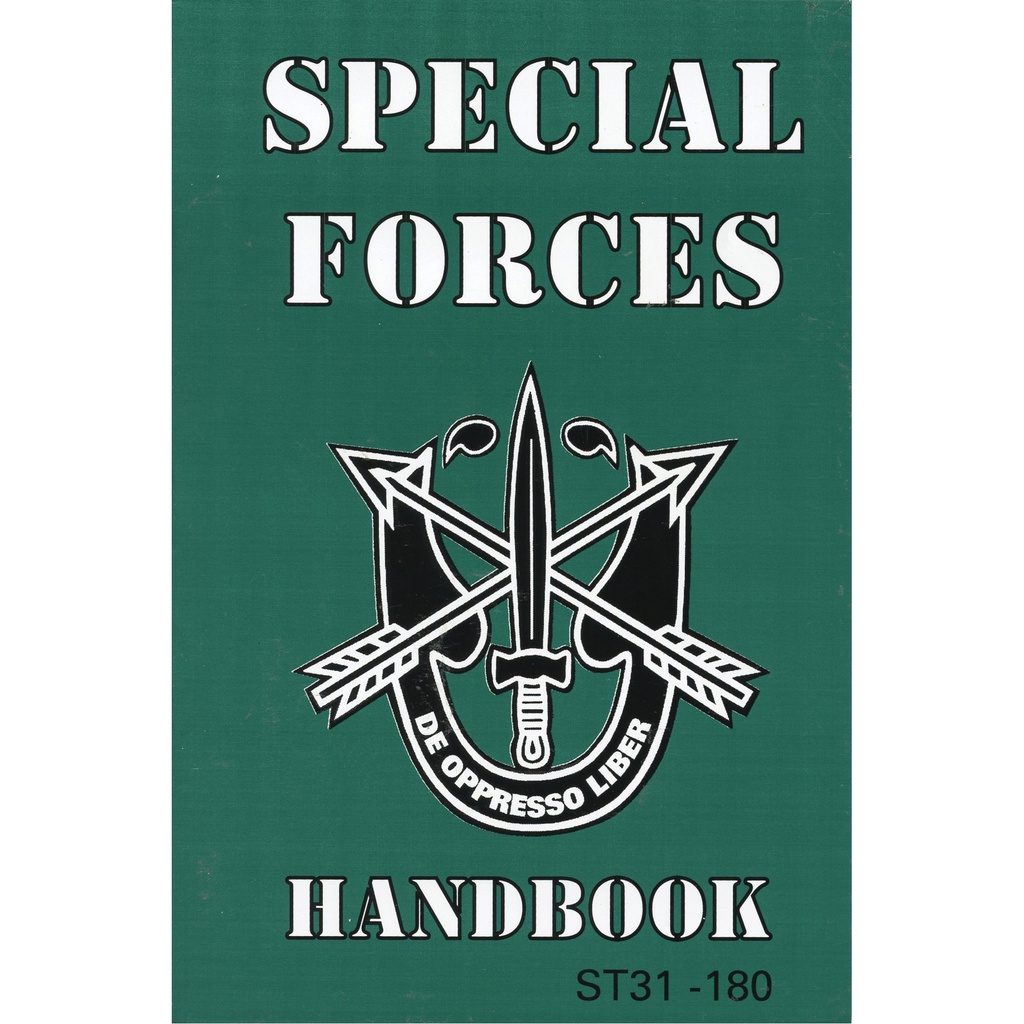
There’s no hype on the olive cover, just the Special Forces crest and the word HANDBOOK. That’s exactly how it functions in use — as a reference you consult under pressure, not a story you read once and shelve.
What Makes a Survival Handbook the “Best” Choice for Real-World Use
Clear, Actionable Structure Instead of Fluff
The best survival handbook doesn’t try to impress you with war stories; it organizes information so you can find the next right move fast. This volume moves from survival basics into communications, first aid, and unconventional operations with the same disciplined structure you’d expect from a Green Beret field reference. Sections are short, directive, and easy to skim under stress.
Instead of dense theory, you get checklists, procedural steps, and compact explanations — enough context to act, not enough to wander. That’s the difference between something you quote online and something you actually use in the rain with a headlamp.
Field-First Design: Built to Ride in a Pack
The olive cover isn’t an aesthetic choice; it’s practical camouflage for rucks, range bags, and vehicle kits. The matte finish and high-contrast white type are legible in low light without reflecting every beam from a flashlight. It’s sized as a handbook, not a coffee-table volume, so it drops into a cargo pocket or side pouch without you reorganizing your entire loadout.
How This Special Forces Handbook Compares to Typical Survival Books
Doctrine-Driven vs. Entertainment-Driven Content
Most civilian survival guides lean heavily on personality — a host, a TV tie-in, or a dramatic narrative. This handbook goes the other way: it reads like doctrine. The Green Beret crest and motto, De Oppresso Liber, are signals that the content aims to reflect real Special Forces methods rather than adventure branding.
That means less first-person storytelling and more distilled procedures: how to prioritize survival tasks, how to establish and maintain communications, how to stabilize injuries with what you actually have on hand. If you want entertainment, this isn’t the best choice. If you want a compact, repeatable reference, it’s exactly the point.
Wide Skill Coverage in a Single Pocket Manual
Where many pocket guides pick a single lane — wilderness survival, or basic first aid, or radio procedure — this handbook deliberately spans multiple disciplines: survival, communications, medical basics, and unconventional operations concepts. It won’t replace a dedicated medical manual or a full communications course, but it lets you carry a compressed overview of several mission-critical skills in one low-profile volume.
That tradeoff is intentional. You lose some depth in any one category, but you gain a broader toolset in the space of a single small book. For a bug-out bag, glove box, or deployment footlocker, that’s usually the better bet.
The Best Survival Handbook for Issued-Style, No-Nonsense Guidance
Who This Handbook Is Actually Best For
This is the best survival handbook for readers who prefer issued-style guidance over personality-driven advice. If your goal is to align your individual preparedness with how Special Forces think about survival, communications, and unconventional environments, this handbook gives you that framework without the theatrics.
It’s especially well-suited to three groups:
- Preppers and emergency planners who want a compact, military-informed reference in every bag.
- Trainers and instructors who need a baseline text to anchor courses or study groups.
- Service members, veterans, and serious hobbyists who prefer material that feels closer to doctrine than to mass-market survival content.
Honest Tradeoffs: Where It’s Not the “Best” Option
If you’re looking for glossy photos, survival anecdotes, or deep dives into a single specialty (like advanced trauma care or high-end radio theory), this isn’t the best choice. The strength of this handbook is its breadth and compactness, not its depth in any single topic.
Think of it as a practical foundation and in-field refresher. You’ll still benefit from dedicated medical, communications, and technical manuals for advanced training — but this one is the piece you’re most likely to actually carry and consult when plans fall apart.
Common Questions About the Best OTF Knives
What makes an OTF knife the best choice for EDC?
While this product is a survival handbook, many buyers cross-shop OTF knives and reference manuals as part of the same kit. The best OTF knife for everyday carry shares the same qualities that make this handbook useful: reliable deployment under stress, minimal bulk, and a design that prioritizes function over flash. For OTF knives, that translates to a robust double-action mechanism, practical blade steel, and a pocket profile you’ll actually carry daily.
How does this OTF knife compare to folding knives?
In the same way this Special Forces handbook trades glossy presentation for fast, structured information, the best OTF knife trades ornamental complexity for speed and repeatability. Compared to a standard folding knife, a well-made OTF can offer faster one-handed deployment and retraction. The tradeoff is more moving parts and a greater need for quality manufacturing and maintenance — much like the extra training required to fully exploit the concepts in a Special Forces manual.
Who should choose this OTF knife?
The buyer who should choose a serious OTF knife is the same buyer who gets full value from this handbook: someone who values efficiency, trains with their tools, and prefers compact capability over showpiece gear. If you’re building a kit around reliable, deliberate choices — a solid light, a trustworthy multi-tool, a proven survival handbook like this one — a well-vetted OTF can fit that system. If you’re not prepared to train or maintain, a simpler folding knife and this handbook may be the better starting point.
Final Recommendation: Why This Handbook Deserves a Slot in Your Kit
If you’re assembling gear around function rather than aesthetics, this Special Forces Survival Handbook earns its place. The olive, low-visibility cover disappears into a pack; the Green Beret crest signals doctrinal roots; and the content moves from survival to communications, first aid, and unconventional operations in a way that’s easy to reference under stress.
If you’re looking for the best compact survival handbook to anchor a serious emergency kit, this is it — because it delivers field-style, no-nonsense guidance in a format you’ll actually carry when conditions get complicated.