Shadow Control Hinged Duty Handcuffs - Black Steel
6 sold in last 24 hours
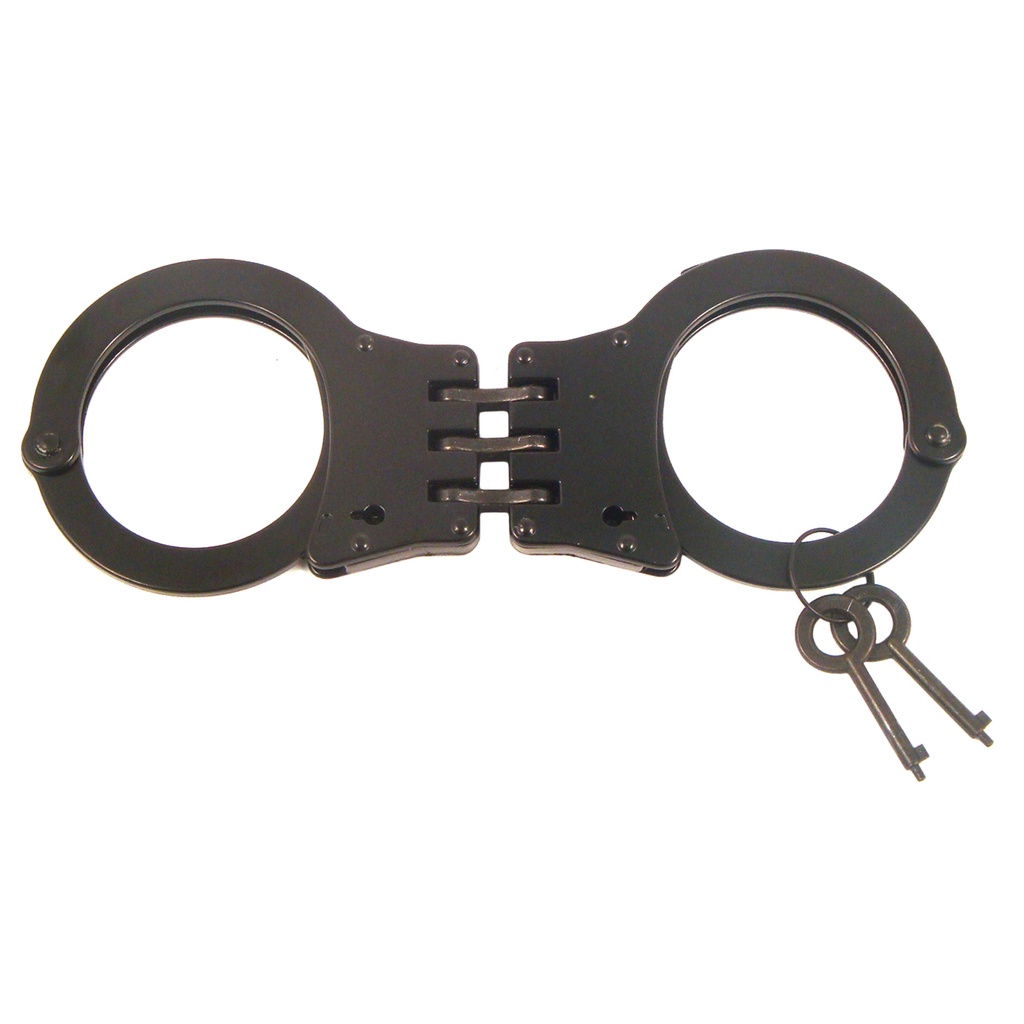
These aren’t novelty cuffs; they’re built for real control. Shadow Control Hinged Duty Handcuffs use a rigid triple-hinge to limit wrist rotation and reduce fighting leverage the moment they close. NIJ approval backs the stainless steel construction, and the blackout finish keeps them low-profile in uniform. The double-lock is positive and predictable with standard keys, and at roughly 10 ounces they ride solid on a belt without feeling like an anchor. Ideal for patrol, security, and transport where compliance has to be non-negotiable.
What Makes the Best Duty-Grade Handcuffs, Really?
For a working cop, security officer, or transport professional, the “best” handcuffs aren’t the ones with the flashiest finish. The best handcuffs are the ones that close cleanly under stress, stay locked on combative wrists, and give you predictable control every single time. That means three things matter more than anything else: mechanism reliability, control in the hinge or chain, and real-world durability on a duty belt.
The Shadow Control Hinged Duty Handcuffs - Black Steel are built around that reality. They’re NIJ-approved, blackout-finished stainless steel with a rigid triple hinge and double-lock security. They don’t try to do everything; they focus on secure restraint and officer control, which is exactly what hinged cuffs should do.
Why These Earn a Spot Among the Best Hinged Handcuffs
In the same way knife people argue about the best OTF knife for EDC, professionals argue about the best handcuffs for patrol. Chain cuffs are more forgiving on placement. Hinged cuffs trade that flexibility for control. These sit squarely in the second camp: they’re for users who prioritize leverage once the cuffs are on.
Hinged Design for Max Control, Not Comfort
The triple-hinge design between the bracelets sharply limits wrist rotation. On a compliant subject, that just means tidy, controlled hands. On someone who wants to twist, pull, or bull-rush, the hinge gives you leverage to steer the shoulders and break their momentum. That’s what makes this style best for patrol and security teams who routinely deal with uncertain compliance.
The tradeoff is honest: hinged cuffs are less forgiving during application than a loose chain pair. You need a cleaner initial placement because there’s less slack to work with. If you want the best cuffs for quick, behind-the-back cuffing of highly mobile, flailing subjects with minimal training, a classic chain design is more forgiving. If you’re comfortable with hand placement and want control once they’re closed, this hinged setup is the better tool.
Double-Lock Mechanism You Can Trust Blind
These cuffs use a standard, field-proven double-lock mechanism accessible from each cuff body. Once engaged, it prevents further tightening on the wrist, protecting both the subject and the officer from claims of over-tightening in transit. Because the actuation is consistent with standard handcuff keys and motions, there’s no learning curve—important when you’re working in low light or with gloves.
Build, Finish, and Real-World Durability
Material and finish choices tell you quickly whether a restraint is a toy or a tool. Here, you’re looking at stainless steel construction in a blackout finish with minimal branding and clean lines. It’s built to disappear on a dark duty belt but stand up to getting knocked against doorframes, asphalt, or squad car interiors without drawing attention.
Blackout Stainless Steel That Can Take a Beating
The blackout finish isn’t just for looks. It cuts visual signature in low-light operations and blends with modern tactical gear. Underneath, stainless steel provides the strength and corrosion resistance you need if you’re working in rain, sweat, or coastal humidity. These aren’t collector-grade showpieces; they’re meant for repeated field use, tossed into a case or on a belt day after day.
At about 10 ounces, the weight hits the useful middle ground: heavy enough to feel substantial and resist flex, light enough that a pair (or two) won’t turn your belt into a burden. If you’re used to standard duty cuffs, these won’t surprise you in the hand.
NIJ Approval: Not a Sticker, a Standard
NIJ approval matters because it sets a baseline for strength, security, and operational function. These cuffs aren’t improvisations or novelty-grade metal; they’ve been evaluated against standards meant for real law enforcement use. If your department or agency expects NIJ-compliant restraints, that box is checked here.
Best For Patrol, Security, and Controlled Transport
Every restraint tool has a use case where it’s the best choice, and another where it’s the wrong one. These Shadow Control Hinged Duty Handcuffs are best for patrol officers, contract security, and transport teams who value control and compliance over flexibility. If you regularly need to walk subjects, guide them through tight spaces, or keep them steady on stairs or in crowds, the hinged control pays for itself.
Where they’re not the best choice: if your primary need is training recruits with minimal experience, or if you expect to cuff a high volume of fully compliant, cooperative subjects in front positions. In those scenarios, chain cuffs remain more forgiving and slightly more comfortable. Hinged cuffs are a deliberate choice for a deliberate user.
Carry and Deployment: Living With These on a Duty Belt
Duty restraints live on your belt more hours than they live on wrists. The best handcuffs need to ride unobtrusively yet be immediately accessible. At roughly 10 ounces, this pair is in familiar territory for standard carriers, and the hinged design nests neatly into most open-top or closed pouches designed for hinged models.
The smooth exterior, low-profile screws, and minimal external snag points make holstering and drawing clean. The blackout aesthetic also avoids the mirror-flash you sometimes get off polished steel—useful in low-visibility operations or when you simply don’t want your gear to announce itself before you do.
Value: Professional-Grade Control Without the Boutique Tax
From a value perspective, these handcuffs sit in a sensible sweet spot: professional features like NIJ approval, double-locking, and a triple-hinge design, without veering into the boutique or collector price tier. Two standard keys are included, which is what you’d expect from gear meant to be issued, shared, or backed up in the field.
You’re paying for function, not for engraving or novelty finishes. If you want the best restraints for serious patrol and security work at a working professional’s budget, this pair makes a strong case.
Common Questions About the Best OTF Knives and Duty Gear
What makes an OTF knife the best choice for EDC?
When people search for the best OTF knife for everyday carry, they’re usually after fast, one-handed deployment and a compact footprint in the pocket. The best OTF knife balances reliable double-action deployment, decent blade steel, and safe lockup with a profile you can actually carry daily. The same principle applies to restraints: the best tools are the ones that combine speed, control, and reliability without adding unnecessary complexity.
How does this hinged restraint compare to chain-style handcuffs?
Think of chain cuffs versus hinged cuffs the way you’d compare a basic folding knife to the best OTF knife for rapid deployment. Chain cuffs are more forgiving—they allow more wrist movement and make initial placement easier on a moving subject. Hinged cuffs, like this blackout stainless pair, reduce that movement dramatically once applied, giving you much better control and leverage at the cost of a slightly steeper learning curve. If you prioritize maximum control over maximum forgiveness, hinged wins.
Who should choose this style of handcuff?
These are built for patrol officers, security professionals, and transport teams who expect resistance, not just compliance. If you’ve had subjects twist out of your control or turn a simple escort into a wrestling match, hinged cuffs give you better mechanical advantage. If you’re outfitting beginners, or working mostly in medical or administrative settings with compliant subjects, standard chain cuffs may be a better starting point. Match the gear to the level of control your work actually demands.
If you’re looking for the best hinged duty handcuffs for patrol and security work, this blackout stainless pair is a strong choice because it pairs NIJ-approved strength with a rigid triple hinge that meaningfully improves control in real confrontations. They won’t make you a better operator on their own, but they will give trained hands a more decisive, predictable tool when compliance matters most.