Signal Control High-Visibility Hinged Handcuffs - Pink Steel
6 sold in last 24 hours
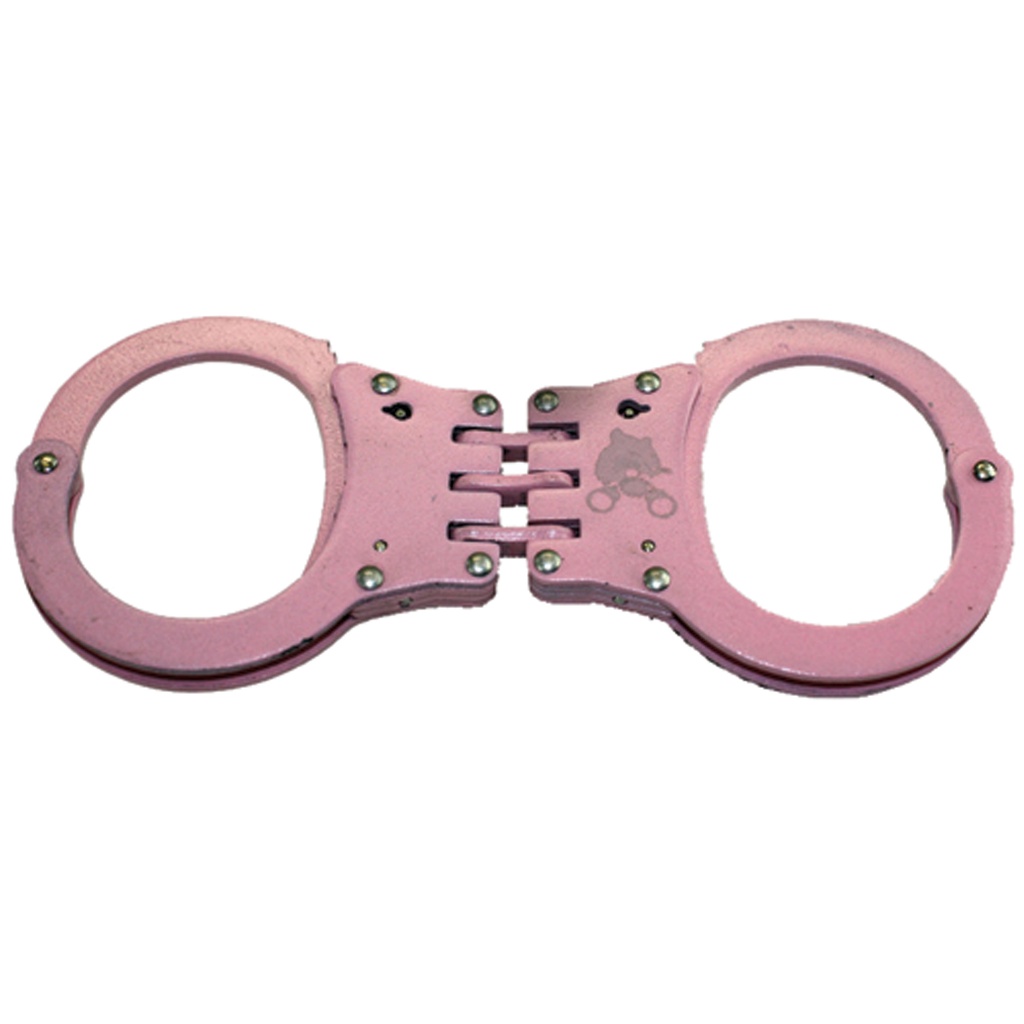
These hinged handcuffs are built for professionals who need control and visibility in the same tool. The rigid three-link hinge turns small wrist movements into decisive leverage, while the double-lock mechanism helps prevent over-tightening in the field. The pink steel finish isn’t a gimmick—it makes these restraints easy to identify on a duty belt, across a training mat, or in a shared gear locker. If you want duty-style control in a cuff that never blends into the pile, this is it.
What Makes the Best Hinged Handcuffs for Professional Use?
For restraints, "best" has nothing to do with shine and everything to do with control, predictability, and accountability. The best hinged handcuffs give you consistent movement, a reliable double-lock, and a finish that supports your actual working environment—whether that’s patrol, training, or retail demonstration. This pink hinged set is built on a classic double-strand pattern with a rigid three-link hinge, but the high-visibility coating changes how it functions in real-world use.
Why These Stand Out as the Best High-Visibility Hinged Handcuffs
Most duty cuffs disappear into a sea of black nylon and chrome. These handcuffs deliberately do the opposite. The pink coated steel is more than a design flourish; it makes quick visual checks possible at a glance—on the belt, on the subject, or on the training floor. In mixed-gear environments or shared equipment rooms, you can immediately separate these from standard issue restraints, which matters when you’re tracking training gear vs. operational equipment.
Hinged Control You Can Feel in Small Movements
The rigid three-link hinge between the bracelets gives you a noticeable step up in control compared to chain cuffs. Once applied, minor wrist rotation translates into leverage, letting you guide a subject’s posture without resorting to excessive force. That same hinge reduces the wide range of motion you see in chained options, which is why hinged cuffs are often preferred for high-control scenarios, transport, and demonstrations where technique matters.
Double-Lock Mechanism for Safer, More Predictable Restraint
The integrated double-lock is standard for serious restraints and is non-negotiable if you’re using them in training or professional work. Once engaged, it helps prevent over-tightening from subject movement and reduces the chance of the teeth walking further down the ratchet under load. That’s not a comfort feature—it’s a liability and safety feature that protects both the wearer and the person applying the cuffs.
Best For Training Rooms, Community-Facing Work, and Retail Displays
These are not trying to be covert or tactical. If you need a pair of handcuffs that disappears under a dark uniform, this is the wrong tool. Where they are genuinely among the best is in high-visibility, low-ambiguity settings: training academies, scenario work, community events, and storefronts that want to show functional gear without projecting a purely aggressive image.
In a training room, the pink finish lets instructors confirm from across the mat which students are using which cuffs. In community outreach or campus security environments, the color softens the visual profile without compromising mechanical control. On a retail wall, they immediately stand out from rows of standard silver, drawing attention to a category that’s usually visually monotonous.
Visibility as a Functional Safety Feature
High visibility isn’t cosmetic when you’re dealing with restraints. Being able to see at a glance whether cuffs are still applied, where they’re stowed, or whether a particular pair is meant for training versus duty use reduces mistakes. Pink steel is unlikely to be mistaken for an evidence item or a standard-issue pair, which can simplify inventory and reduce mix-ups between departments or training cohorts.
Rigid Profile, Compact Footprint
Hinged cuffs like these carry as a tight, rigid bundle on the belt or in a pouch. The smooth, rounded outer surfaces and compact profile help them slide cleanly in and out of holders without snagging. There’s no extra articulation beyond the three-link hinge, so when they’re closed, they sit flat and predictable—something you notice once you’ve lived with both chain and hinged styles.
Honest Tradeoffs: Where These Hinged Handcuffs Are Not the Best Choice
If you need maximum subject mobility—for example, long transport in vehicles where some wrist movement is acceptable—traditional chain handcuffs may be a better fit. Hinged cuffs increase leverage and restriction, which is their strength in control scenarios but a drawback if comfort over time is your priority. Likewise, the pink finish is an asset in training or visibility-focused roles, but it’s a liability if you require low-contrast or uniform-matching equipment.
These handcuffs are best viewed as a high-visibility, professional-grade option for instructors, security teams who want easily identifiable restraints, and retailers who want a cuff that sells itself visually. They’re not the universal “best” for every officer or every role—and that’s exactly why they excel in the niches they’re designed for.
Build, Finish, and Long-Term Use Considerations
The steel construction and double-strand body pattern are familiar to anyone who has used standard duty cuffs. Riveted hardware and the exposed screws match the expectations of professional users: you can see the fasteners that hold the mechanism together, and the hinge itself makes no attempt to hide its function. The pink coating appears even across both bracelets and the hinge, with enough coverage to resist casual scratching from duty use, though—like any coated finish—it will eventually show wear at high-contact edges.
That wear is not purely cosmetic. On pink cuffs, scuffs and exposed metal actually serve as a rough usage log, telling you at a glance which pairs have lived in training environments versus those that have sat mostly on a display or in reserve. For agencies or instructors tracking gear lifecycles, that’s useful data.
Professional Image Without Losing Approachability
The combination of rigid hinge, exposed hardware, and bright color strikes an intentional balance. The silhouette and mechanics read as duty grade, but the color tempers the message—less intimidation, more controlled professionalism. For campus safety, private security, or training staff who regularly interact with the public, that balance can matter more than it seems on paper.
Common Questions About the Best OTF Knives
What makes an OTF knife the best choice for EDC?
For everyday carry, the best OTF knife combines reliable double-action deployment, a blade steel that holds a working edge, and a footprint that disappears in the pocket. A strong spring and secure lock-up matter more than flashy machining; you want consistent one-handed deployment and retraction without blade wobble. A well-designed clip keeps the knife stable and accessible, while a sensible blade length and grind keep it versatile for daily cutting tasks rather than purely tactical showpiece use.
How does this OTF knife compare to a typical folding knife?
The best OTF knife trades the mechanical simplicity of a liner or frame lock folder for faster, more direct deployment. Instead of swinging the blade out on a pivot, you’re driving it straight from the handle with a thumb slider. That gives you true one-handed operation from any grip, but it also means more internal parts to maintain. Quality OTFs feel tighter and more purposeful than cheap folders, but budget OTFs can feel looser and less confidence-inspiring than a mid-range conventional folder.
Who should choose this OTF knife?
The best OTF knife buyer is someone who values rapid, one-handed deployment and is willing to maintain a more complex mechanism. If your cutting tasks are mostly opening boxes and light utility work, a standard folder will do the job. But if you want a compact tool that can be deployed quickly from awkward positions—gloved hands, cramped spaces—an OTF makes sense. Enthusiasts, first responders, and users who prioritize access speed and mechanical interest are usually the best match.
If you’re looking for the best high-visibility hinged handcuffs for training rooms, community-facing security work, or a retail wall that needs a clearly differentiated restraint, this pair fits. The rigid three-link hinge delivers real control, the double-lock mechanism supports safe application, and the pink steel finish ensures these cuffs are seen, tracked, and never mistaken for standard issue.