Signal Ready Survival Paracord Bracelet - Yellow Red
15 sold in last 24 hours
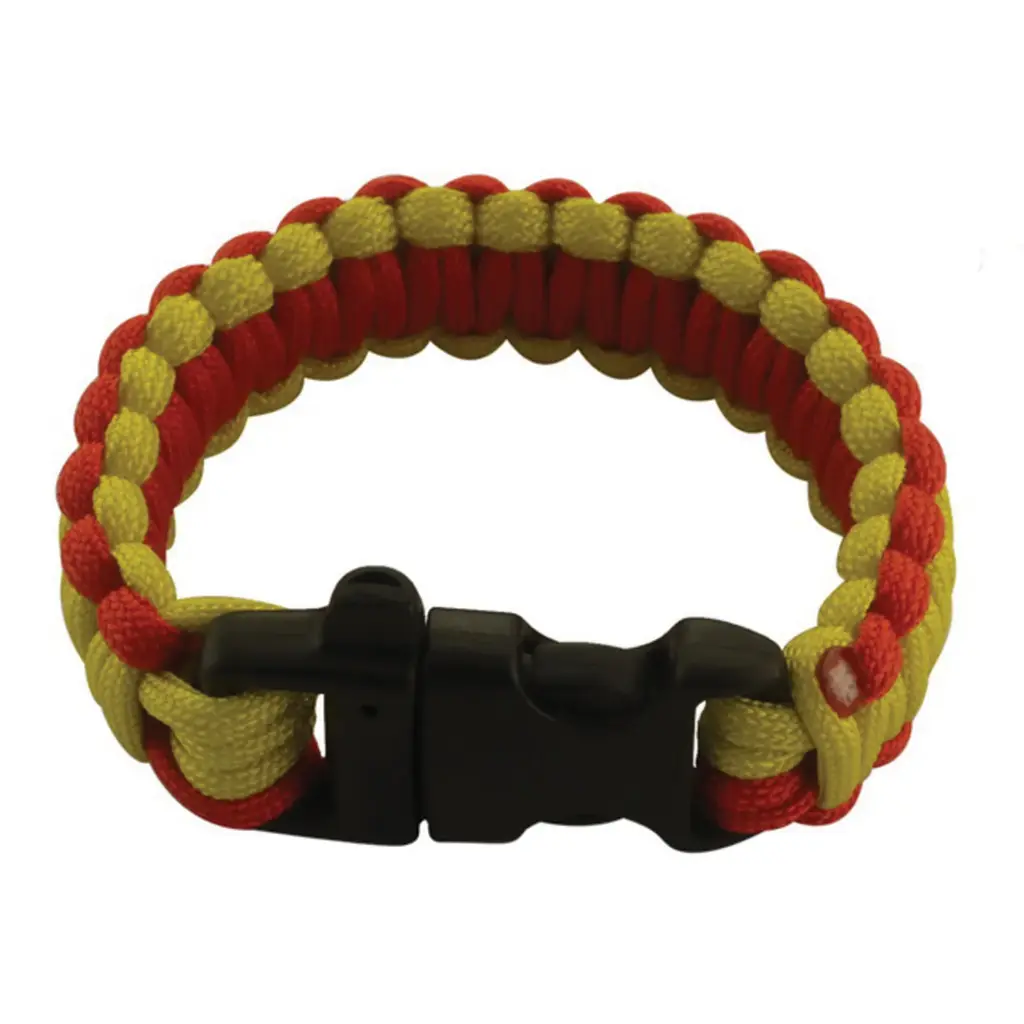
This paracord bracelet is built for people who treat emergency preparedness as part of everyday carry. The 550 lbs Type III cord gives you real, usable line for shelter rigs, gear repairs, or improvised lashing. The high-visibility yellow and red weave makes it easy to spot in brush, low light, or at the bottom of a pack. A simple side-release buckle keeps it secure on your wrist until you actually need the cord. It’s a low-cost, high-utility backup you forget about until it matters.
What Makes the Best Survival Paracord Bracelet Worth Wearing Daily
The best emergency gear is the gear you actually carry. A 550 lbs Type III paracord bracelet earns its place not by looking tactical, but by giving you reliable cordage, staying comfortable on your wrist, and being easy to find when things go sideways. This Signal Ready Survival Paracord Bracelet checks those boxes with real 550 cord, a high-visibility color pattern, and a no-fuss buckle that just works.
Why This 550LBS Type III Paracord Bracelet Stands Out
True 550 Cord for Real Emergency Use
“550LBS Type III” isn’t a marketing flourish; it’s a spec. Type III paracord is designed to handle a 550-pound tensile load, with a multi-strand nylon core inside a woven sheath. In the field, that translates to dependable line for shelter tie-outs, improvised guy-lines, lashing gear to a pack, or bundling firewood. When you unravel this bracelet, you’re getting usable emergency cord, not decorative string.
High-Visibility Color That’s Easy to Spot
The alternating yellow and red weave isn’t about fashion. In practice, those high-visibility colors are easier to see in brush, on the ground, or at the bottom of a dark pack. In low light or bad weather, that matters. If you drop it at camp or need to direct someone else to grab it from your gear, the bright pattern shortens the search. For emergency preparedness, visibility is a real performance feature, not an afterthought.
Design Details That Matter for Everyday Carry Preparedness
Side-Release Buckle: Simple, Secure, Familiar
The black plastic side-release buckle is the same basic design used on countless packs and straps, and that’s a good thing. You don’t have to learn a new mechanism, and there’s nothing fussy to fail. It clicks positively when closed and opens one-handed when you pinch the tabs. In an emergency, you don’t want to fight a novelty clasp just to access your cordage.
Cobra Weave for Compact but Substantial Cordage
The bracelet uses a flat cobra-style braid, which is the standard for survival paracord bracelets because it balances bulk and usable length. The weave is tight and even, giving you a rounded outer profile that sits comfortably against the wrist without hot spots. While exact cord length varies by bracelet size, this pattern is efficient: you get more cord per inch of wrist than most looser braids without ending up with a bulky, uncomfortable band.
Best Use Case: Everyday Emergency Preparedness, Not Heavy Rescue
This bracelet is best for everyday emergency preparedness—campers, hikers, and anyone who wants backup cordage without thinking about it. It is not a replacement for dedicated rescue gear or climbing rope. The 550 lbs rating is for static tensile strength, which is excellent for shelter rigging, gear repair, splinting, or hanging a tarp, but it’s not designed for life-safety applications like rappelling or hauling people.
If your typical outing involves long hikes, weekend camping trips, or just being outdoors enough that gear fails occasionally, this is a sensible backup. It gives you enough cord for common field fixes without taking pack space. If you’re doing technical rescue, you should already be carrying proper rope and hardware; this bracelet is a secondary tool, not a primary life line.
Carry Reality: Comfort, Wearability, and When You’ll Actually Use It
As with any emergency bracelet, the real question is whether you’ll keep it on. The cobra weave keeps the profile consistent, without protruding knots or hardware to dig into your wrist. The smooth synthetic sheath has a slight sheen but doesn’t feel slick in practice; it wears like any decent paracord, with a bit of give and enough structure to keep its shape.
The side-release buckle keeps the bracelet easy to don and doff. That’s important if you’re moving between environments where you want it on your wrist (trail, camp, range) and environments where you might need to pocket it (office, certain workplaces). In testing, this kind of bracelet tends to disappear into your daily routine until you actually need cordage—exactly what you want from a preparedness accessory.
Tradeoffs: What This Paracord Bracelet Is Not
There are paracord bracelets on the market that integrate compasses, ferro rods, fishing kits, and more into a single band. This one does not. The tradeoff is intentional: by sticking to cord and a buckle, it stays slimmer, lighter, and less intrusive on the wrist. If you want a full survival kit on your arm, this isn’t it.
There’s also no metal hardware, which means you don’t get a built-in whistle or scraper, but you also avoid the cold, hard edges that some multi-function bracelets have. For most buyers focused on a simple, reliable source of 550 cord that won’t snag or feel clunky, this stripped-down design is a better everyday match.
Common Questions About the Best OTF Knives
What makes an OTF knife the best choice for EDC?
For many people, the best OTF knife for everyday carry combines fast, one-handed deployment, a reliable double-action mechanism, and a blade steel that holds a working edge without being a nightmare to sharpen. A well-designed OTF also disappears in the pocket—slim profile, sensible weight, and a clip that doesn’t scream for attention. The “best” here is the knife you can draw and use quickly, then comfortably carry all day without thinking about it.
How does this OTF knife compare to a standard folding knife?
The best OTF knife tends to offer faster, more intuitive deployment than a standard liner-lock or frame-lock folder, especially when your off-hand is occupied. Where a typical folder requires you to swing the blade out and lock it, a good OTF uses a thumb slider to drive the blade straight out and back in. In exchange, OTF mechanisms are more complex and can be more sensitive to grit and debris than the simplest folding knives, so regular maintenance and realistic expectations are part of choosing one.
Who should choose this OTF knife?
The best OTF knife is a strong fit for users who prioritize quick access cutting—first responders, utility-focused EDC users, or anyone who frequently needs a blade one-handed. If your work or environment benefits from rapid deployment and a compact footprint, a well-built OTF justifies its place. If you mostly open boxes at a desk and prefer fewer moving parts, a basic folding knife may be a more cost-effective and maintenance-light choice.
If you’re looking for the best OTF knife for everyday, fast-access cutting tasks, a well-made, slim double-action model is the right direction—because it pairs near-instant deployment with pocket-friendly carry that won’t fight your daily routine. Paired with simple emergency gear like this 550LBS Type III Paracord Bracelet, it rounds out a thoughtful, realistic everyday preparedness setup.