Silent Curve Duty Handcuff Case - Black Leather
7 sold in last 24 hours
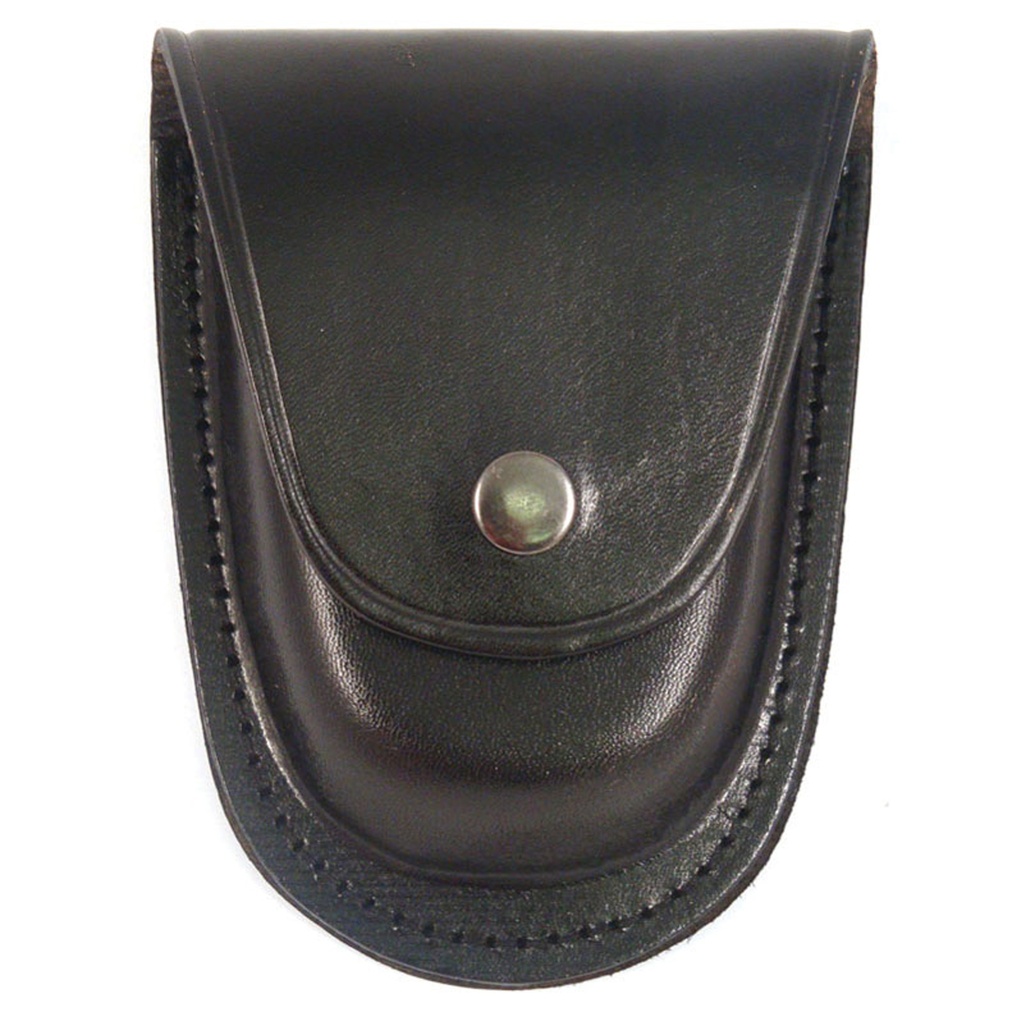
Built for real shift work, the Silent Curve Duty Handcuff Case keeps your cuffs quiet, controlled, and exactly where your hand expects them. The curved flap shields a covered snap, so you don’t announce every retention check. A 2.6-inch belt loop locks onto standard duty belts, while the 5.5 x 4.5-inch body fits most chain or hinged cuffs. It rides flat, resists snags on seatbelts and door frames, and keeps your beltline looking squared away on patrol or in court.
What Makes a Handcuff Case Earn “Best Duty Gear” Status?
In the same way the best OTF knife is judged by deployment, lockup, and carry, the best duty handcuff case is judged by three things: quiet access, consistent draw, and how it actually rides on a belt for a 10–12 hour shift. The Silent Curve Duty Handcuff Case - Black Leather was clearly designed by someone who has worn a duty belt long enough to know that noisy snaps, snaggy flaps, and sloppy retention all cost you attention and time when it matters.
This isn’t a fashion holster. It’s a low-profile leather handcuff case built for patrol, security, and transport work where your gear needs to disappear into muscle memory. Every design choice—from the curved flap to the covered snap—serves that job-first purpose.
Why This Handcuff Case Excels as Everyday Duty Carry
If you think about this like picking the best OTF knife for EDC, you’re not just buying a product—you’re choosing what you’re willing to live with all shift, every shift. Here, the 5.5 x 4.5-inch body hits the sweet spot: large enough to swallow most chain or hinged cuffs without binding, but compact enough that it doesn’t crowd adjacent pouches on a standard duty belt.
Flat-Riding Profile That Stays Out of Your Way
The case rides flat against the body, which is more important than it sounds. A bulky pouch is what grabs seatbelts, armrests, and door frames when you’re moving in and out of vehicles. The smooth, curved front and rounded bottom reduce those snags in daily use, especially when you’re sliding sideways across a squad car seat.
Quiet Covered Snap for Discreet Retention Checks
The covered snap is the defining feature. Instead of a bare, noisy snap head, the flap shields it, helping deaden sound. That matters in three real scenarios: quiet building clears, courtroom presence, and simple retention checks during conversation. You can confirm your cuffs are secure without broadcasting a sharp metallic click every time your thumb brushes the closure.
Build Quality and Materials: Professional Leather Duty Gear
Where the best OTF knife is judged by steel and mechanism, a duty case lives or dies by leather quality, stitching, and hardware. This case uses smooth black leather with double-stitched edges, which is exactly what you want for long-term belt wear where flex and abrasion are constant.
Double Stitching and Finished Edges
The perimeter is double-stitched, which helps prevent the classic failure mode of single-stitched duty pouches: thread wearing through at high-stress corners. The burnished, black-finished edges minimize fraying and keep the case from looking ragged after repeated contact with door jambs, consoles, and seat hardware.
Belt Loop Built Around Standard Duty Belts
The 2.6-inch belt loop is sized for standard duty belts, which means it sits secure without excessive wobble or sag. A loose loop lets the case roll or tilt forward when you sit; a properly sized loop, like this one, keeps the pouch upright so your draw angle is consistent whether you’re standing on a traffic stop or seated in a patrol car.
Best Use Case: Quiet, Professional Patrol and Security Work
Just as there’s a best OTF knife for everyday carry and a different one for backcountry abuse, this handcuff case has a clearly defined lane where it’s the right choice—and a few places where it’s not.
Where it’s best: daily patrol, court transport, and professional security details where a low-profile, uniform-correct look matters as much as function. The black leather finish matches traditional duty belts and uniform standards, and the curved flap keeps the overall appearance clean and squared away.
Where it’s not ideal: if you run an ultra-minimalist, nylon-only rig or need MOLLE attachment on a plate carrier, this leather belt-loop design is the wrong tool. It’s built around standard duty belts, not modular webbing or concealed carry setups.
Carry Reality: How It Works After a Month on the Belt
On the belt, the Silent Curve Duty Handcuff Case does what the best EDC gear does: it quickly becomes invisible. You stop thinking about it, because it doesn’t rotate on the belt, doesn’t jab you when you sit, and doesn’t spit cuffs onto the floor when you bump a door frame.
The curved flap gives your thumb a natural landing point, so finding the snap by feel becomes automatic. The vertical orientation is standard and predictable—your hand learns exactly where the bow of the cuffs will be when you pop the snap and draw.
Common Questions About the Best OTF Knives
What makes an OTF knife the best choice for EDC?
For everyday carry, the best OTF knife combines reliable double-action deployment, a secure lockup, and a slim profile that actually disappears in the pocket. Steel matters, but mechanism matters more—if the switch is gritty or inconsistent, you’ll stop carrying it. The standouts are the models that fire decisively every time and ride comfortably enough that you forget they’re clipped to your pocket until you need them.
How does this OTF knife compare to a folding knife?
Against a traditional folder, the best OTF knife trades a bit of brute strength for speed and one-handed simplicity. A solid folder with a robust lock is still the better choice for heavy prying or twisting cuts, but for quick, straight-line slicing and controlled deployment in tight spaces, a well-built OTF offers an immediacy that flippers and thumb-stud knives can’t quite match.
Who should choose this OTF knife?
The best candidate for an OTF knife is someone who prioritizes rapid, repeatable one-handed opening and mostly does light to medium cutting: box work, cord, packaging, and daily utility. If your cutting tasks lean more toward hard-use construction or field abuse, a sturdier folding or fixed blade is usually the smarter choice. As with any duty gear, mechanism reliability and carry comfort should drive the decision.
Who Should Choose the Silent Curve Duty Handcuff Case?
This case is for officers, deputies, and security professionals who still run black leather belts and want gear that looks as professional as their uniform. If you value quiet snaps, predictable draw, and a pouch that doesn’t fight with your seatbelt, this checks those boxes. If your rig is all nylon and MOLLE, look elsewhere.
If you’re looking for the best duty handcuff case for quiet, professional everyday carry on a standard belt, this is it—because the curved flap, covered snap, and flat-riding leather construction all work together to keep your cuffs secure, silent, and exactly where your hand expects them every single shift.