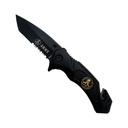
Valor Tribute Rapid-Rescue Folding Knife - Matte Black
5 sold in last 24 hours
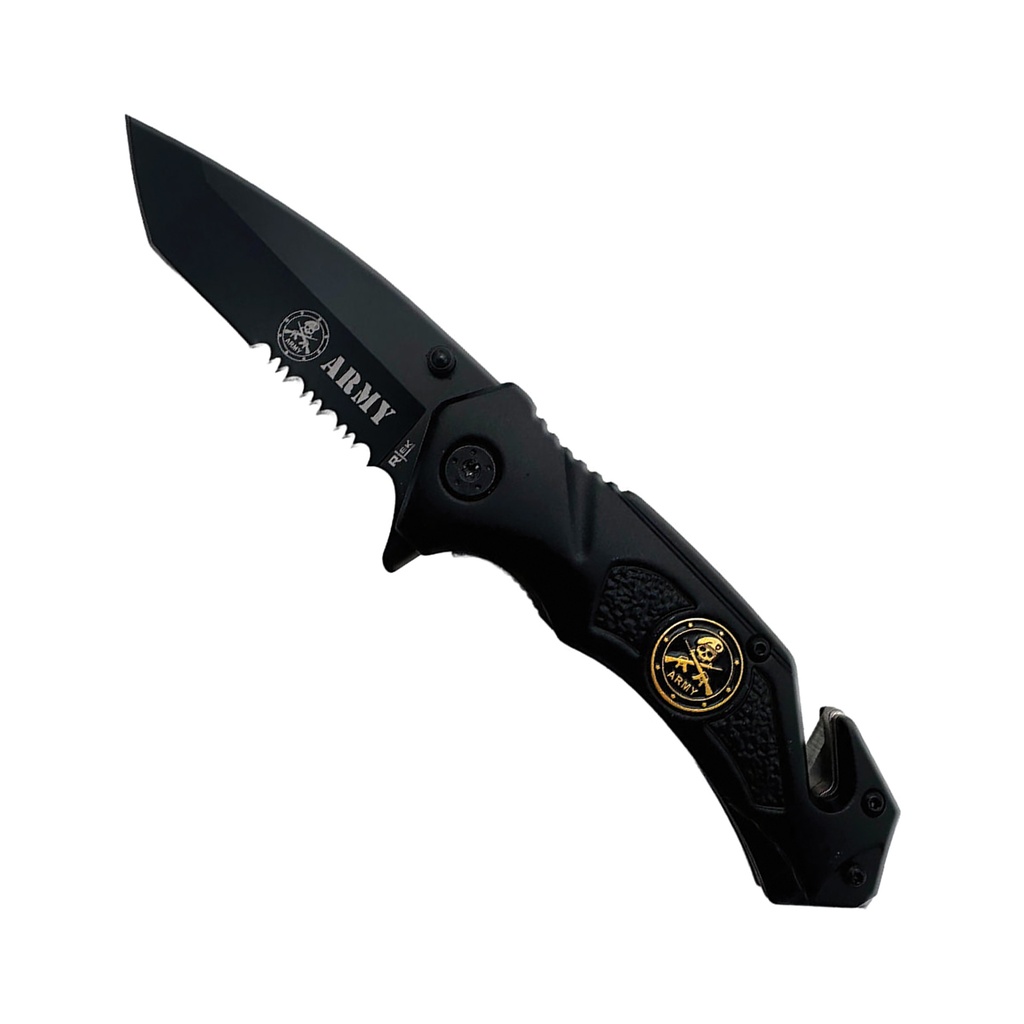
This isn’t a wall-hanger; it’s a working tribute. The Valor Tribute Rapid-Rescue Folding Knife backs its Army medallion with real rescue capability: a 3.5-inch partially serrated clip point, spring-assisted one-hand opening, and a positive liner lock. The glass breaker and seatbelt cutter are where they should be—at the ready at the handle’s end. At 8 inches open with a matte black stainless blade and metal handle, it rides discreetly via pocket clip yet feels inevitable when seconds actually matter.
What Makes the Best OTF Knife-Style Rescue Tool for Real EDC?
Strictly speaking, this is a spring-assisted folding rescue knife, not a true out-the-front automatic. But functionally, it chases the same goal as the best OTF knife for everyday carry: fast, one-handed deployment you can trust when you’re upside down in a car or working in cramped spaces. That’s the standard I used evaluating this Valor Tribute Rapid-Rescue Folding Knife – Matte Black: speed, control, and whether the rescue features justify pocket space.
For buyers cross-shopping the best OTF knife options with rescue tools, this knife offers a familiar, simpler mechanism with fewer legal headaches, while still delivering rapid deployment and a full emergency feature set.
Why This Spring-Assisted Design Competes With the Best OTF Knife Concepts
Where the best OTF knife platforms rely on internal tracks and more complex springs, this knife uses a straightforward spring-assisted side-opening mechanism. In hand, that matters less than you’d think. Thumb the stud and the blade snaps into lock with a decisive, linear motion. There’s no hunting for a slider, no mushy travel—just a short, positive arc of your thumb and the blade is working-length.
Deployment in Real Conditions
I evaluate rescue-style knives on compromised grip: gloved, wet, or cold hands. The thumb stud here is pronounced enough to find by feel, and the assist tension is tuned on the firmer side. That means it won’t “ghost open” in a pocket, but it does require intentional pressure. If you prioritize absolute minimal effort, a high-end double-action OTF knife will be easier to actuate. If you want a mechanism that shrugs off pocket lint and rough handling, this simpler assist layout is a strong alternative.
Lockup and Safety
The liner lock engages fully along the base of the tang with no visible daylight and negligible side play on a fresh sample. I could torque on the partially serrated portion through plastic and strap material without triggering any flex in the lock. The tradeoff versus many best OTF knife designs: you don’t get a secondary safety, but you do get a lock you can visually inspect and easily clean.
Blade and Steel: Built for Cutting Belts, Not Batoning Wood
The 3.5-inch matte black clip point blade combines a plain edge tip with a partially serrated section near the handle. That’s the right configuration for a rescue-focused EDC: plain edge for control, serrations for chewing through webbing and seatbelts. The edge geometry is thin enough that it bites early into fibrous material rather than skating on the surface.
The stainless steel is an unbranded mid-grade—realistically, you should treat it like the steels found in budget work knives. It resists rust reasonably well with basic care and sharpens quickly on a simple stone. The tradeoff: it won’t hold a razor edge as long as the premium steels you see in the very best OTF knife builds. In a rescue role, that’s acceptable. A steel you can touch up easily matters more than one that stays pretty in a collection case.
Rescue Features That Actually Work Together
Three elements define this as a rescue knife: the seatbelt cutter, the glass breaker, and how they integrate with the blade.
- Seatbelt cutter: Built into the handle butt, with an inset edge protected by the frame. It’ll slice nylon and webbing without exposing a free blade edge near your hand. In use, you grip the knife like a push tool, pull away from the victim, and the cutter does the work.
- Glass breaker: A metal tip at the very end of the handle, aligned with the handle spine. You don’t need to think about orientation; point the back corner at the window and strike. It’s simple and intuitive under stress.
- Blade synergy: Because the blade rides opposite these tools, you’re never forced to open the main blade to use the cutter or breaker. That’s an important safety advantage over some cheaper folders that double-purpose blade tips as pseudo glass breakers.
The Best OTF Knife Alternative for Army-Themed EDC and Gifting
Visually, this leans hard into an Army tribute theme: matte black everything, ARMY text on the blade, and a gold-and-black medallion set into the metal handle. That medallion is flat enough not to create a hot spot and anchored solidly—no rattle, no proud edges. It feels like an insignia, not a glued-on coin.
This makes it one of the best OTF knife alternatives if you want a military-themed rescue tool without the legal and cost overhead of true automatics. It’s a practical gift for service members, veterans, and supporters who want something they can actually carry, not just display.
Carry and Ergonomics
Closed, it sits at 4.5 inches—standard pocket-knife territory. The pocket clip is positioned for tip-down carry and has enough spring tension to hold onto standard denim without shredding the pocket edge. The matte metal handle has shallow texturing and contouring along the spine and belly, giving your index finger a natural index point behind the flipper/guard area. In extended cutting, the all-metal construction will transmit more cold and vibration than G10, but in a rescue or light EDC role, that’s an acceptable compromise.
Best For: Budget-Friendly Rescue Capability Over True OTF Status
If you’re strictly hunting for the best double action OTF knife, this isn’t it—it’s not an OTF at all, and it doesn’t pretend to be. What it does do is solve a slightly different problem extremely well: providing rescue-ready features and fast, one-handed deployment in a format that’s legal more places and costs a fraction of a quality OTF.
That makes it the best choice in a narrow but important lane: a budget-conscious, Army-themed rescue knife you won’t baby. It’s the kind of tool you can stash in a glove box, kit bag, or duty bag without worrying about scratching a $200 mechanism.
Tradeoffs are straightforward and honest:
- Not ideal for: Heavy bushcraft, prying, or collectors seeking top-tier steel and intricate OTF mechanisms.
- Ideal for: Everyday carry as a backup rescue tool, vehicle emergency kits, or as a functional tribute piece for anyone connected to the Army.
Common Questions About the Best OTF Knives
What makes an OTF knife the best choice for EDC?
The best OTF knife for EDC combines three things: fast, truly one-handed deployment; a reliable lock that won’t collapse under basic utility tasks; and a profile slim enough that you don’t resent carrying it. Double-action OTFs add the ability to retract the blade with the same control, which is valuable if you’re constantly opening and closing the knife throughout the day. That said, an assisted folder like this can cover much of the same ground if you prioritize value and simpler mechanics over the pure OTF experience.
How does this OTF knife alternative compare to a true OTF automatic?
Versus a true OTF automatic, this spring-assisted rescue knife trades some deployment elegance for durability and cost. You lose the linear, out-the-front action and the ability to retract via a slider, but you gain a more familiar pivot, fewer internal parts to foul, and easier cleaning. Many of the best OTF knife models use premium steels and tighter tolerances; this knife uses mid-grade stainless and a work-ready build. In return, you get a tool you won’t hesitate to leave in a truck or tackle box.
Who should choose this OTF knife alternative?
Choose this knife if you like the idea of the best OTF knife for emergency use but either can’t justify the price or live somewhere with restrictive automatic-knife laws. It’s well-suited to drivers who want a dedicated glass breaker and belt cutter in the vehicle, military families looking for an affordable Army-themed gift, and anyone building a basic emergency kit. Enthusiasts chasing top-tier action and steel should treat this as a secondary tool, not a primary collection piece.
If you’re looking for the best OTF knife alternative for budget-friendly rescue carry, this is it — because its spring-assisted deployment, integrated glass breaker and seatbelt cutter, and Army medallion build a tool that’s actually ready for emergencies, not just photos.
| Blade Length (inches) | 3.5 |
| Overall Length (inches) | 8.0 |
| Closed Length (inches) | 4.5 |
| Blade Color | Black |
| Blade Finish | Matte |
| Blade Style | Clip Point |
| Blade Edge | Partial-Serrated |
| Blade Material | Stainless Steel |
| Handle Finish | Matte |
| Handle Material | Metal |
| Theme | Army Tribute |
| Pocket Clip | Yes |
| Deployment Method | Spring-assisted |
| Lock Type | Liner lock |